Chull in the Cold Desert: A Journey Through Spiti Valley
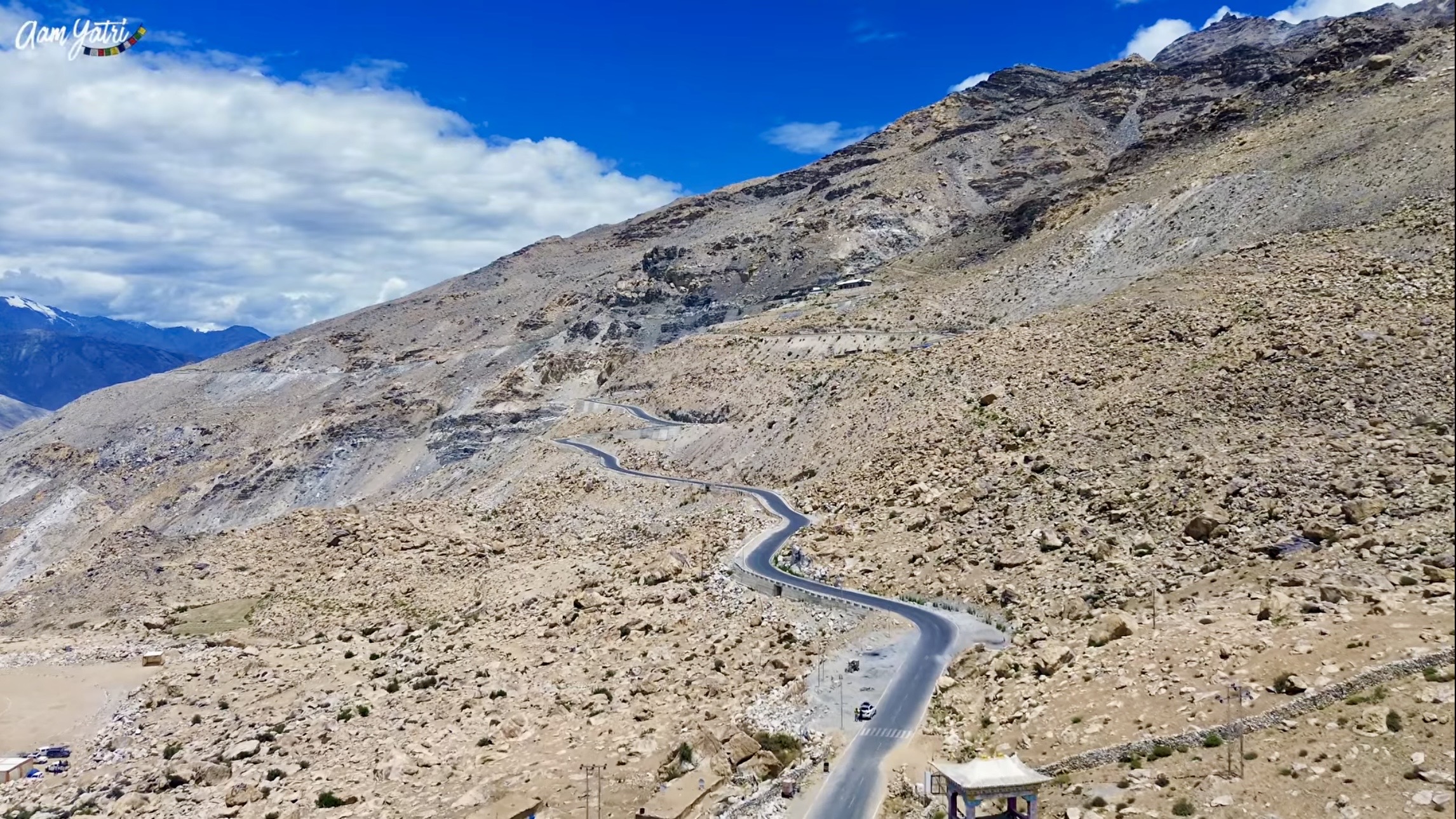
Spiti Valley — where silence feels louder than cities.
The Valley That Doesn’t Entertain You — It Changes You
Human beings are strange creatures. In search of peace, we travel to crowded tourist destinations packed with noise, traffic, cafés, music, and thousands of people searching for the exact same escape. We say we want silence, but when true silence finally appears before us, it begins to feel uncomfortable. Perhaps that is why Spiti Valley still remains untouched compared to the rest of the Himalayas. Not because it lacks beauty, but because it offers something modern life has almost erased from us completely — stillness.
Maybe people are simply not used to this level of peace anymore.
Or maybe they lack something within themselves.
That restless fire which pushes a person beyond comfort, beyond routine, beyond ordinary life.
Spiti is not a destination designed for comfort. It does not welcome you with luxury or convenience. It tests your patience, your body, your expectations, and sometimes even your purpose. Situated high in the cold desert region of Himachal Pradesh, the valley is defined by barren mountains, dangerous roads, ancient monasteries, freezing winds, and an overwhelming sense of isolation. Unlike the green Himalayan landscapes people usually romanticize, Spiti feels raw and exposed. The mountains stand naked against the sky like ancient ruins untouched by time.
And yet, hidden within this harshness is a strange calmness.
The kind of calmness that slowly enters your mind after hours of driving through empty roads where human existence begins to feel incredibly small compared to the scale of nature surrounding you.
Nako — The First Whisper of Spiti
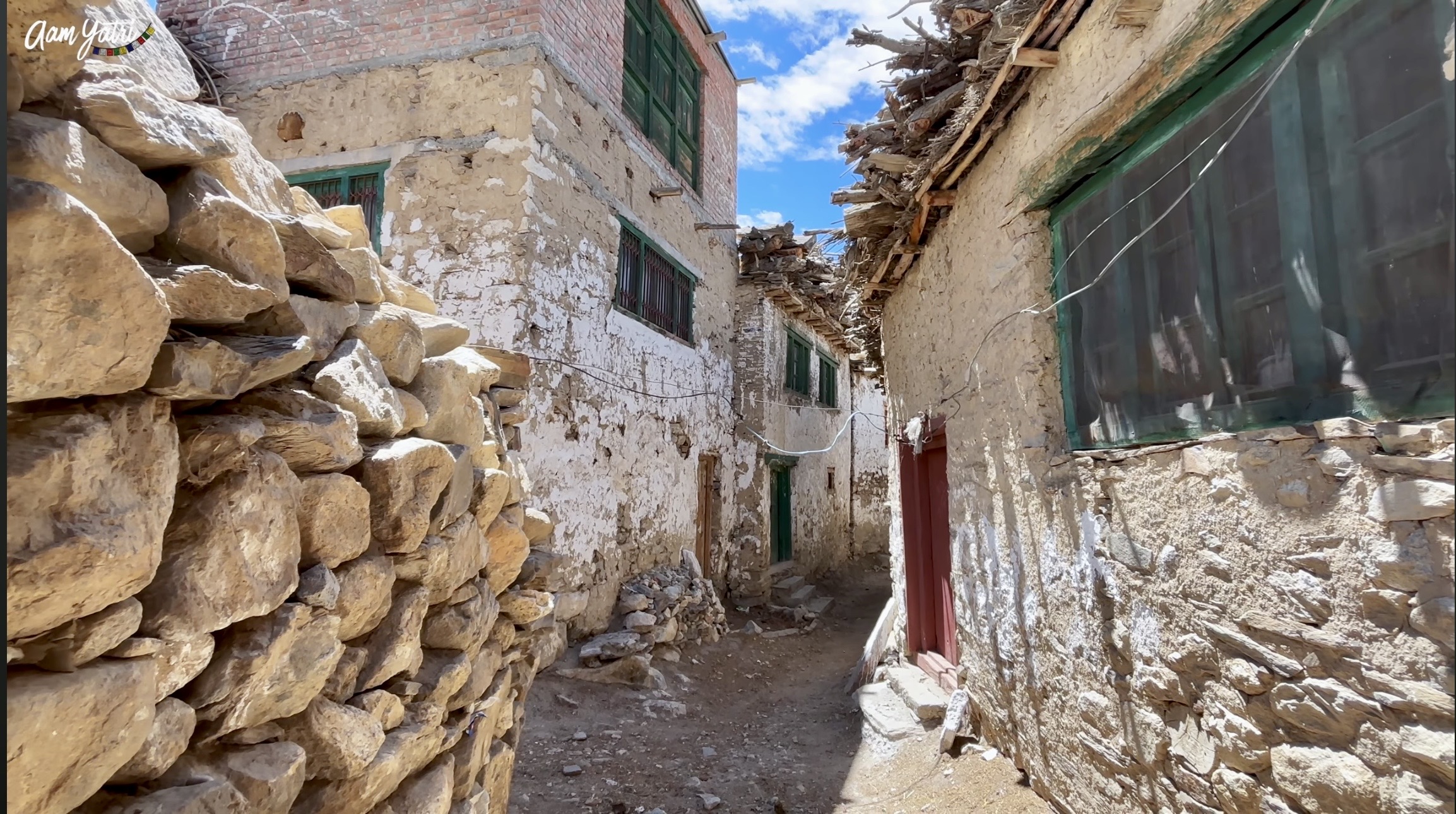
The quiet streets of Nako feel untouched by time.
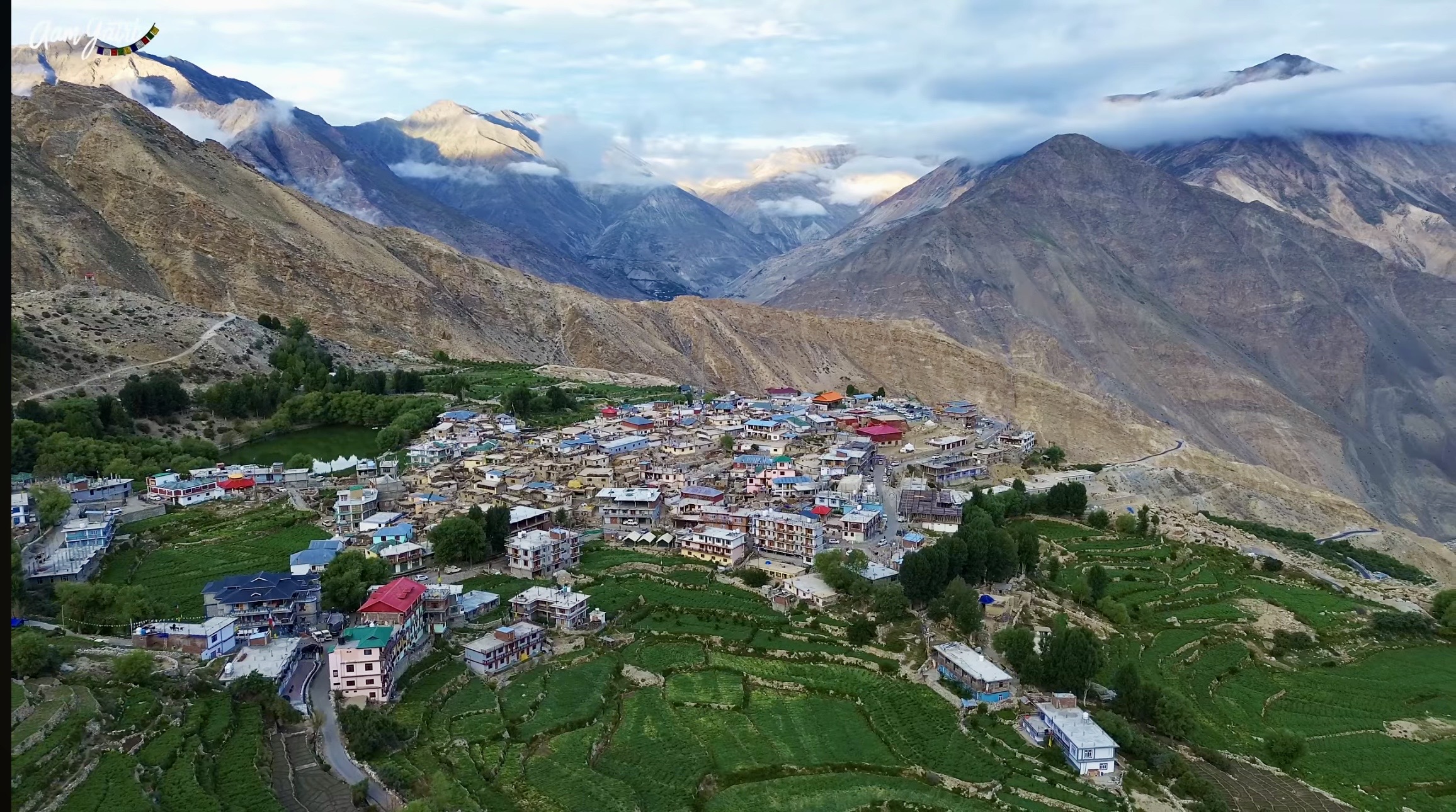
A village resting gently between mountains and silence.
Most travelers begin the Spiti circuit from Shimla or Manali, but this journey skips the introductions and arrives directly at Nako — a tiny Himalayan village resting beside a quiet lake at the edge of the mountains.
Nako does not try to impress anyone. There are no giant cafés, no loud markets, no curated tourist experiences. Its beauty exists quietly in old monasteries, narrow stone lanes, traditional Tibetan-style homes, and the reflection of mountains dancing gently over still lake water. Time does not seem to move here in the same way it does in cities. It simply lingers.
Returning to Nako also carried something deeply personal. Certain places stop becoming locations after a point; they become memories. Years ago, friendships were formed here, and coming back felt less like arriving at a destination and more like reopening an unfinished chapter of life.
Above the village rises Rio Purgyal, the highest mountain peak in Himachal Pradesh, standing silently like a giant witness to human lives passing below.
And somewhere beneath that mountain, reality continued calling.
The corporate world never stops chasing you. Even in the middle of the Himalayas, phone calls about deadlines, promotions, responsibilities, and the “corporate ladder” somehow continue to reach you.
Giu — Where Time Stood Still
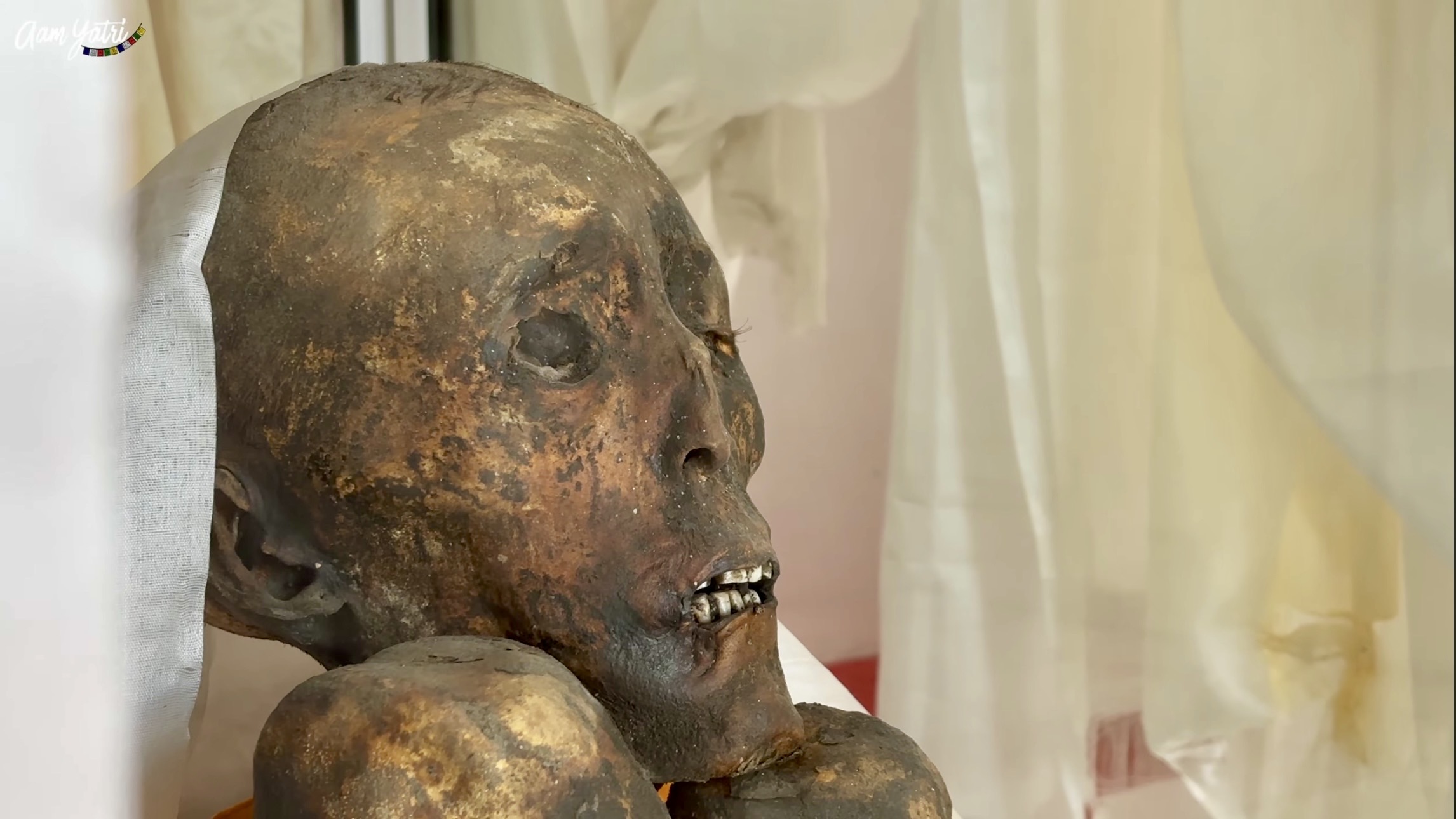
Lama Tenzin — still in meditation centuries later.
As the roads moved deeper into the cold desert, civilization slowly began disappearing behind barren cliffs and endless silence. Villages became smaller, roads emptier, and thoughts louder. Somewhere within this isolation lies Giu Monastery, carrying one of the most haunting stories in the entire valley.
Inside rests the naturally preserved mummy of Buddhist monk Sangha Tenzin, believed to belong to the fifteenth century. Sitting in a meditative posture for centuries, the monk’s body has become far more than a historical artifact. It feels like a confrontation with time itself. Standing before him creates an unsettling realization about how temporary human life truly is.
Entire generations have been born and disappeared while he remained seated in silence, untouched by the chaos that consumed the outside world. The modern world constantly teaches people to move faster — earn faster, grow faster, achieve faster — but places like Giu force a person to pause.
Looking at the monk, one thought repeatedly returns: where will any of us be in fifty years? Or even five? Human beings spend their entire lives worrying about careers, money, status, and future plans, only to eventually disappear into time without warning. Yet somehow this monk, who stopped moving centuries ago, still continues to leave an impact on every traveler who walks into that room.
The irony feels impossible to ignore. We spend our lives desperately trying to stay alive, while perhaps never truly learning how to live peacefully.
The Road That Makes You Confront Yourself
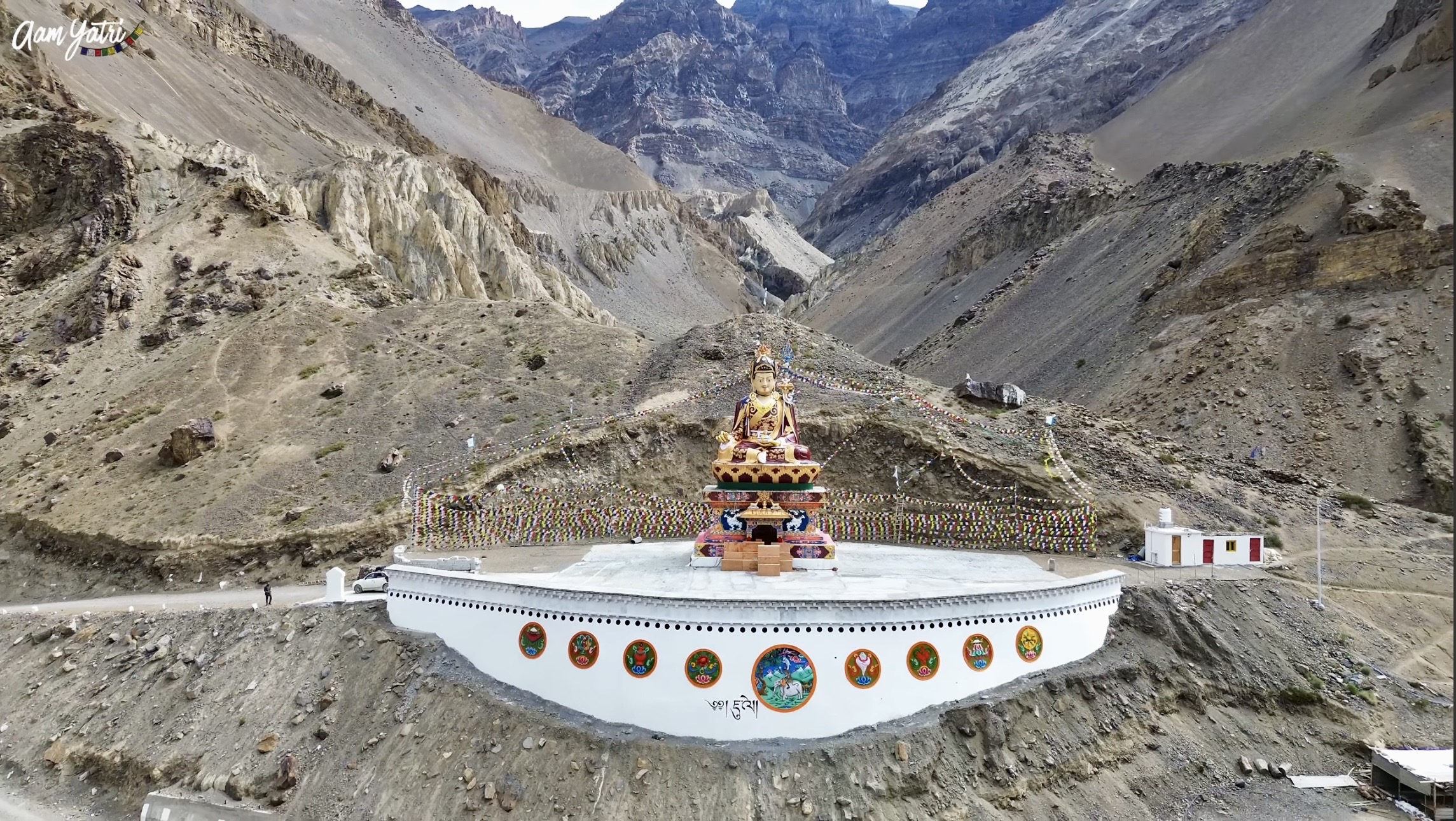
Some conversations happen only in silence.
One of the strangest things about Spiti is how quickly the mountains begin affecting the mind. In cities, people rarely sit alone with their thoughts for long enough to truly hear themselves. There is always some distraction available — traffic, notifications, conversations, screens, deadlines.
But in Spiti, there are moments where nothing exists except you, the road, and mountains stretching endlessly into the sky. Somewhere during that journey, even a roadside encounter with Guru Padmasambhava began to feel strangely emotional.
Sitting alone against the backdrop of barren mountains, the statue carried a presence that felt comforting rather than grand. The silence around it almost demanded conversation. And perhaps that is what mountains do best — they create enough silence for buried thoughts to finally surface.
Questions about freedom, purpose, work, and happiness begin appearing naturally. How long can a person continue living mechanically? At what point does survival stop feeling like life?
The mountains momentarily make freedom feel achievable, as if one could simply walk away from the endless cycle of routines and expectations.
But reality always arrives eventually.
Hunger interrupts philosophy. Bills interrupt dreams. Responsibilities interrupt escape. The romantic fantasy of leaving everything behind collides once again with the practical truth that life still demands money in exchange for existence.
That contrast becomes one of the most honest parts of the Spiti experience. The valley inspires spiritual thoughts, but it never lets spirituality become fake or performative.
Tabo — Where History Still Breathes
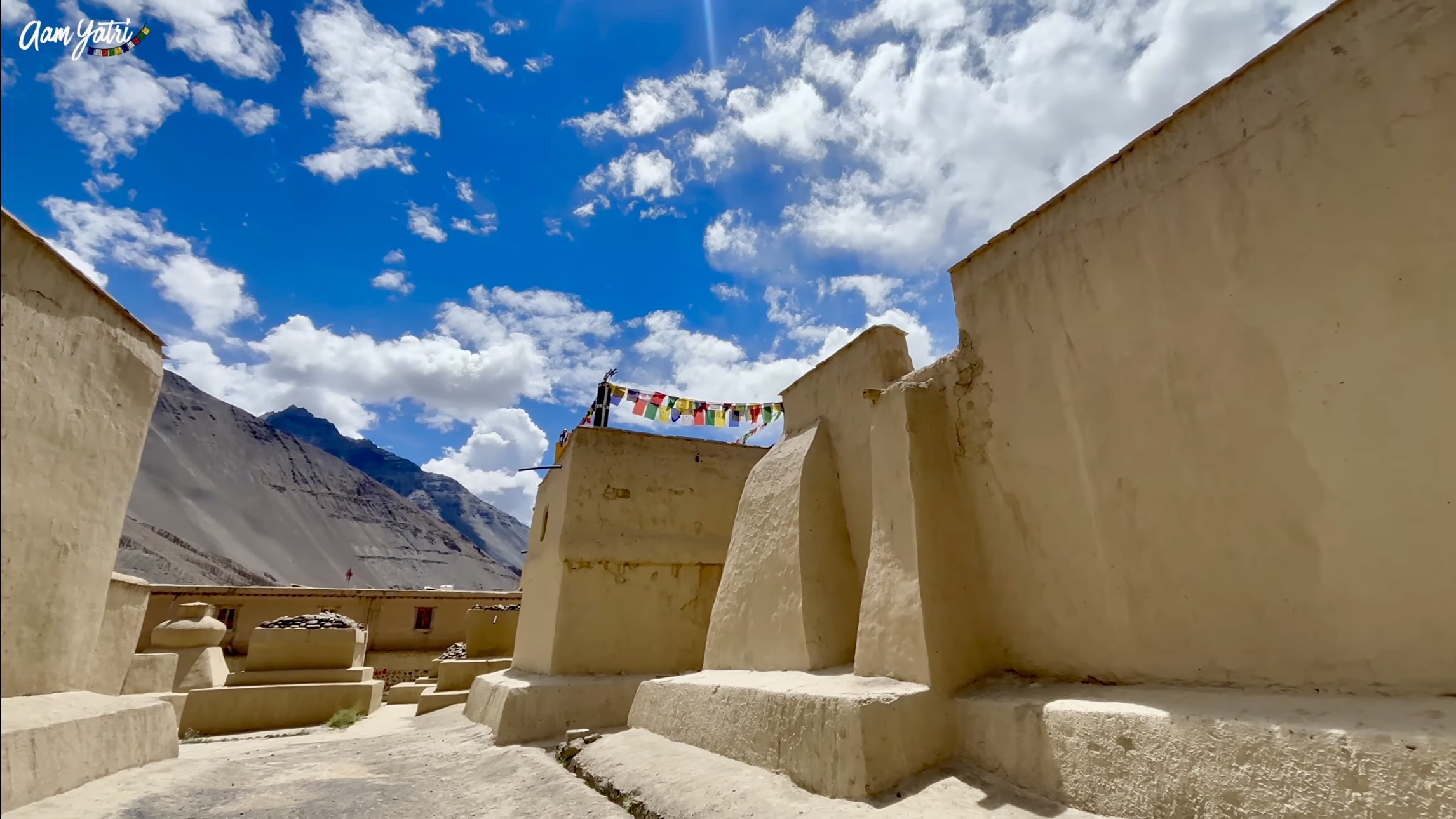
Tabo Monastery — over a thousand years of history preserved in silence.
Further ahead lies Tabo Monastery, one of the oldest continuously functioning Buddhist monasteries in the world. Founded in 996 CE, Tabo does not feel like a tourist attraction; it feels like time itself has slowed down inside its walls. Built from mud and stone, the monastery quietly preserves ancient murals, scriptures, and artwork that have survived for over a thousand years in one of the harshest environments imaginable.
Walking through the monastery creates a feeling difficult to explain. There is no dramatic architecture demanding attention, no attempt to overwhelm visitors with grandeur. Instead, Tabo carries a deeply human kind of spirituality. The dimly lit halls, faded paintings, prayer rooms, and silence together create an atmosphere where history feels alive rather than preserved.
Outside, the cold desert continues endlessly beneath towering mountains, but inside the monastery everything feels still. Travelers come searching for peace here, yet what they often discover instead is clarity. And clarity can be uncomfortable because it forces a person to recognize how exhausted modern life has quietly made them.
Cities normalize stress so completely that people forget what calmness even feels like until they encounter places like Tabo.
The spiritual energy of the monastery is not loud or dramatic. It reveals itself slowly, almost invisibly, through silence. Even the simplest moments — monks walking through corridors, prayer flags moving with the wind, sunlight entering old rooms — begin feeling meaningful.
Dhankar — Built Between Sky and Abyss
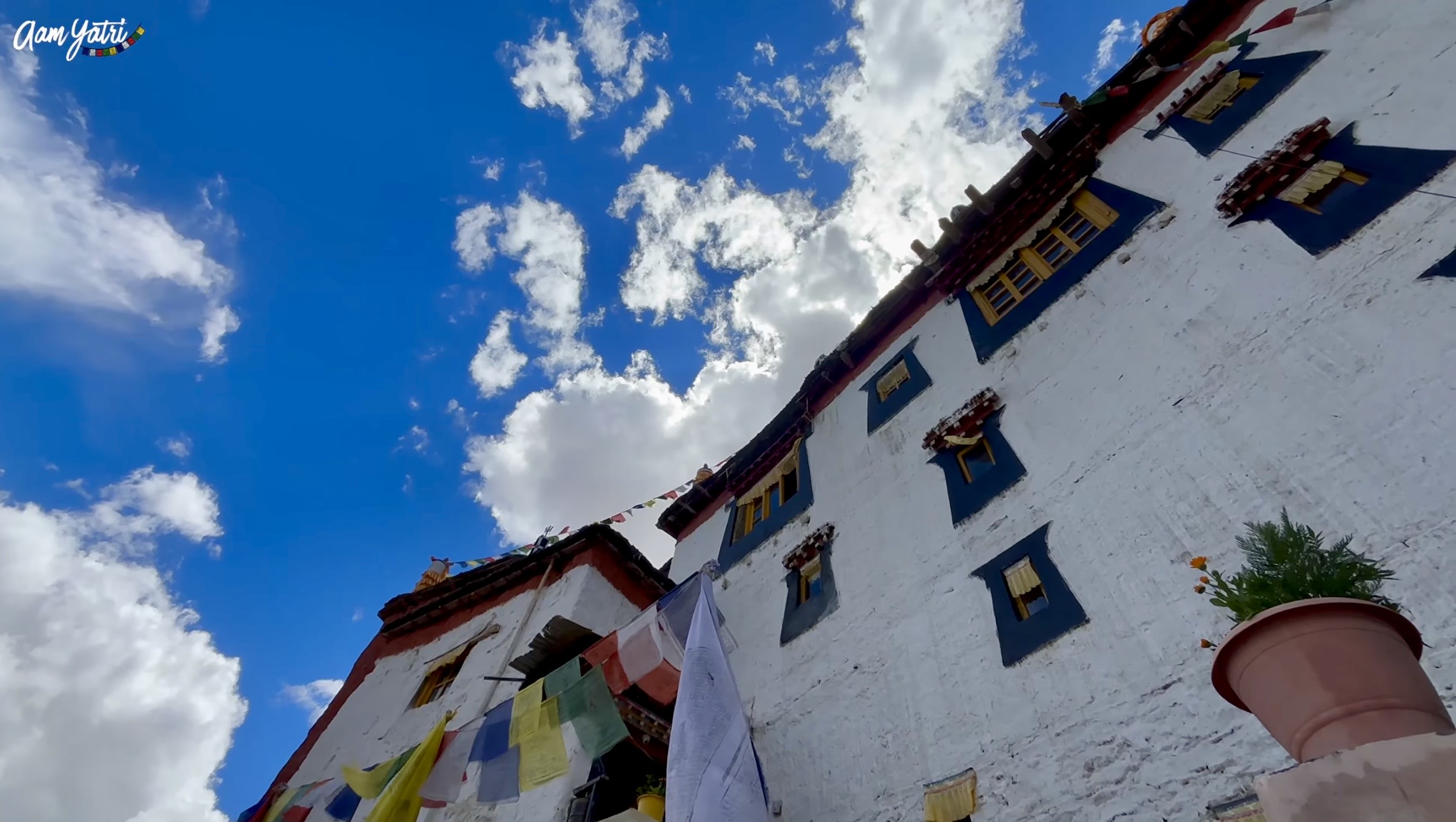
Ancient interiors carrying centuries of stories.
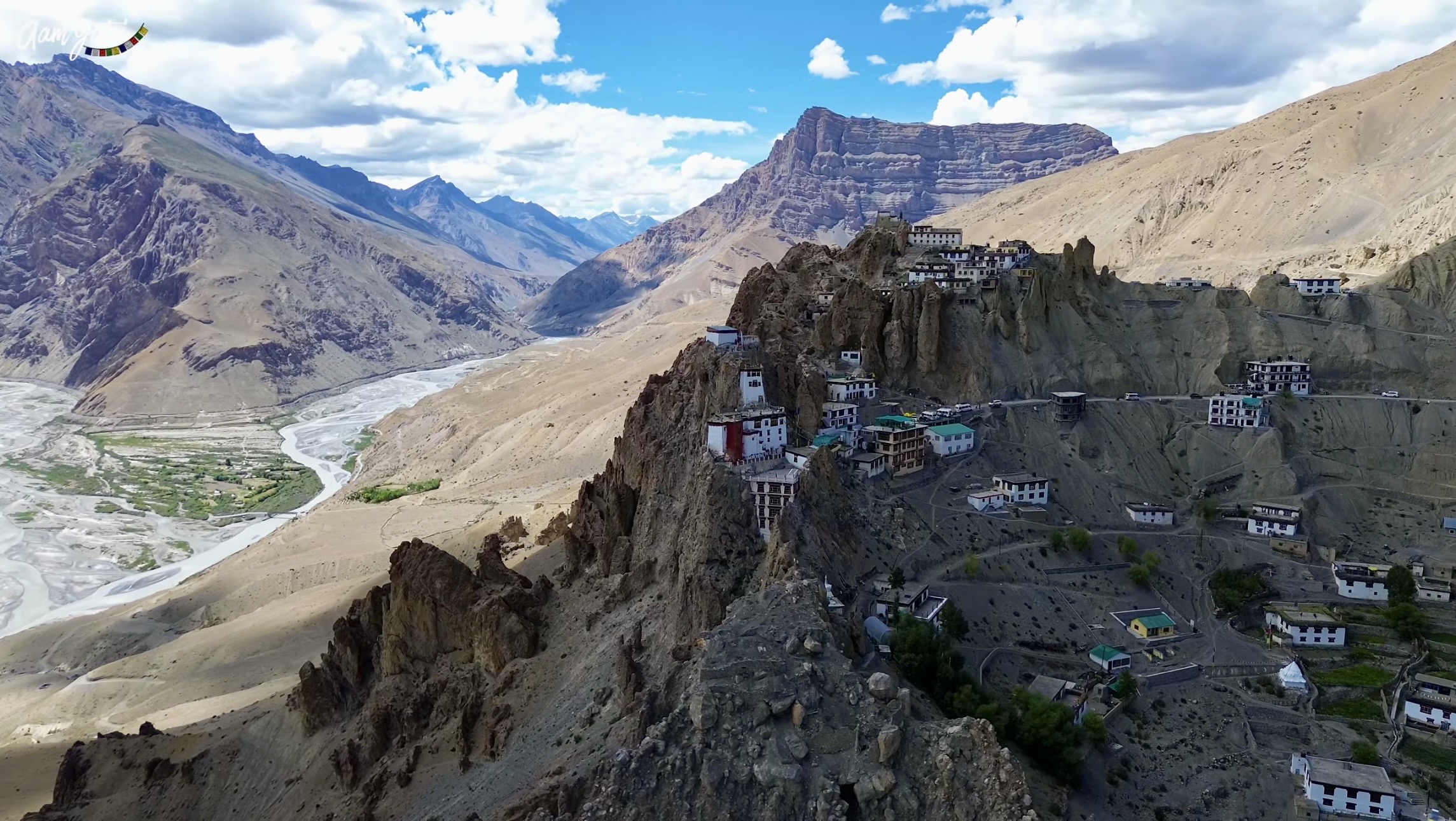
The valley below feels endless from Dhankar.
Few places in Spiti capture human imagination as powerfully as Dhankar Monastery. Perched dramatically on the edge of a cliff overlooking the confluence of the Spiti and Pin rivers, the monastery appears almost impossible from a distance. It looks less like a structure built by human beings and more like something naturally carved into the mountain itself.
Once the capital of the Spiti kingdom, Dhankar carries centuries of history within its fragile-looking walls. Ancient thangka paintings, Buddhist scriptures, statues, and prayer halls continue surviving despite earthquakes, landslides, storms, and brutal Himalayan winters.
Standing there creates genuine admiration not only for spirituality, but for human determination itself. Building something at such altitude and terrain even today would be difficult. Imagining people constructing it nearly a thousand years ago feels almost unbelievable.
The view from Dhankar is equally unforgettable. The barren valley stretches endlessly below while rivers cut through the mountains like veins across the earth. There is a strange loneliness to the landscape, but it never feels empty. Instead, it feels ancient — as if the mountains are carrying stories far older than humanity itself.
Moments like these change the way a person looks at civilization. In cities, people celebrate skyscrapers, technology, and modern engineering as symbols of progress. Yet standing before a thousand-year-old monastery balanced on a cliff in the middle of a cold desert creates a different kind of respect altogether.
Kaza — The Heartbeat of Spiti
Eventually the journey reaches Kaza, the administrative center and beating heart of Spiti Valley. Compared to the silence of smaller villages, Kaza feels lively — cafés buzzing with travelers, motorcycles lined across dusty roads, conversations about routes, fuel, weather, and altitude filling the air.
Yet even here, civilization feels temporary against the backdrop of the mountains surrounding it.
Kaza becomes more than just a stopover. It becomes the point where travelers pause, breathe, recover, and prepare themselves for the higher villages waiting ahead. There is a strange emotional transition that happens here.
By the time one reaches Kaza, Spiti has already begun changing the rhythm of the mind. The urgency carried from cities slowly weakens. Days stop feeling scheduled. Time becomes less important than experience.
Langza — Where the Earth Remembers Its Ocean
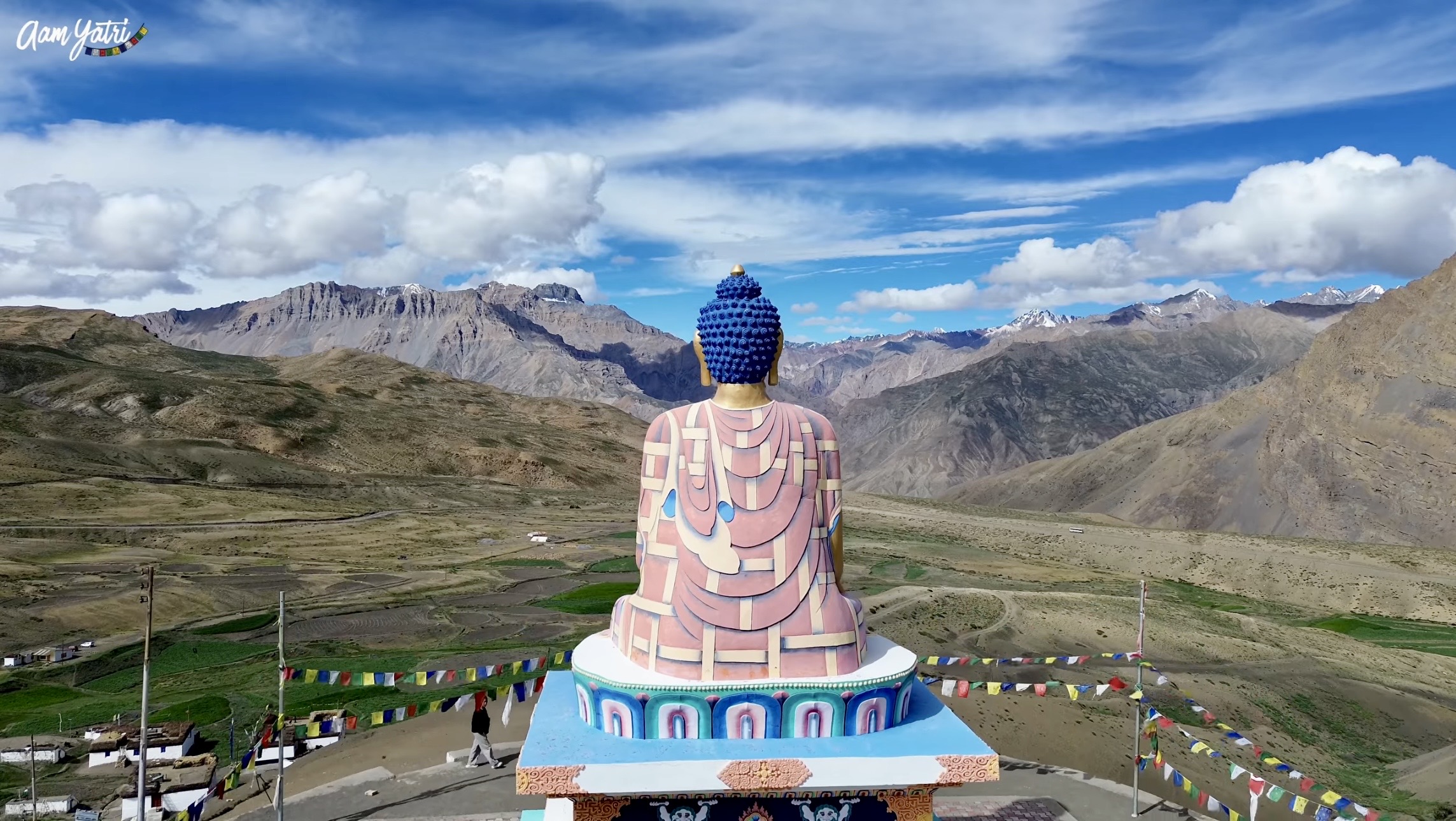
Langza — silence stretched across the Himalayas.
High above Kaza lies Langza, one of the highest inhabited villages in the region. Surrounded by endless open landscapes and guarded by a giant Buddha statue overlooking the valley, Langza feels detached from the modern world completely. The silence here feels deeper, the skies larger, and the air thinner in every possible sense.
But what makes Langza truly extraordinary is not just its beauty. It is the realization that millions of years ago, this barren Himalayan desert existed beneath an ancient ocean. Fossils scattered across the region continue proving that history.
Standing there while holding remnants of marine life creates a surreal collision between past and present. Mountains that now touch the sky were once underwater.
Spiti constantly humbles human understanding of time. Human beings think in decades; nature thinks in millions of years.
At night, Langza transforms into something almost unreal. With little to no artificial light, the sky explodes into countless stars stretching endlessly across the universe.
Hikkim — Where Slowness Still Survives
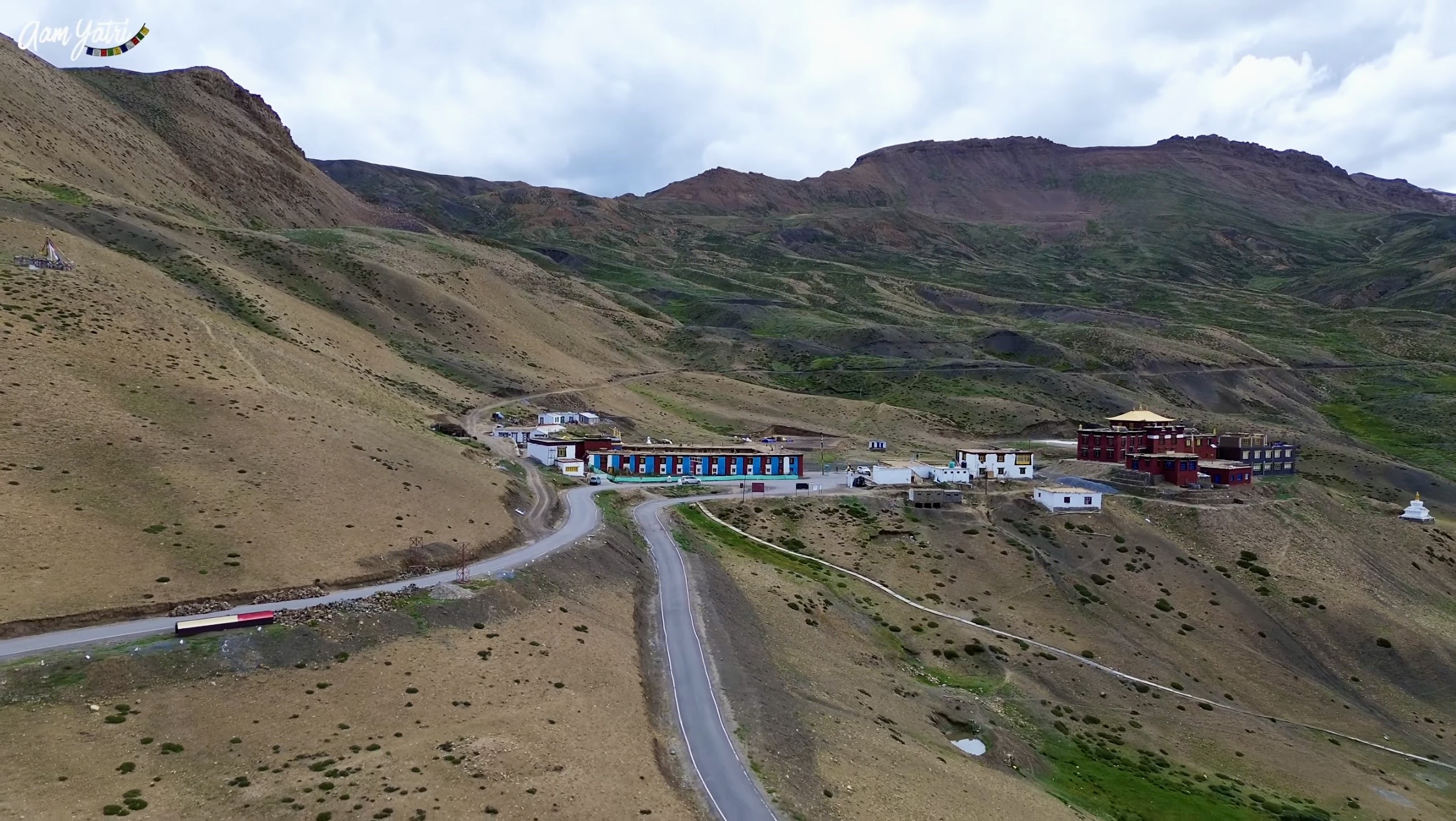
Hikkim — where the modern world feels very far away.
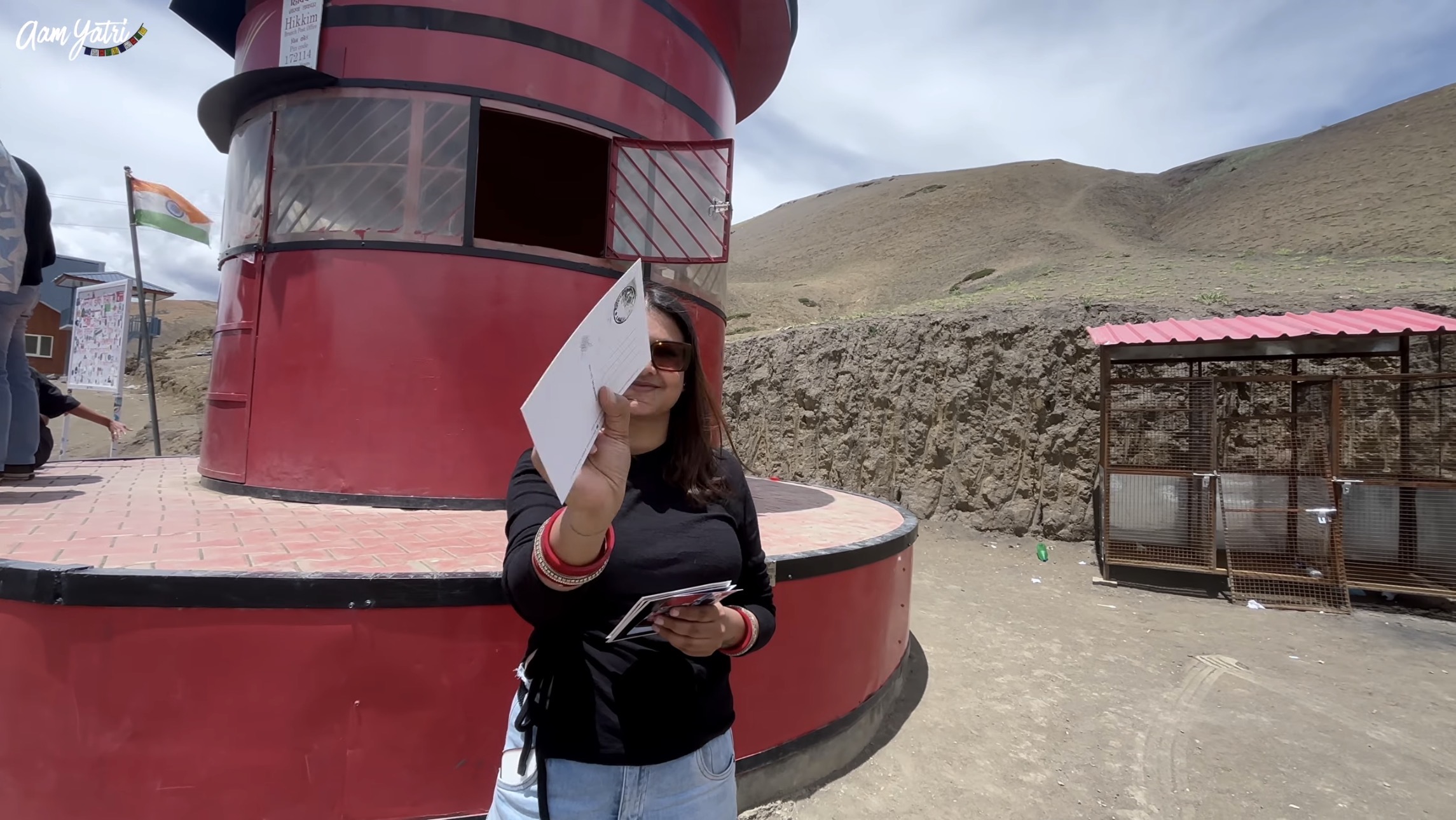
One of the world’s highest post offices.
A short drive from Langza lies Hikkim, home to one of the world’s highest post offices. In an era dominated by instant messaging, disappearing stories, and endless notifications, the existence of a tiny functioning post office at such altitude feels strangely emotional.
Here, communication still takes effort.
A postcard written in Hikkim carries something modern conversations often lack — patience. It travels slowly across mountains, cities, and distances before eventually reaching someone’s hands.
Key Monastery — A Thousand Years of Stillness
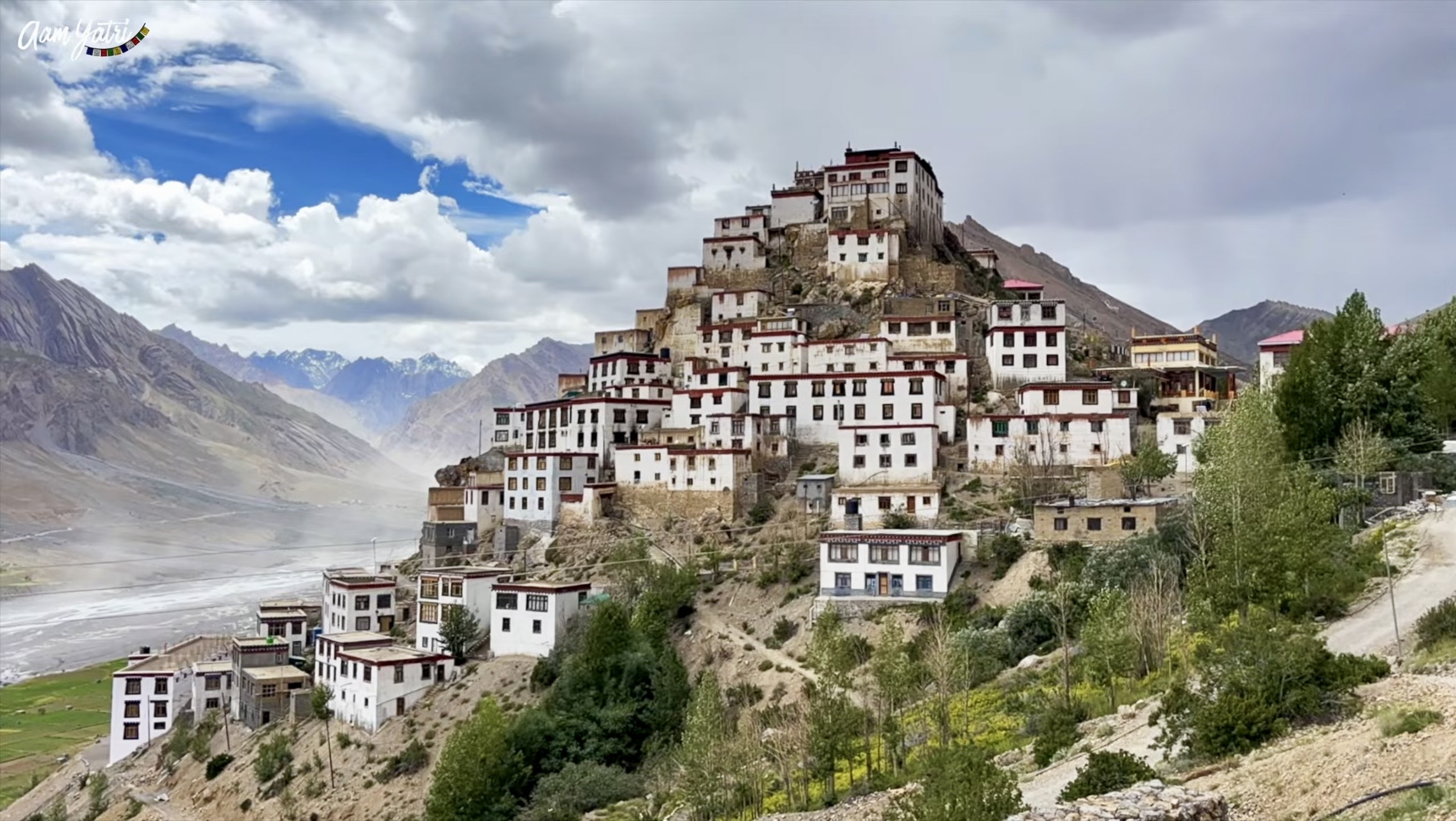
Key Monastery — the soul of Spiti Valley.
Then finally appears the soul of Spiti itself — Key Monastery. Built over a thousand years ago, the monastery rises dramatically across the mountainside like a fortress suspended between earth and sky.
Inside, young monks continue studying ancient Buddhist teachings while old prayer halls preserve centuries of wisdom, rituals, and scriptures. The monastery has survived invasions, earthquakes, brutal winters, and the passage of time itself.
Human lives came and went, empires changed, roads were built, technologies evolved, but Key Monastery remained standing above the valley watching history unfold quietly beneath it.
Walking through its corridors creates a strange realization about permanence.
Chicham — The Bridge Between Fear and Freedom
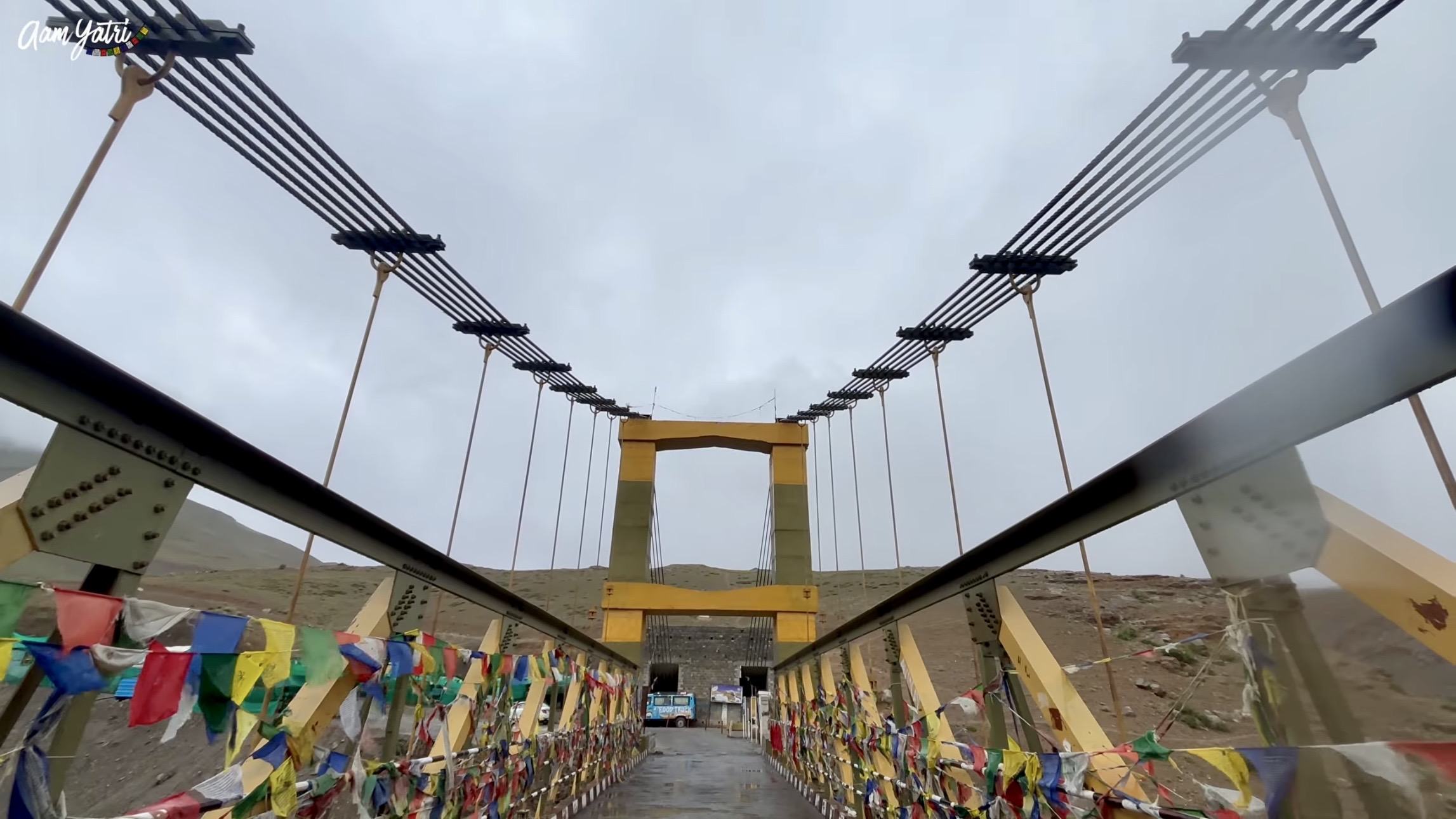
Chicham Bridge suspended above silence and emptiness.
As the circuit slowly approaches its conclusion, the landscapes become harsher and the roads rougher. Somewhere between deep gorges and dramatic cliffs stands Chicham Bridge, one of Asia’s highest suspension bridges.
Before the bridge was built in 2017, locals crossed this gorge using dangerous ropeways suspended over the abyss below. Standing there today creates immense respect for the resilience of people living in these mountains.
The bridge itself feels symbolic of the Spiti experience. Every traveler arrives carrying fears, exhaustion, routines, distractions, and emotional baggage from the outside world. Somewhere during the journey, the mountains slowly strip those layers away.
Chandratal — Where the Journey Ends
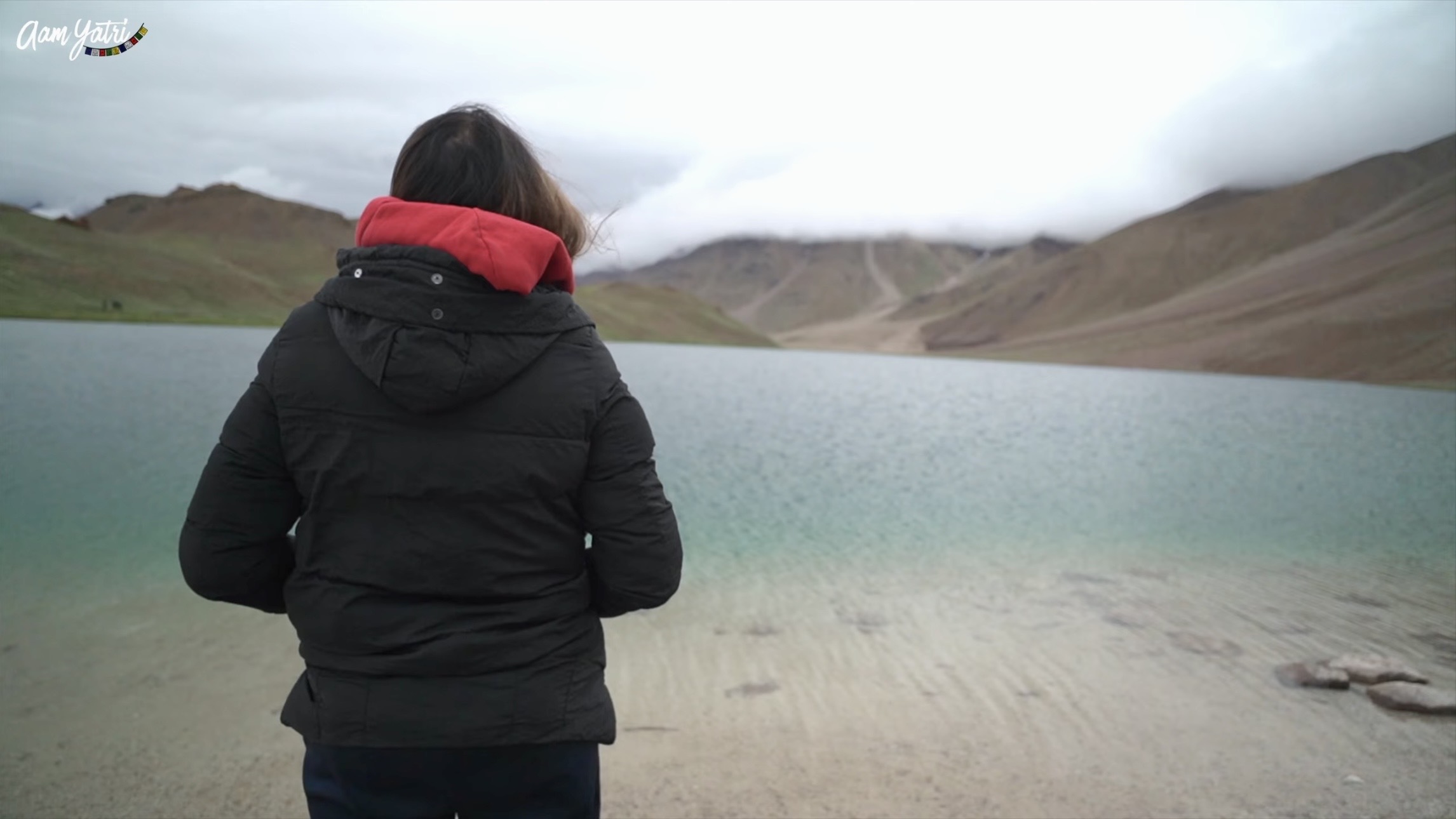
Chandratal Lake glowing beneath the cold Himalayan sky.
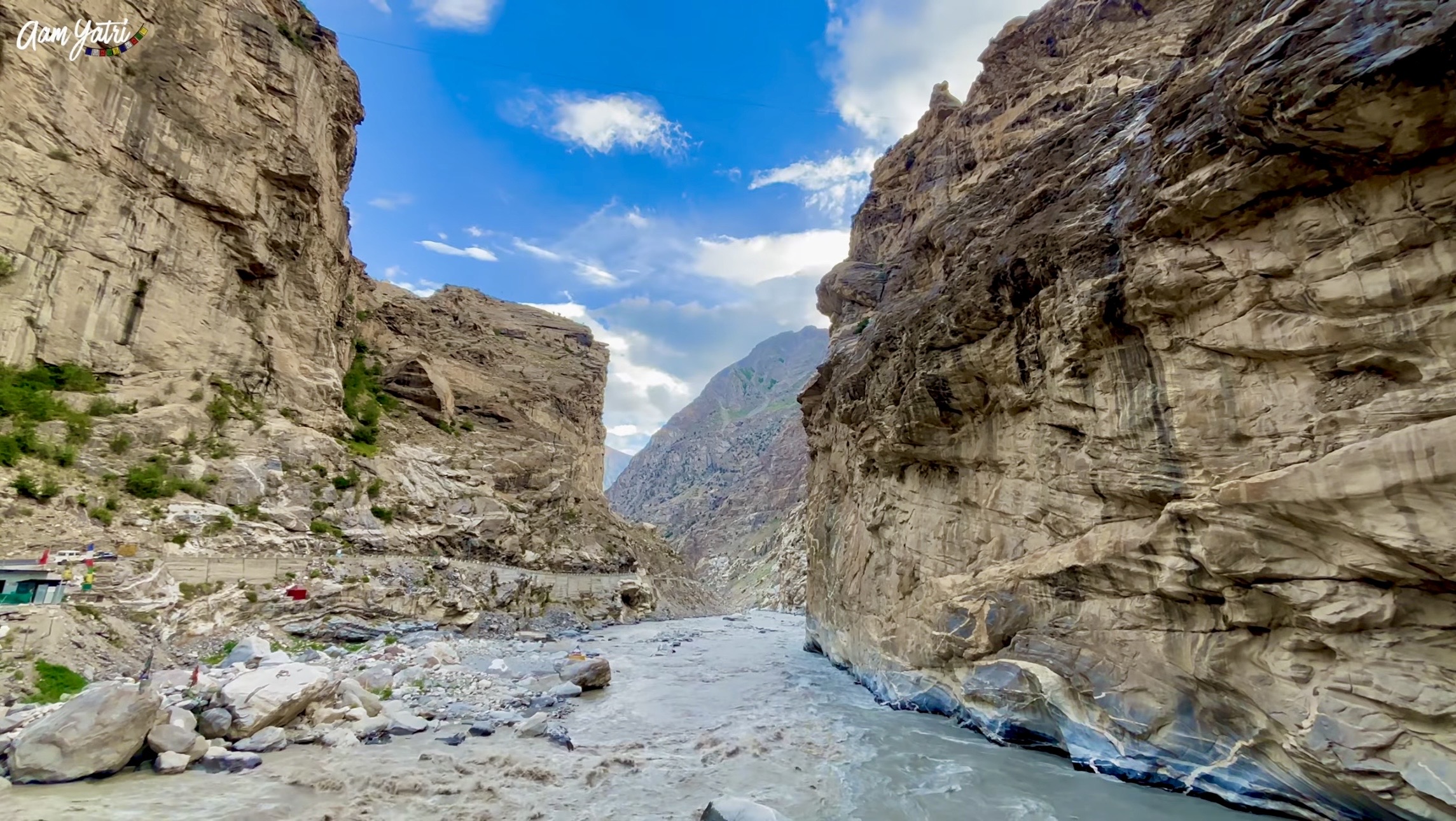
The final frame before returning back to the world.
Finally, after endless roads, freezing winds, altitude headaches, monasteries, silence, conversations, breakdowns, and moments of clarity, the journey arrives at Chandratal Lake — the Moon Lake.
Resting at over 4,300 meters above sea level, Chandratal looks almost unreal against the barren mountains surrounding it. During the daytime, the lake shifts between impossible shades of blue, emerald, and green depending on the sunlight.
At night, under a sky overflowing with stars, the entire landscape begins feeling detached from reality itself.
And yet, despite all its beauty, Chandratal carries a strange sadness too. Because this is where the journey ends.
The realization quietly begins settling in that soon everything will return to normal again — offices, deadlines, traffic, responsibilities, and routines.
The Real Circuit of Life
Perhaps places like Spiti do not exist to help people escape life. Perhaps they exist to remind people what life feels like before it becomes consumed by noise.
For a brief moment in the cold desert, people remember how to slow down. How to think clearly. How to sit in silence without reaching for distraction.
And maybe that feeling is the real reason travelers keep returning to these mountains.
Not for photographs.
Not for checklists.
Not even for adventure.
But to meet the version of themselves that modern life slowly buried beneath routine.