South Goa Around Palolem: Where Goa Finally Slows Down
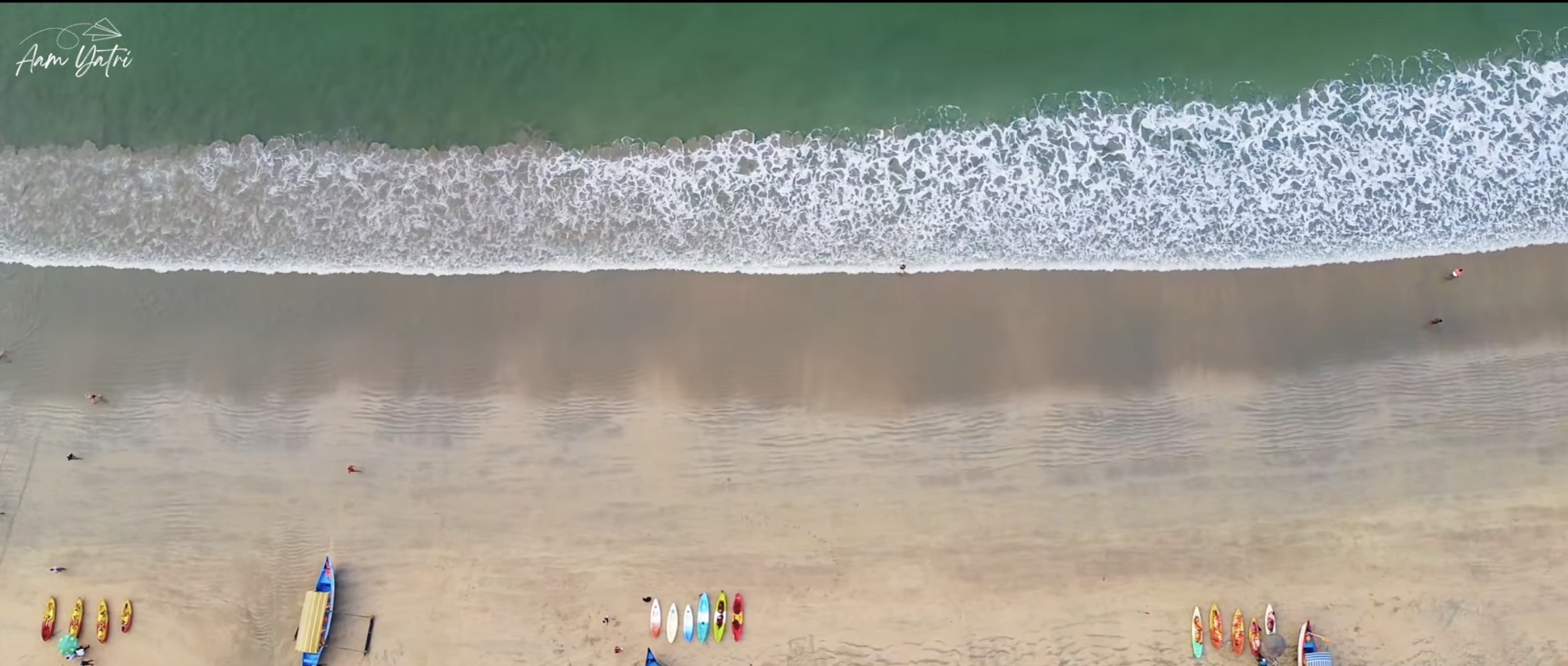
The Goa that doesn’t try to be seen — only experienced.
The Goa We Arrive With
There is a version of Goa most of us carry long before we ever set foot here. It is loud, restless, and familiar — a place defined by crowded beaches, music that spills into the night, and a pace that rarely slows down. It is the Goa that is easiest to experience, and for that reason, the one most often remembered.
It was the Goa I knew too.
When I first travelled here in 2013, I moved through it the way most people do — quickly, instinctively, following what was already laid out. North Goa, packed streets, constant movement. It felt complete at the time, as if nothing had been left unseen. Only later did it become clear that what I had experienced was not the entirety of Goa, but only its most visible layer.
Moving South
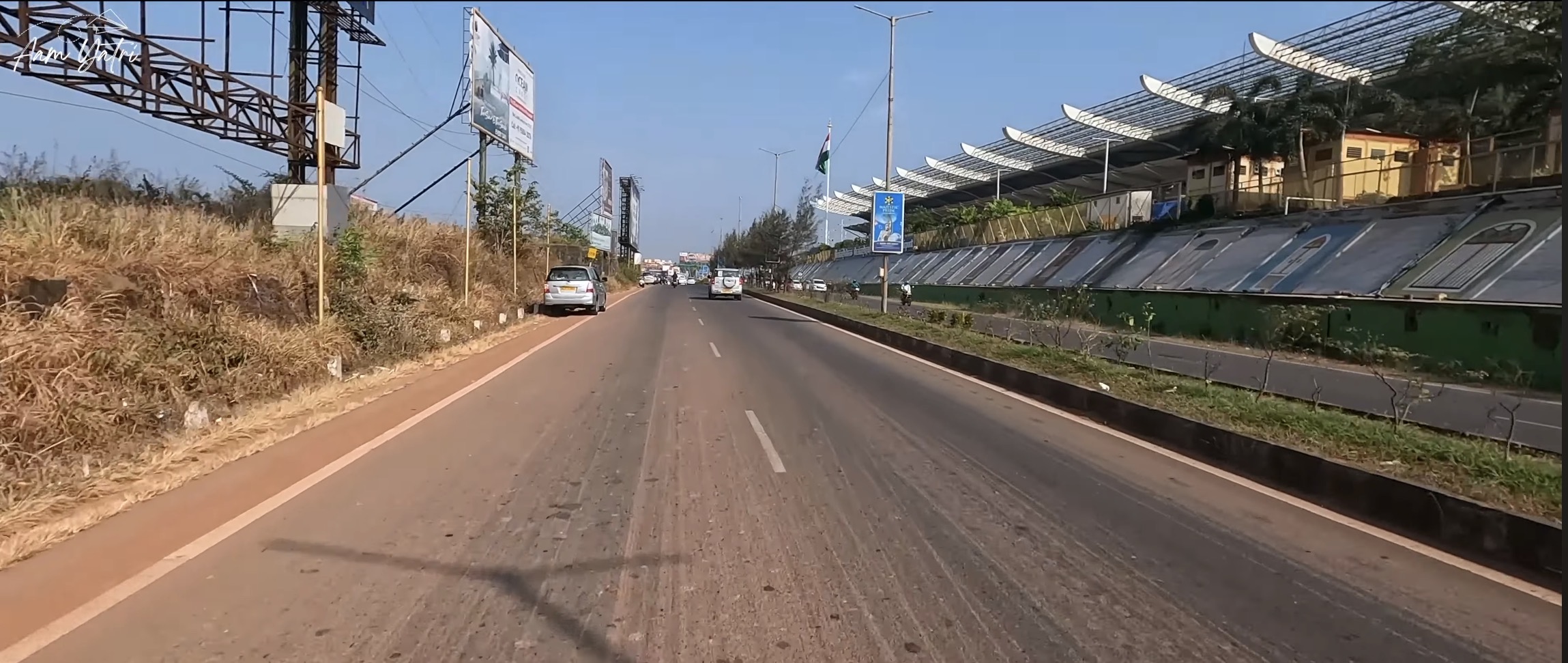
Sometimes the journey changes before the destination does.
Returning years later, the intention was not to see more, but to see differently. Instead of retracing familiar routes, I chose to move south, towards Palolem — not with a plan, but with a quiet curiosity about what might exist beyond what is usually spoken about.
The shift begins almost immediately. Just outside the airport, where most travellers instinctively move towards taxis, there is another option waiting quietly — rows of scooters lined up without much attention. Choosing one is not simply a practical decision; it changes the nature of the journey itself. Movement becomes slower, more deliberate. The distance between traveller and place begins to narrow.
The Road to Palolem
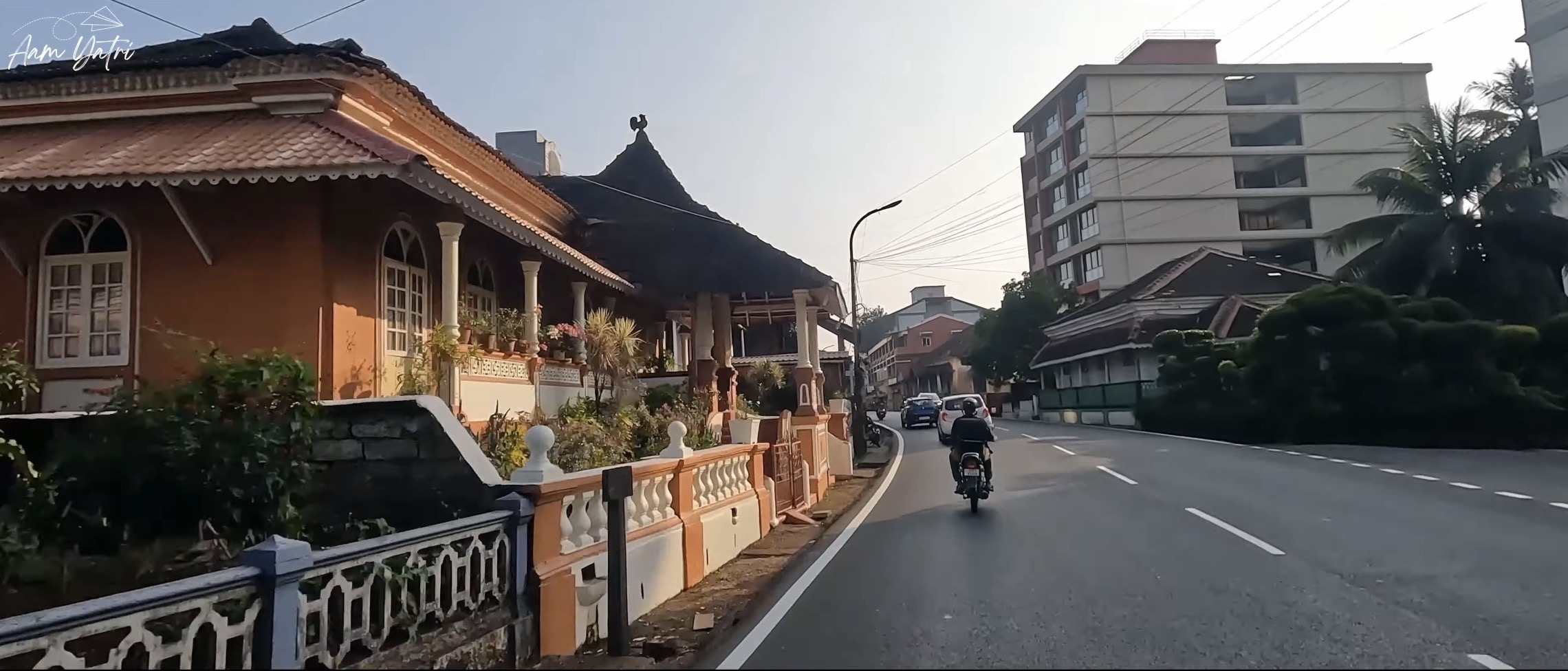
The noise fades slowly — until you notice it’s gone.
The drive to Palolem, roughly sixty kilometres, does not demand attention at first. It is an ordinary road, easy to overlook. But slowly, without any clear moment marking it, the character of Goa begins to change.
Traffic thins. Noise recedes. The landscape opens up.
The sea appears intermittently, never constant but always present. Churches and homes marked by Portuguese influence stand quietly along the roadside, carrying a stillness that contrasts with the pace of the north. It is not a sudden transformation, but a gradual one — the kind that only becomes noticeable once it has already happened.
By the time Palolem is reached, it no longer feels like the same Goa.
First Evening in Palolem
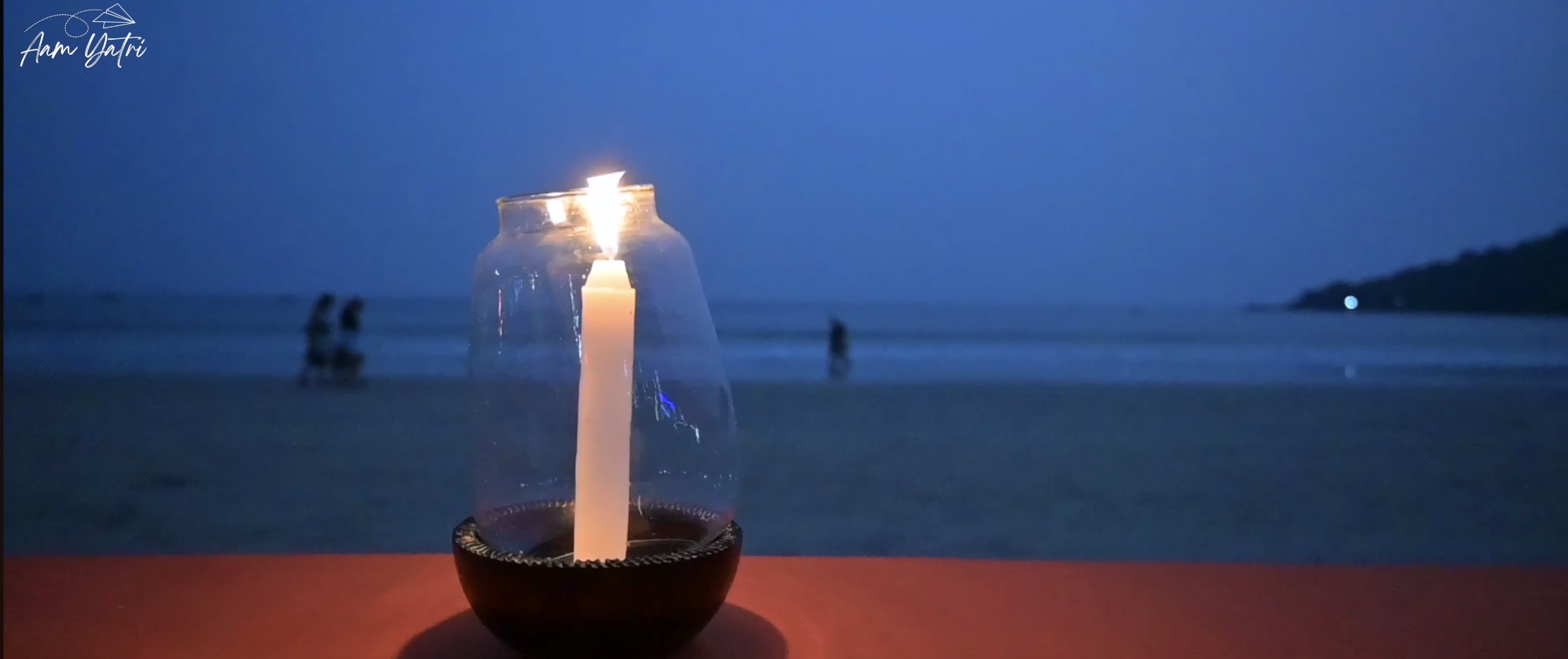
Nothing dramatic. And yet, everything feels different.
Arrival coincides, almost unintentionally, with sunset. The light softens across the shoreline, and the beach settles into a rhythm that feels unhurried. There is movement, but no urgency. Conversations drift rather than dominate, and the space feels open rather than crowded.
Nothing about it is dramatic.
And yet, everything about it feels different.
The first evening does not try to impress. It simply allows you to notice — the colour of the sky changing slowly, the sound of waves settling into a pattern, the absence of noise that usually defines Goa. It is a quiet introduction, but a deliberate one.
Morning by the Water
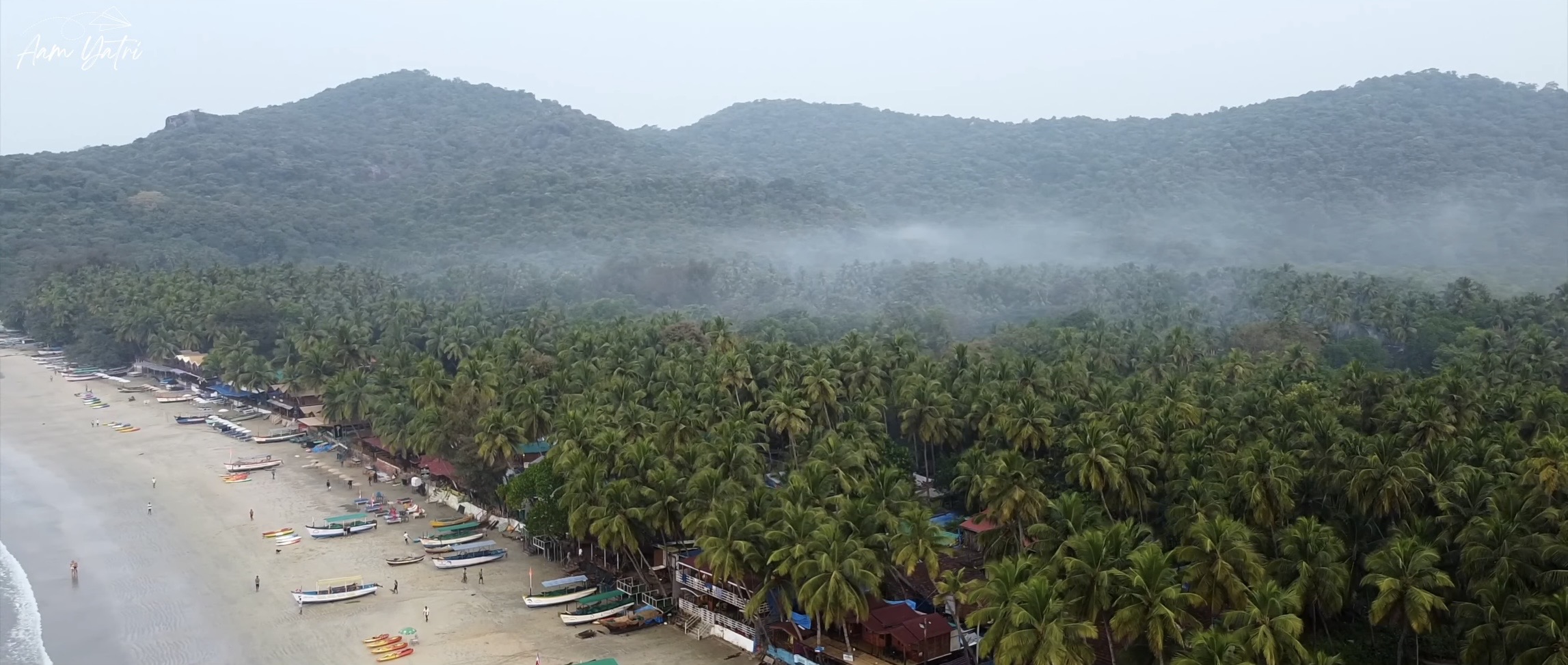
Mornings here don’t begin — they unfold.
Morning in Palolem reveals another layer entirely. The beach feels wider, quieter, and less defined by activity. What makes this stretch of South Goa distinctive is the coexistence of ocean and backwaters, creating a landscape that feels more layered than expected.
Kayaks move slowly across still water, and the shoreline remains largely undisturbed. There is a sense of calm that does not need to be created — it already exists.
It is in these unstructured moments that the place begins to settle in.
The Pause in Between
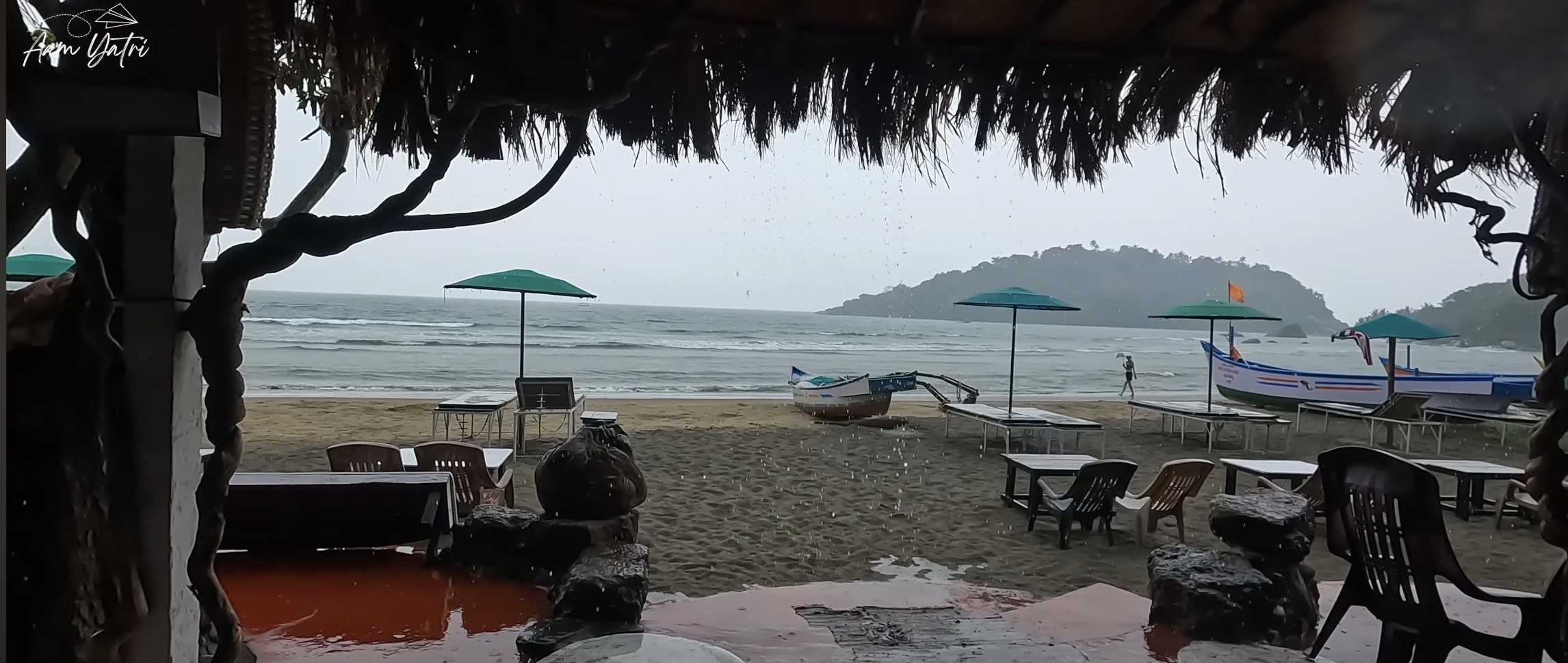
When the rain arrives, time quietly stretches.
Later, a small café by the beach becomes an unexpected pause in the day. The setting is simple, almost incidental, but the experience shifts with the arrival of rain. Not heavy enough to disrupt, but enough to slow everything down.
The beach clears, the horizon softens, and time stretches quietly.
Meals extend without intention. Movement becomes optional. The moment, without trying, becomes complete.
The Boat Ride Along the Coast
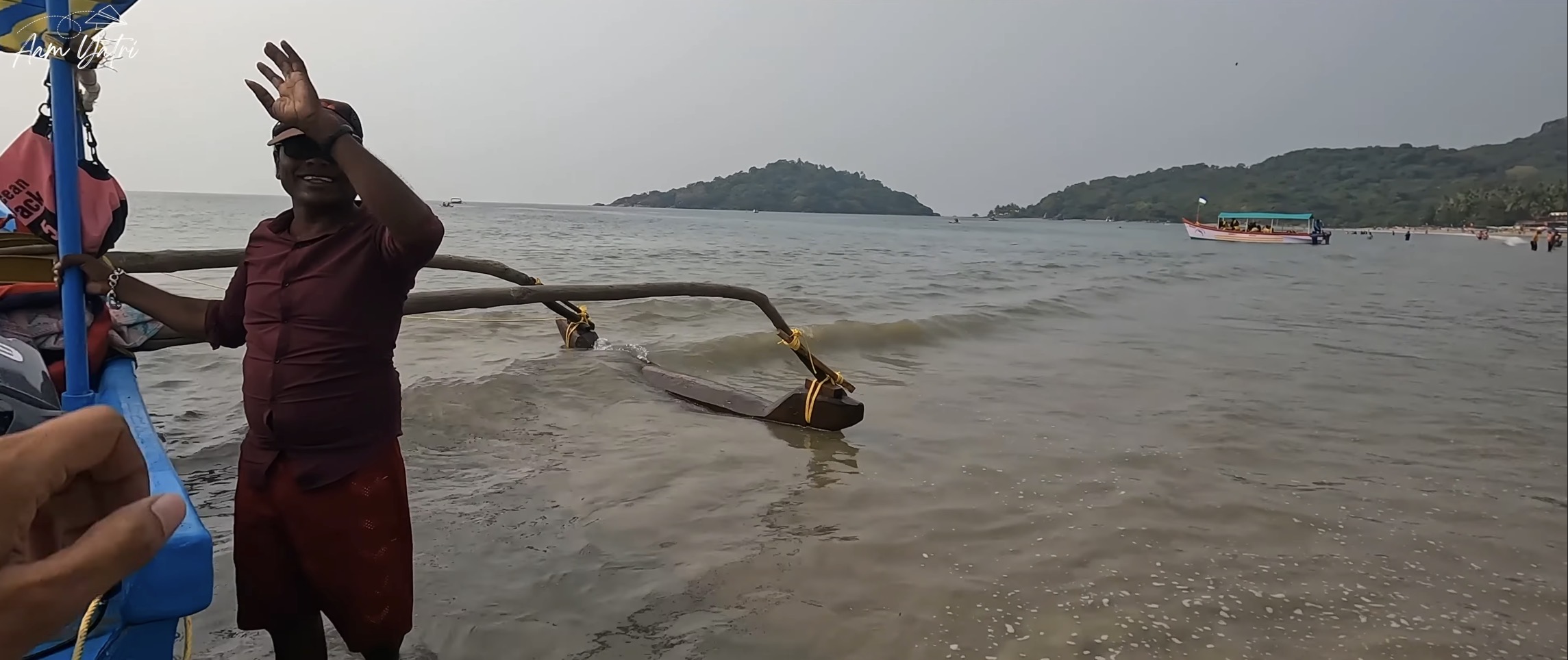
Out here, even time seems to move differently.
As the boat pulls away, Palolem slowly recedes, and with it, the familiarity of the beach. What replaces it is a coastline that feels entirely different when seen from the water. Rocky edges rise sharply, formations appear without symmetry, and stretches of untouched shoreline pass by without interruption.
The movement is steady, rhythmic. The sound of water against the boat, the shifting light, the open horizon — everything begins to settle into a pattern.
Somewhere along the way, the boat slows.
A gesture towards the distance.
For a few seconds, dolphins surface, cutting through the water with a kind of ease that feels almost unreal. They disappear just as quickly, leaving behind only the memory of the moment.
Further ahead, Monkey Island comes into view, followed by formations like Elephant Rock, shaped in a way that feels both accidental and precise. There are glimpses of smaller, quieter beaches along the way — Honeymoon Beach among them — visible, yet distant, as if they exist without needing to be reached.
The ride lasts no more than fifteen to twenty minutes.
But it feels longer.
Not in time — but in experience.
Some journeys are better watched than explained.
A Hidden Cove

Not hidden. Just not hurried.
Butterfly Beach reveals itself slowly, almost as if it prefers not to be approached too directly. Enclosed by hills and rock formations, it sits quietly, separated just enough from the rest of the coastline to feel distinct.
It is no longer completely empty. A few boats anchor near the shore, and small groups move across the sand. Yet, even with this presence, the beach holds onto a sense of distance — not isolation, but separation.
The real shift comes when you move upward.
From the elevated viewpoint above, the entire cove unfolds differently. The curve of the shoreline becomes more defined, the water stretches further than it seems from below, and the surrounding hills frame the space in a way that feels almost intentional.
It is not dramatic in the way popular destinations often are.
It is quieter than that.
And perhaps because of that, it lingers longer.
Beyond the Shore
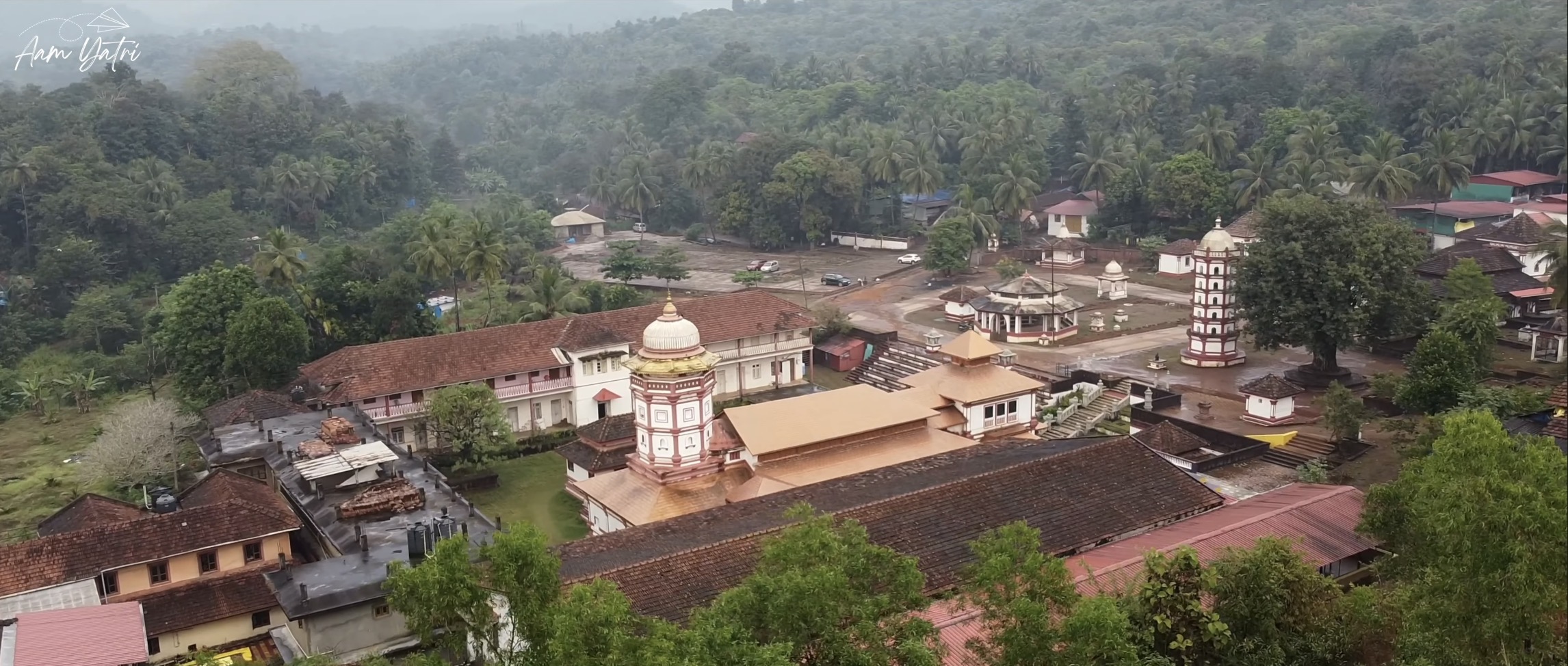
A different kind of silence lives here.
From Palolem, the Mallikarjuna Temple lies roughly ten to fifteen minutes inland, a short distance in terms of travel, but a significant one in experience. The transition is immediate — the sound of waves disappears, replaced by stillness, and the landscape shifts from open coastline to enclosed greenery.
The temple sits within this quiet setting, surrounded by low hills and dense vegetation, carrying a presence that feels older than its surroundings. There is no attempt to draw attention, no sense of spectacle. Instead, there is continuity — a rhythm that has existed long before the movement of tourism around it.
Visitors arrive with intention. They move slowly, speak less, and stay longer. The architecture reflects this same patience — carved details, aged surfaces, and spaces that feel shaped over time rather than constructed within it.
It becomes difficult to connect this place with the Goa most people imagine.
And yet, it is undeniably part of it.
An Empty Shoreline
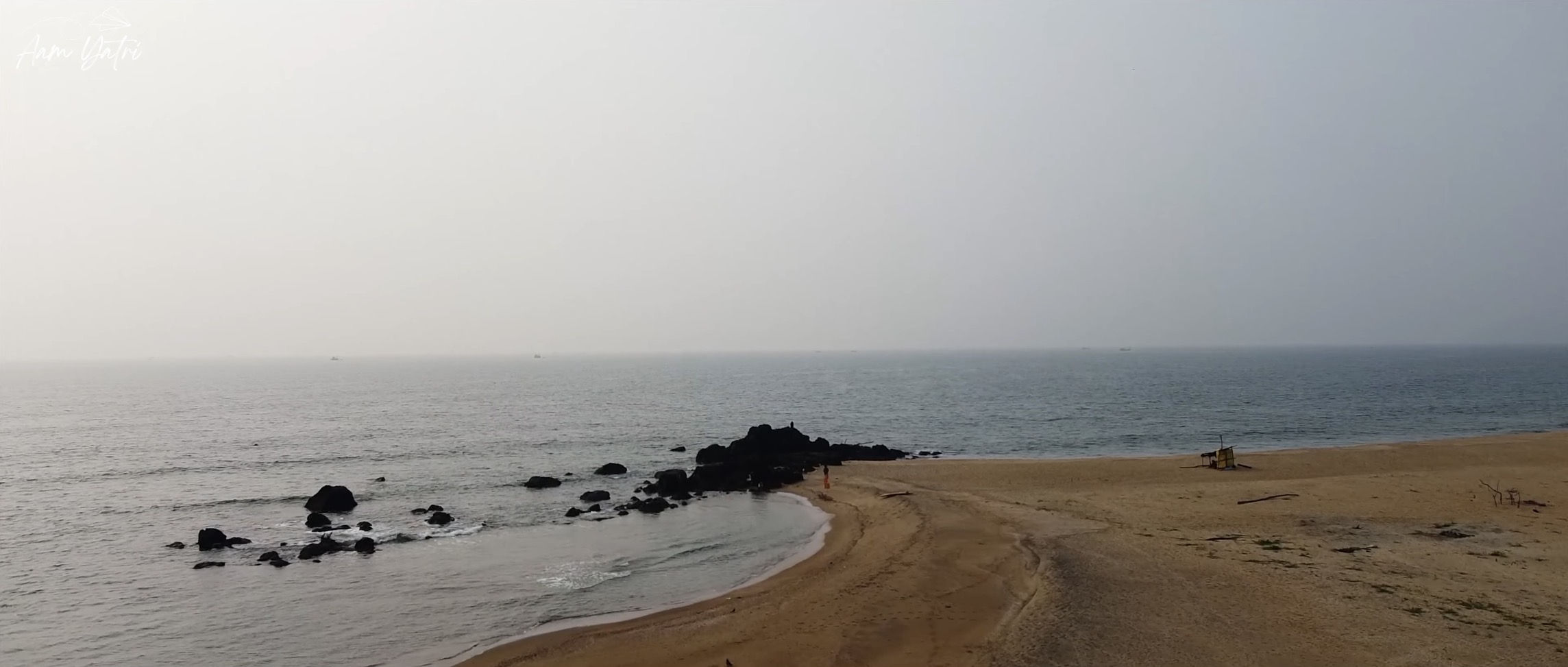
A place that doesn’t add — it takes things away.
By the time Galgibaga is reached, the day has softened again. Located about twenty to twenty-five minutes from Palolem, this stretch of coastline feels removed not just in distance, but in atmosphere.
Unlike Palolem, which balances calm with quiet activity, Galgibaga exists in near absence of both.
The beach stretches wide and uninterrupted. There are few people, little movement, and almost no attempt to shape the experience.
The absence becomes its defining quality.
Walking here feels less like exploration and more like release — from expectation, from pace, from the need to engage. The sound of waves remains constant, the horizon unobstructed.
It is not a place that offers something.
It is a place that removes everything else.
A Different Understanding
Returning to Palolem that evening, the familiarity of the setting contrasts with the shift in perception. The beach is unchanged, yet the experience of it is not.
Perhaps Goa has always contained this quieter dimension, existing alongside its more visible identity. Not hidden, but easily overlooked. Not distant, but requiring a different way of moving through it.
What changes is not the place.
But the pace at which it is experienced.
And in slowing down, even briefly, a different Goa becomes visible — one that does not demand attention, but rewards it.
If this felt like your kind of travel, you’ll find more journeys like this on Aamyatri.