CHITKUL TO KALPA: THE LAST VILLAGE, THE QUIET MOUNTAINS, AND A JOURNEY THAT STAYS
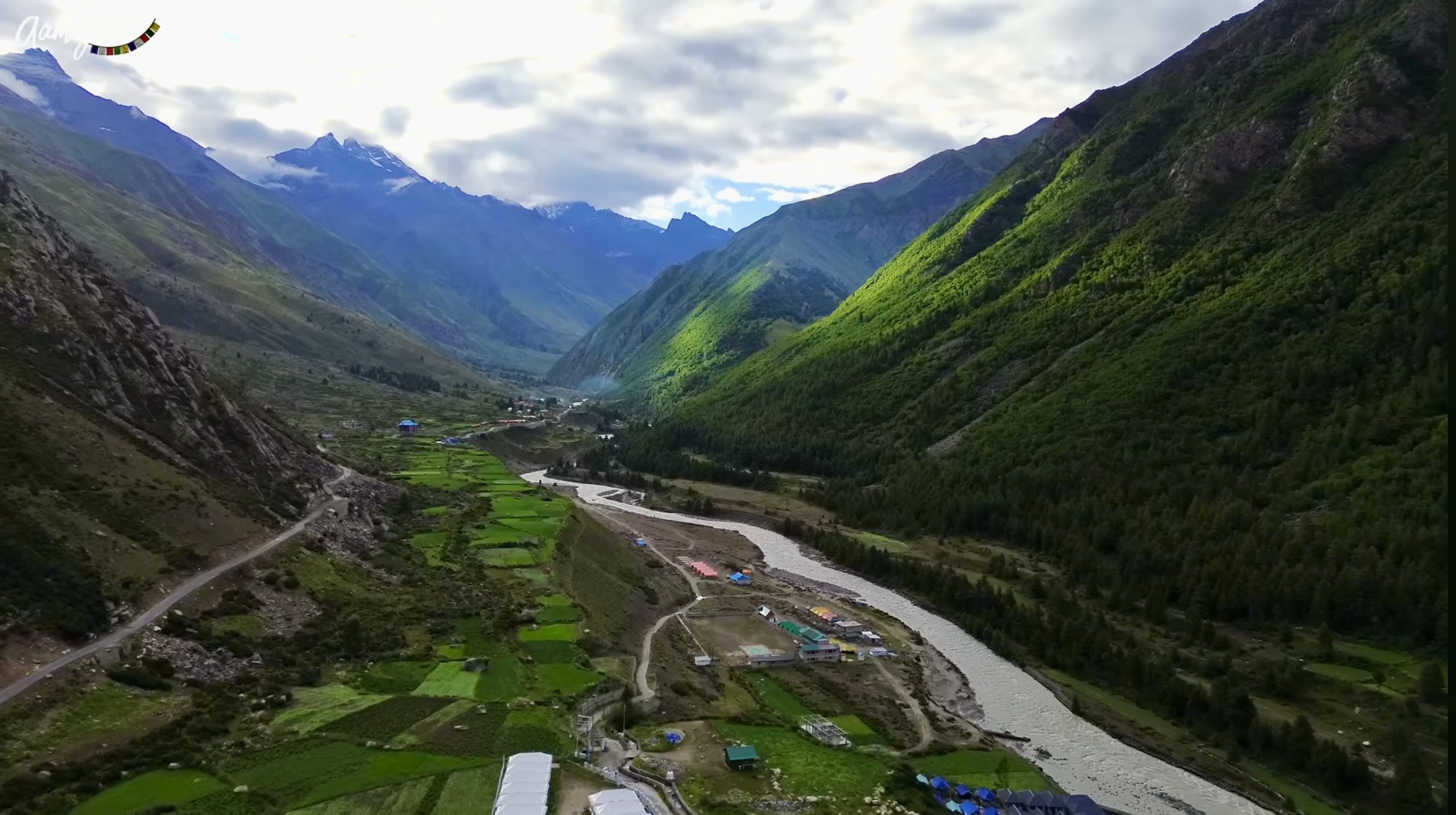
Where the road ends, and something deeper begins.
Rethinking What “Last” Really Means
All of us grow up carrying a silent fear of coming last.
It starts early — in classrooms, in playgrounds, in the small comparisons that slowly shape how we see ourselves. Being last is never celebrated. It is always something to avoid, something to fix, something to run away from.
But somewhere in the higher reaches of Himachal Pradesh, that idea quietly dissolves.
At the edge of India, near the Indo-Tibetan border, lies Chitkul — often referred to as the last inhabited village on the Indian side. And yet, there is no sense of ending here. No feeling of being left behind.
If anything, standing here feels like arriving somewhere meaningful.
Because sometimes, “last” is not about losing the race.
Sometimes, it simply means you have reached as far as the road allows — and beyond that, only silence, mountains, and borders remain.
The Road That Demands Your Attention
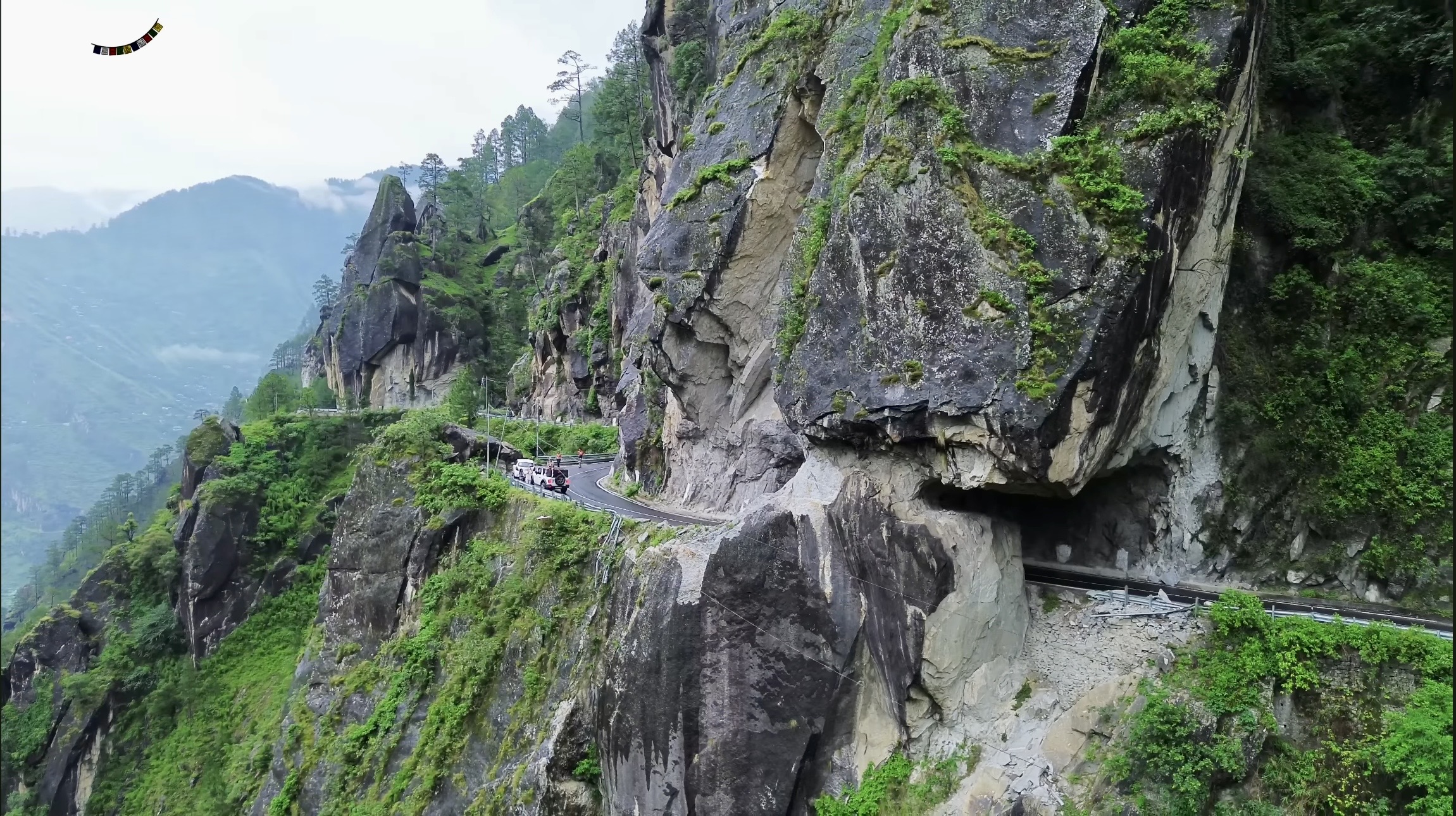
The journey begins from Shimla, but very quickly, it becomes clear that this is not just another mountain drive.
As you move deeper into Kinnaur, the roads narrow, the terrain sharpens, and the comfort of predictable travel disappears. You’re no longer just driving — you’re negotiating with the mountains.
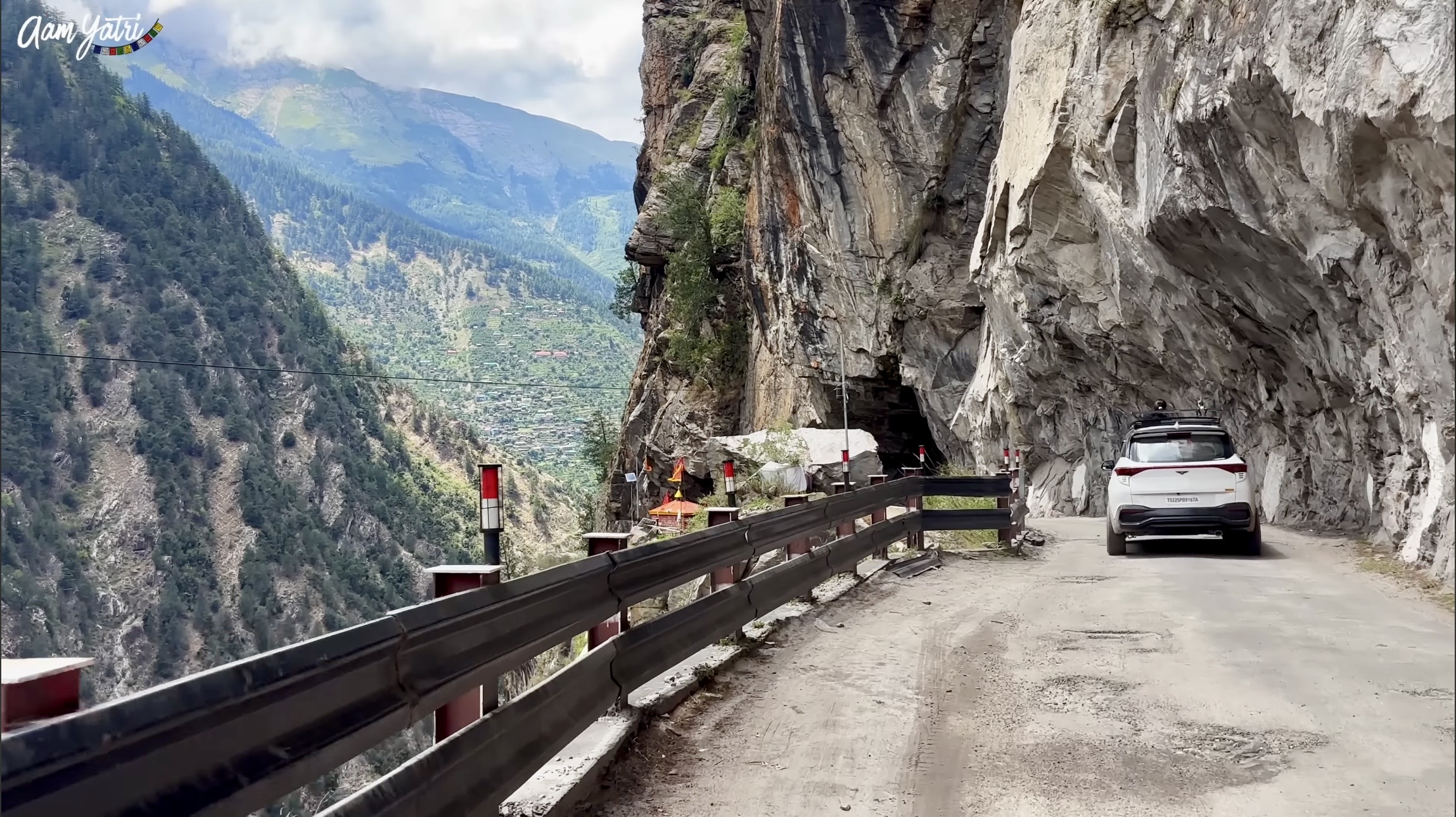
There are stretches where the road is carved directly out of rock, hanging between cliffs and valleys that drop without warning. Landslide zones appear suddenly. Loose stones scatter across the path. At some turns, visibility drops so low that you rely more on instinct than sight.
And yet, there is beauty everywhere.
The Baspa River begins to accompany you like a constant presence — sometimes calm, sometimes aggressive — cutting through the valley with a sound that becomes part of the journey itself. Snow patches appear in the distance. Pine trees line certain sections before slowly giving way to more rugged, barren terrain.
It’s the kind of route where you cannot afford distraction.
And maybe that’s exactly why it feels so real.
Because for once, you are fully present.
Arrival in Chitkul: A Village That Doesn’t Rush
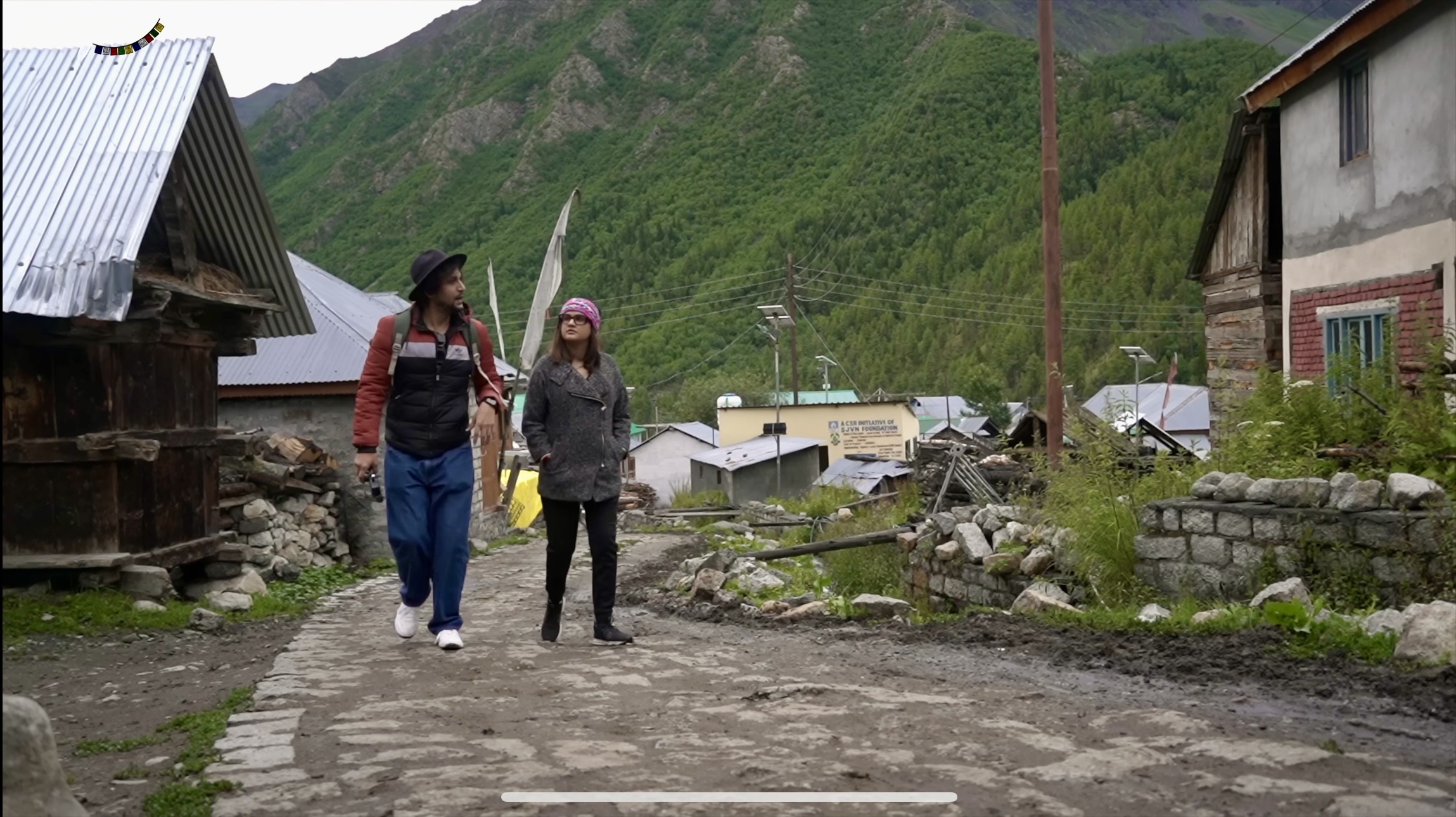
At around 11,319 feet, Chitkul appears almost suddenly — not as a grand entry, but as a quiet settlement resting beside the Baspa River.
There are no dramatic gates or crowded checkpoints.
Just a small village, sitting peacefully where the road decides to stop.
With a population of roughly 600 people and around 100 families, life here is far removed from the pace we are used to. There is no visible urgency. No constant noise. No feeling that something needs to happen next.
Instead, there is space — physical and mental.
The air feels sharper, cleaner. The sound of the river feels louder. Even conversations feel slower, more deliberate.
And in that stillness, you begin to notice details you would otherwise miss.
Homes Built for Survival, Yet Full of Character
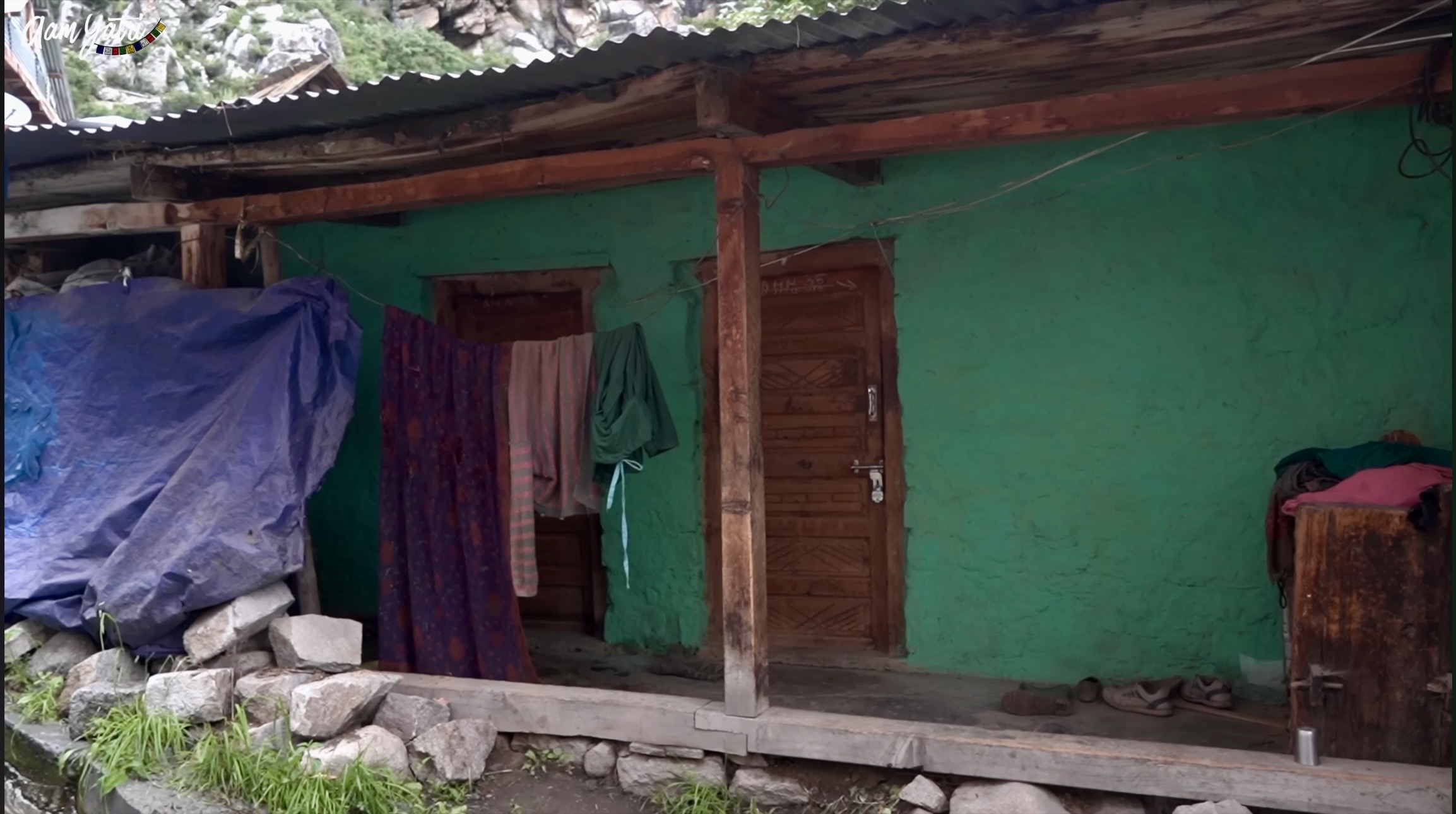
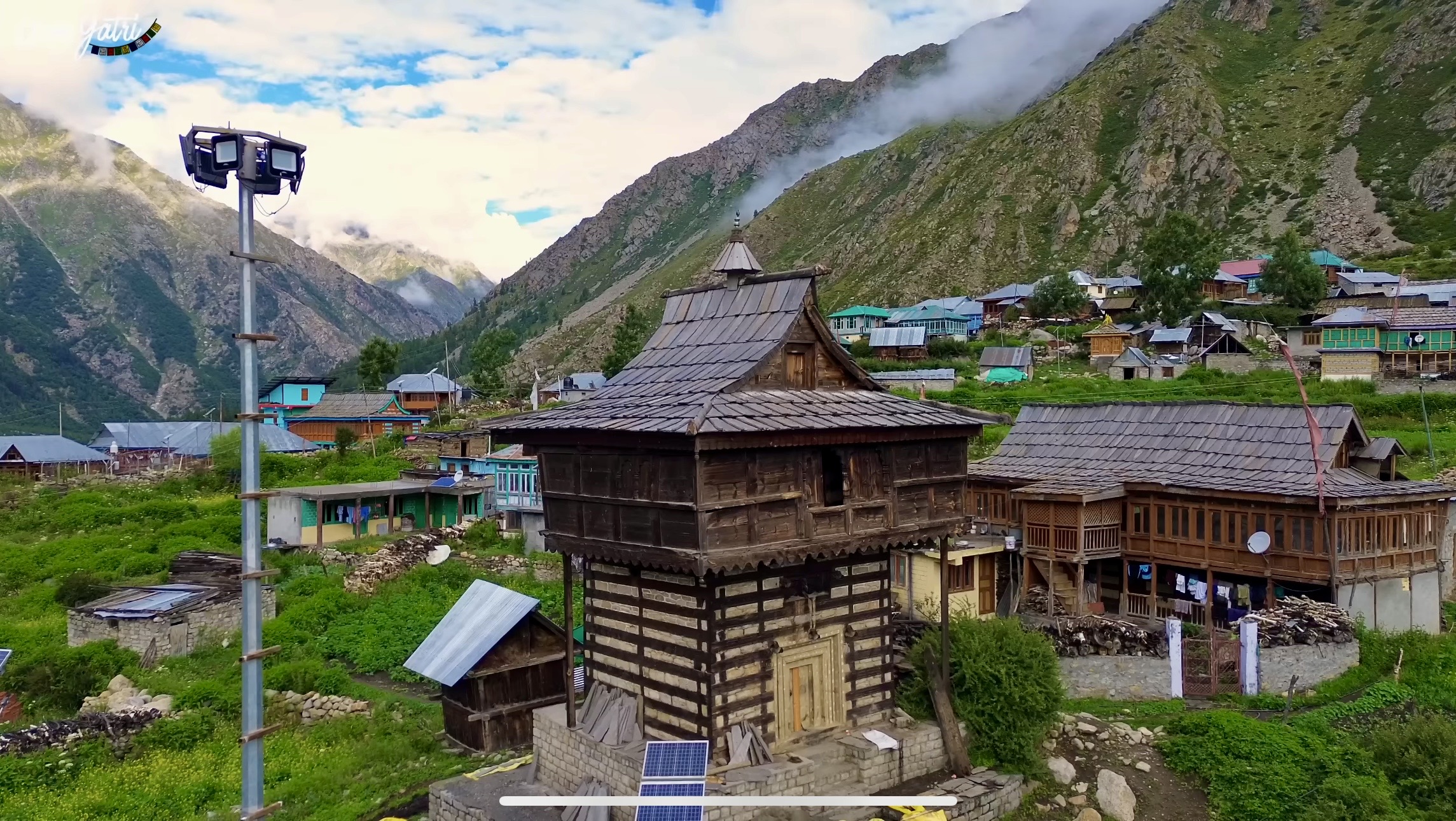
One of the first things that stands out in Chitkul is its architecture.
Most houses are made of wood, often combined with stone, designed specifically to withstand extreme winters. Temperatures here can drop drastically, and survival is not optional — it is a daily requirement.
Wooden interiors trap heat, making homes warmer from within, while slanted metal roofs allow heavy snowfall to slide off instead of accumulating dangerously.
But what makes these houses truly interesting is their individuality.
No two homes look identical.
Some have intricate wooden carvings, others are simpler, more functional. Some feel older, carrying visible marks of time, while others reflect gradual modernization. Together, they create a village that feels organic — shaped not by uniform planning, but by personal need and local wisdom.
The Rhythm of Life in the Mountains
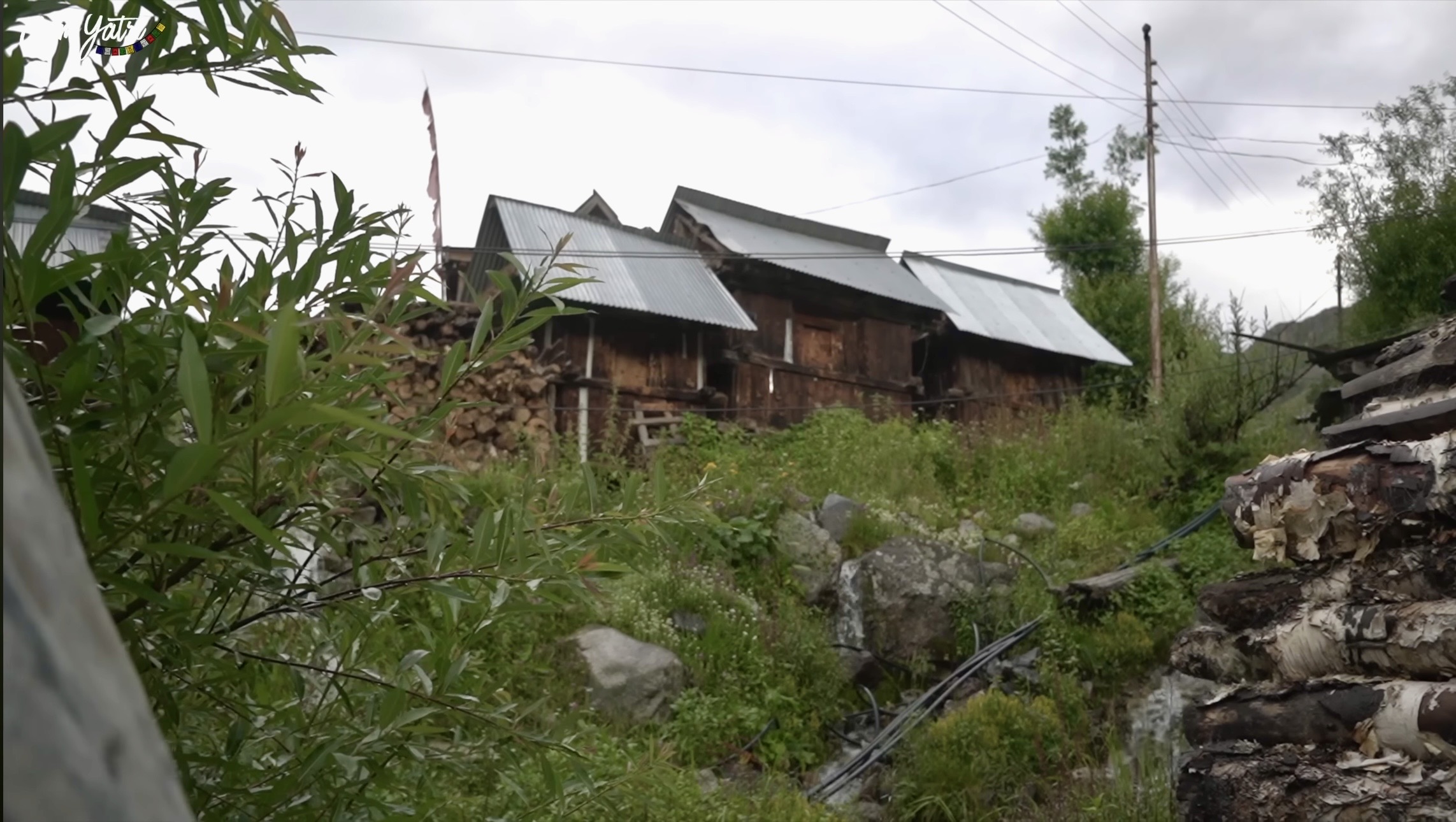
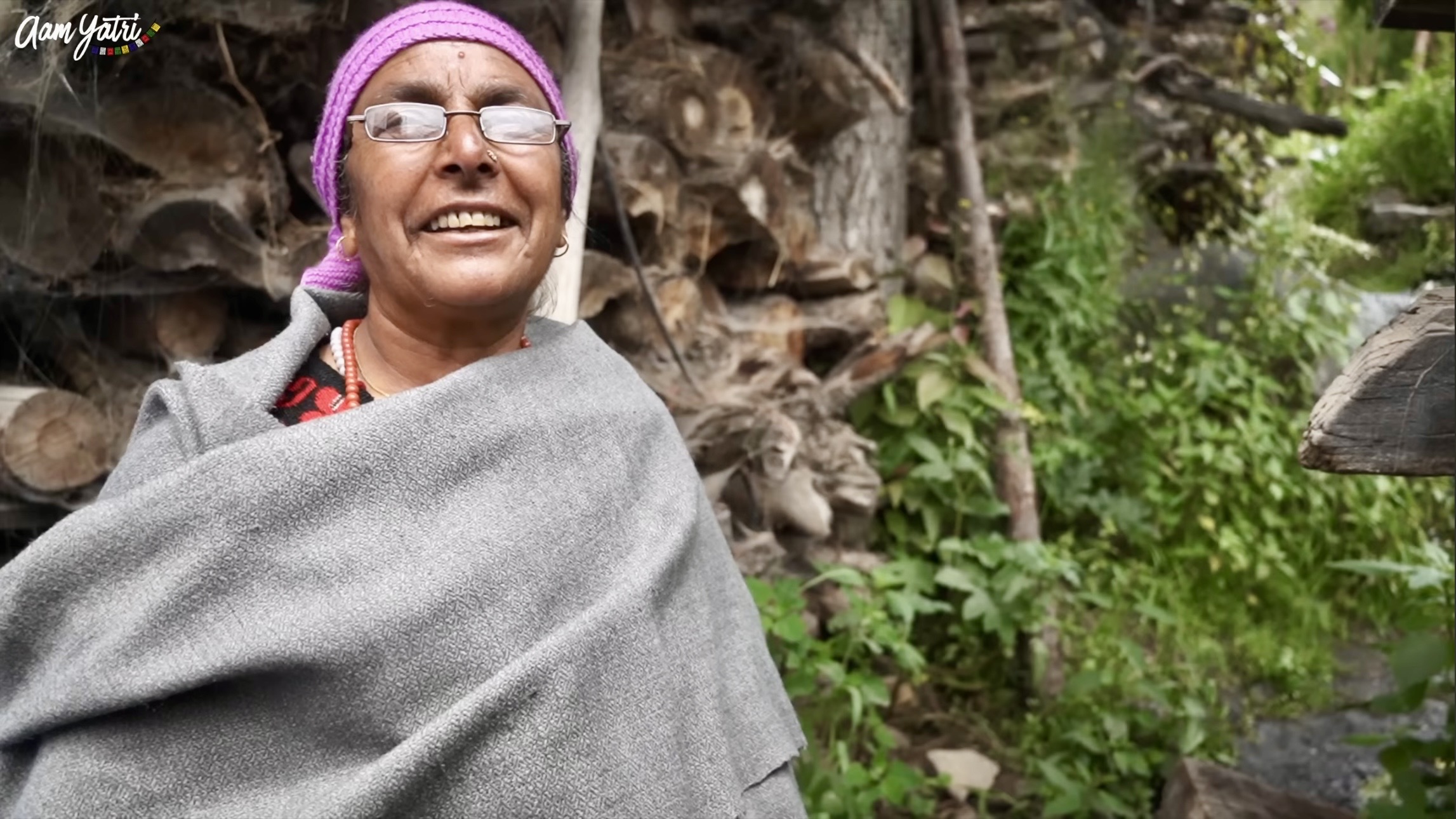
Life in Chitkul is deeply connected to the land.
Agriculture and dairy farming form the backbone of daily existence. Fields are small but carefully maintained. Storage structures made of wood — often raised slightly above ground — protect grains from moisture, snow, and pests.
The cold climate itself becomes a natural preservation system. Insects are rare, and food storage follows methods that have been passed down for generations.
One of the most fascinating sights here is the traditional water-powered flour mill. Using the natural flow of water, these mills grind grains without electricity — a system that feels both ancient and efficient at the same time.
Nothing here feels excessive.
Nothing feels wasteful.
It’s a way of life built on understanding nature, not trying to control it.
Where Faith Coexists Without Conflict
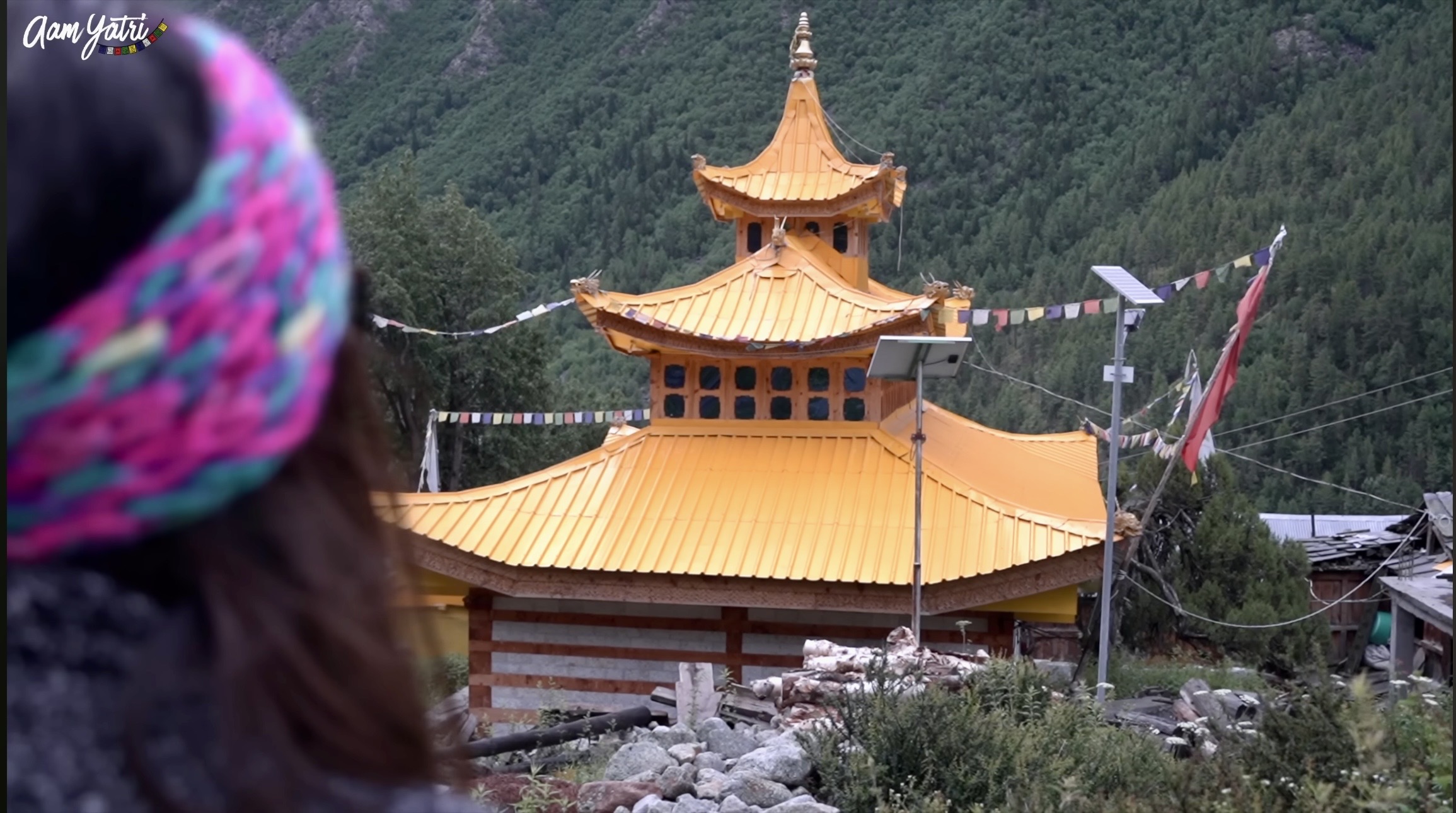
In many parts of the world, religion divides people.
In Chitkul, it seems to quietly bring them together.
The village is home to both Hindu and Buddhist communities, and instead of existing separately, their beliefs overlap in everyday life.
At one end, you’ll find a monastery — calm, elevated, and deeply rooted in Buddhist tradition. Built using Kinnauri architectural elements, it combines wood and stone in a way that feels both strong and simple. From its position, it overlooks the village, almost like a silent guardian.
Not far from it stands the Mathi Devi Temple, dedicated to the village’s presiding deity. This temple is not just a place of worship — it is a center of cultural identity.
Unlike typical tourist-accessible temples, this one follows strict traditions. It remains closed most of the week and opens only during specific rituals, usually on Sundays. During these rituals, selected villagers carry out ceremonies, while outsiders are respectfully kept at a distance.
It’s not about exclusion.
It’s about preserving something sacred.
And when you witness that from afar, you understand that not every experience needs to be consumed to be meaningful.
The Warmth of People in a Cold Place
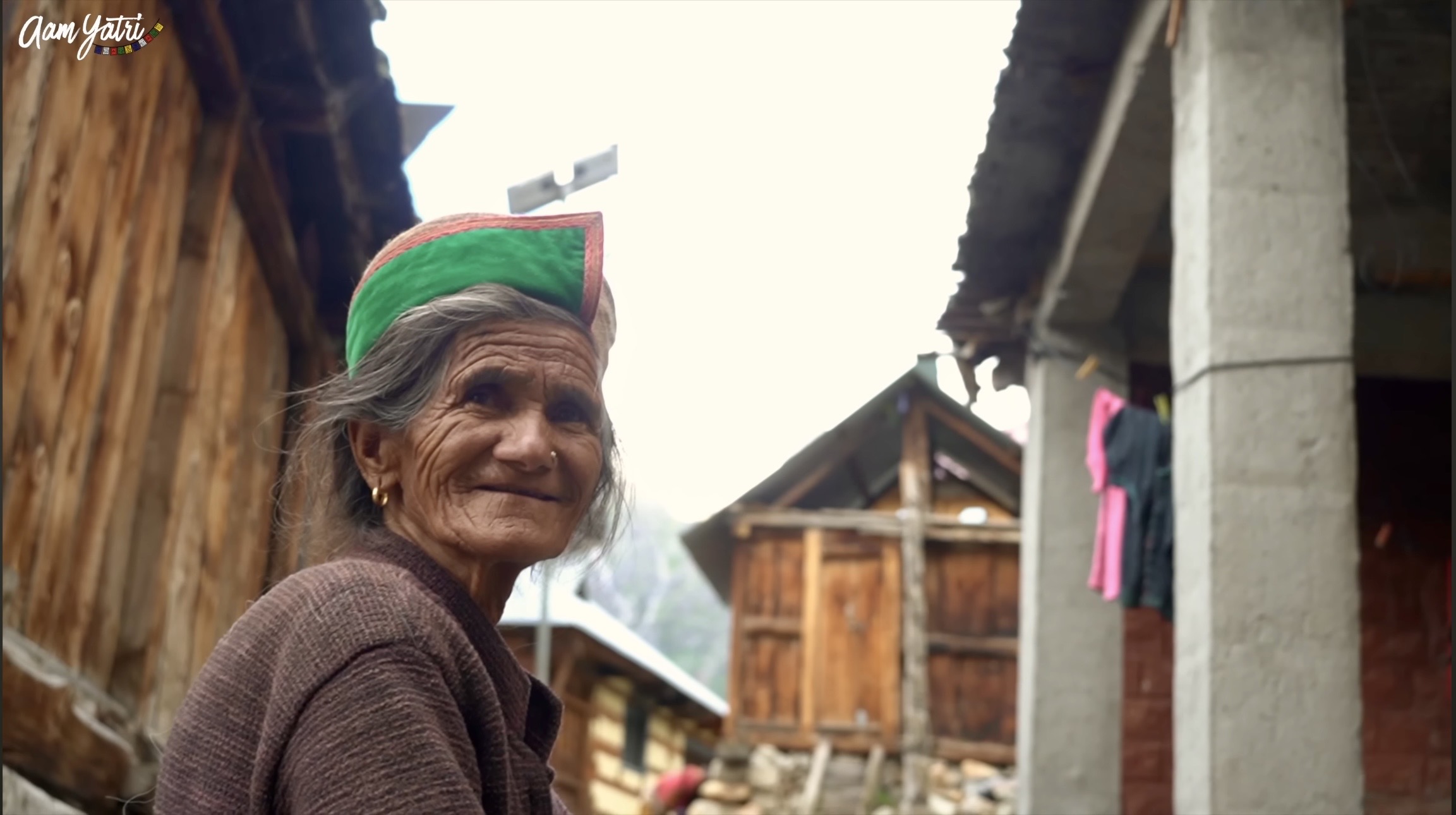
Despite the harsh climate, the warmth of the people here stands out immediately.
There is no forced hospitality, no rehearsed friendliness. Conversations happen naturally — whether it’s a quick exchange about the weather or a deeper interaction about life in the village.
You don’t feel like a customer here.
You feel like someone who has been accepted, even if only for a short while.
And that feeling stays.
Food That Feels Honest
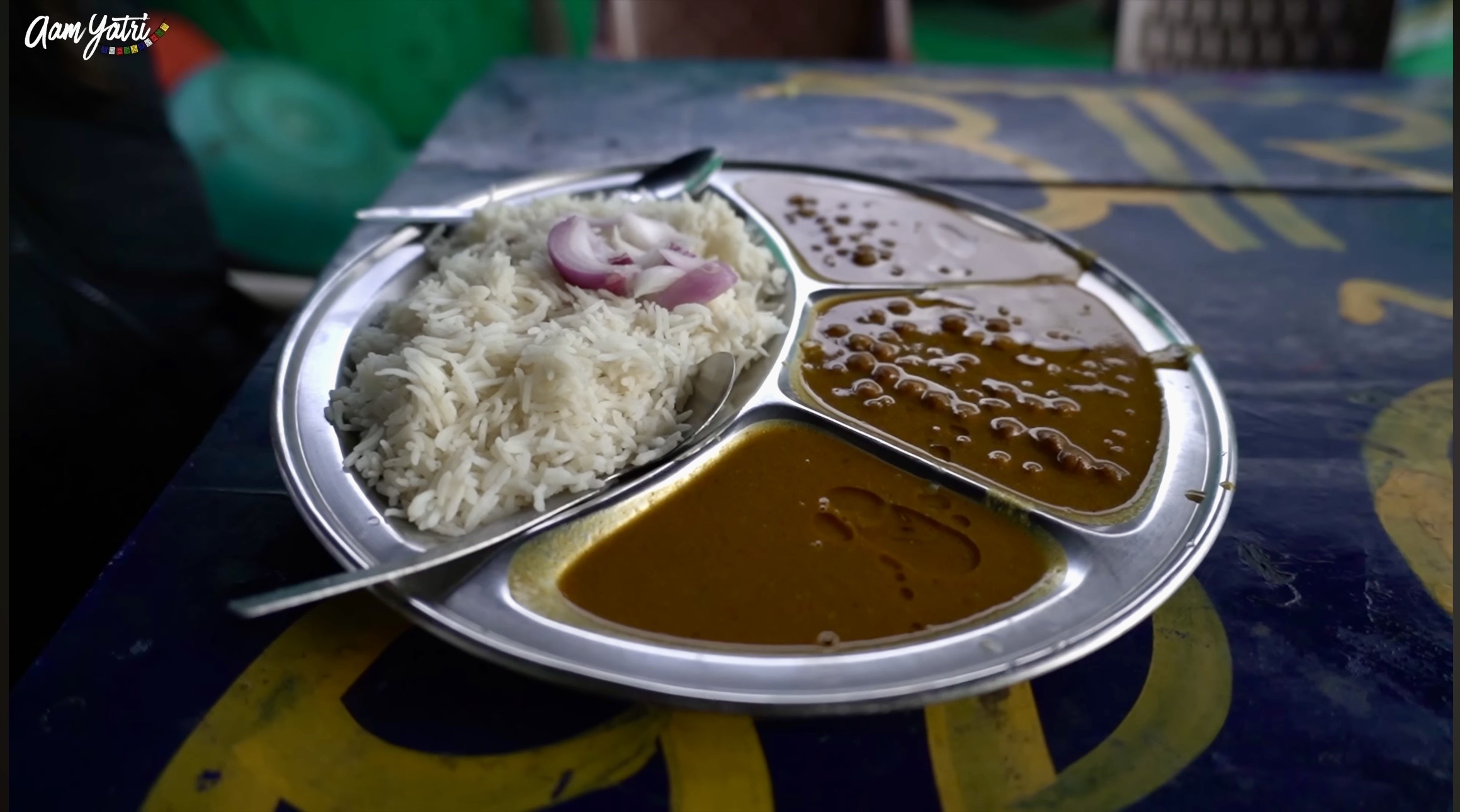
Somewhere in Chitkul lies a small yet famous spot — often called the “last dhaba of India.” Over the years, it has been visited by travelers from across the country, including a few familiar celebrity names.
But what makes it special is not its popularity — it’s its simplicity.
A plate of rajma chawal here doesn’t try to impress you. It doesn’t come with presentation or variation. Yet, the taste feels complete.
Maybe it’s because everything here is closer to its source.
Maybe it’s because nothing is rushed.
Or maybe, it’s because you’re finally eating without distraction.
Leaving Chitkul, Carrying Its Silence
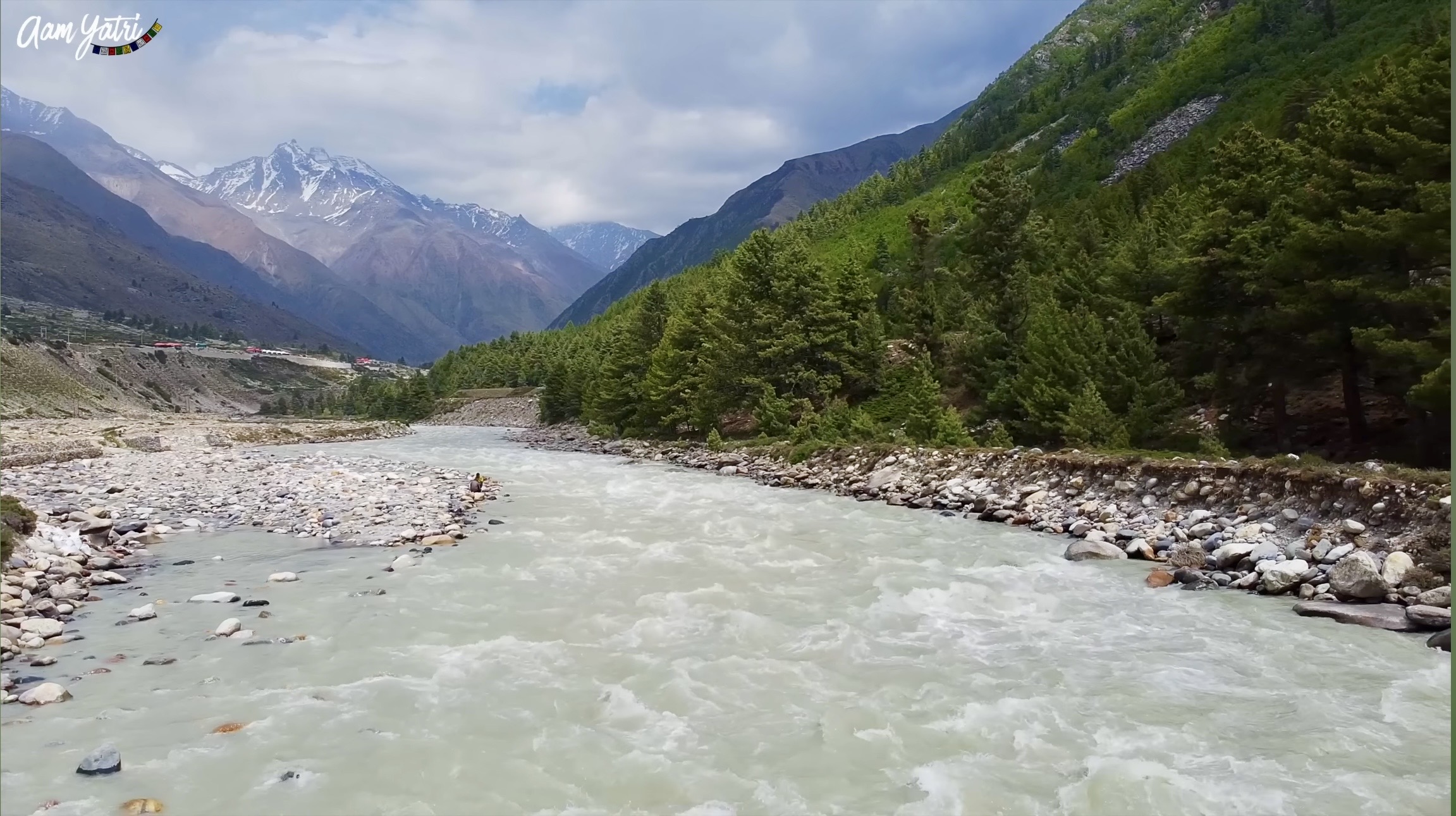
Leaving Chitkul doesn’t feel like checking off a destination.
It feels like stepping away from something you hadn’t realized you needed.
The road continues, and with it, the journey moves forward — towards Kalpa, roughly 70 kilometers away.
But something within you stays behind.
Kalpa: Where the Mountains Take Over
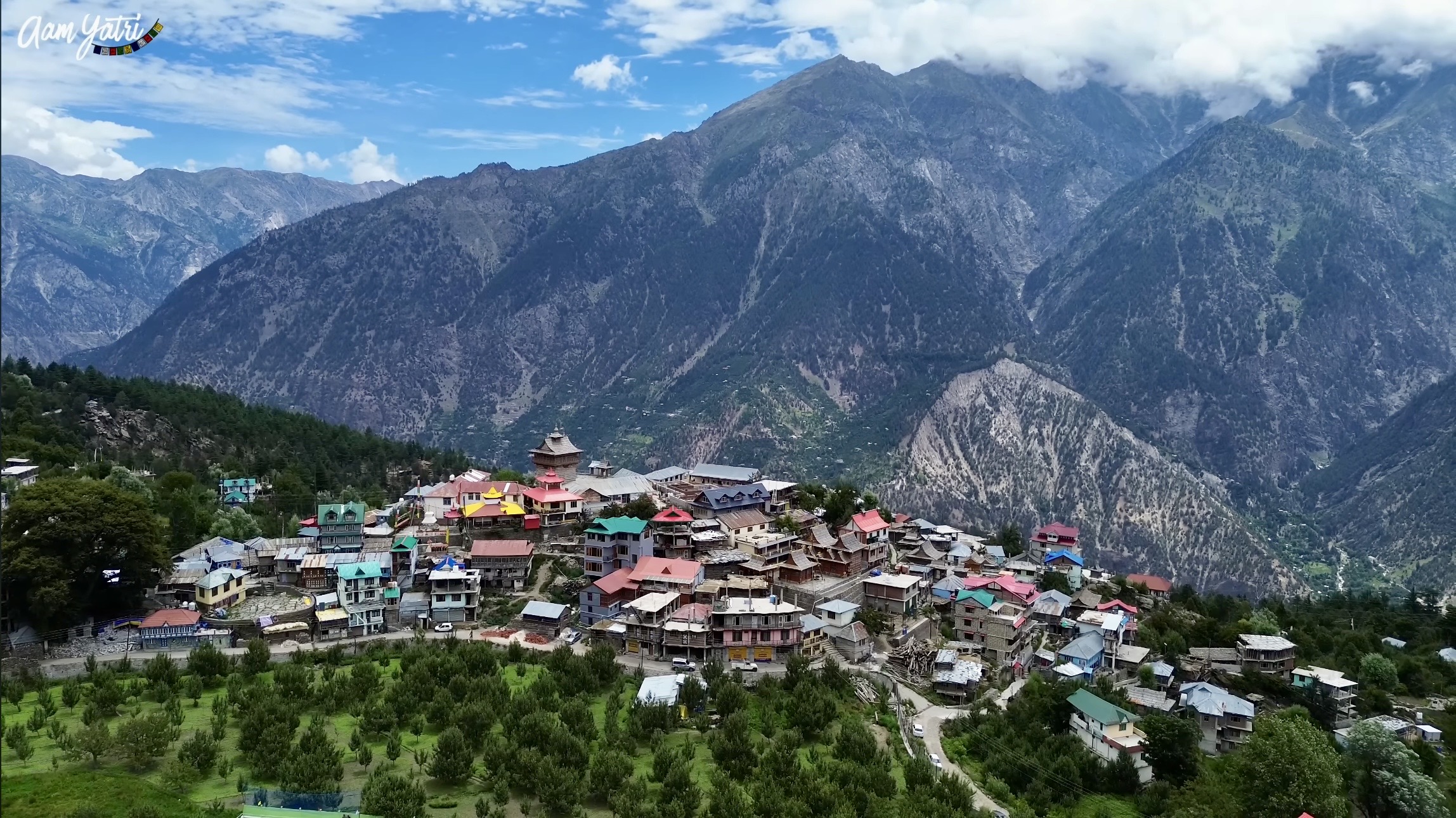
If Chitkul is about stillness and simplicity, Kalpa is about scale and presence.
Situated at around 9,711 feet, Kalpa opens up to one of the most breathtaking views in the entire Kinnaur region — the Kinner Kailash range.
Unlike distant mountain views that fade into the background, these peaks dominate your field of vision. They are impossible to ignore.
The Shivling peak, rising above 20,000 feet, stands as both a natural wonder and a spiritual symbol. It changes color with light — from soft gold in the morning to sharp white under the sun, and eventually fading into shadow by evening.
And no matter where you stand in Kalpa, the mountains are always there.
Watching. Waiting. Existing.
A Place Where History Feels Alive
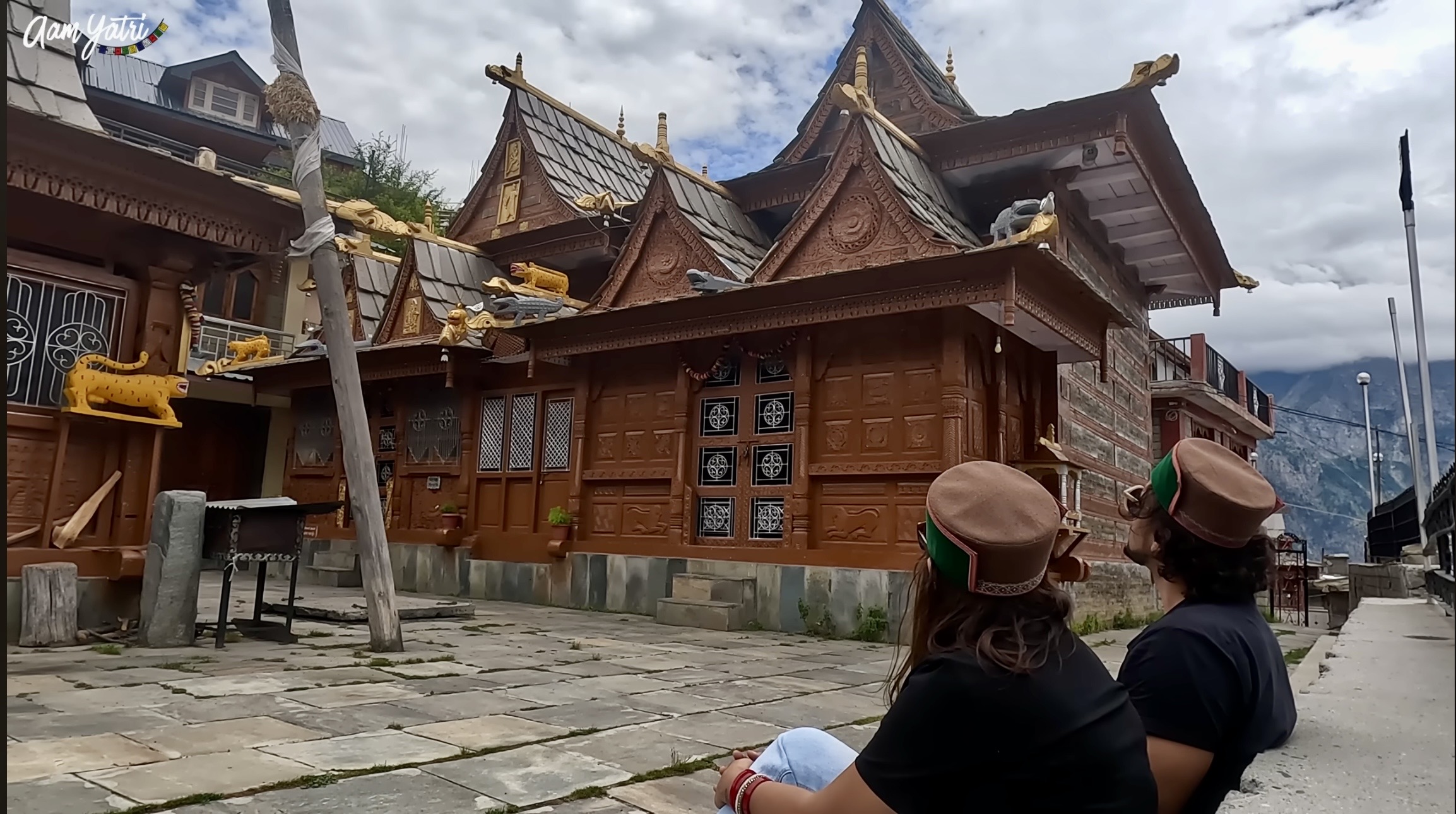
Kalpa carries layers of history that go beyond what you see.
The Narayan Nagini Temple, believed to be centuries — possibly even thousands of years old, reflects a blend of Kinnauri and Tibetan architectural styles. Wooden carvings, intricate designs, and the overall structure speak of a time when craftsmanship was deeply connected to belief.
There are stories that the Pandavas once visited this region during their exile. Whether myth or memory, the story fits perfectly into the landscape.
Because Kalpa doesn’t feel like a modern place trying to preserve history.
It feels like history that never left.
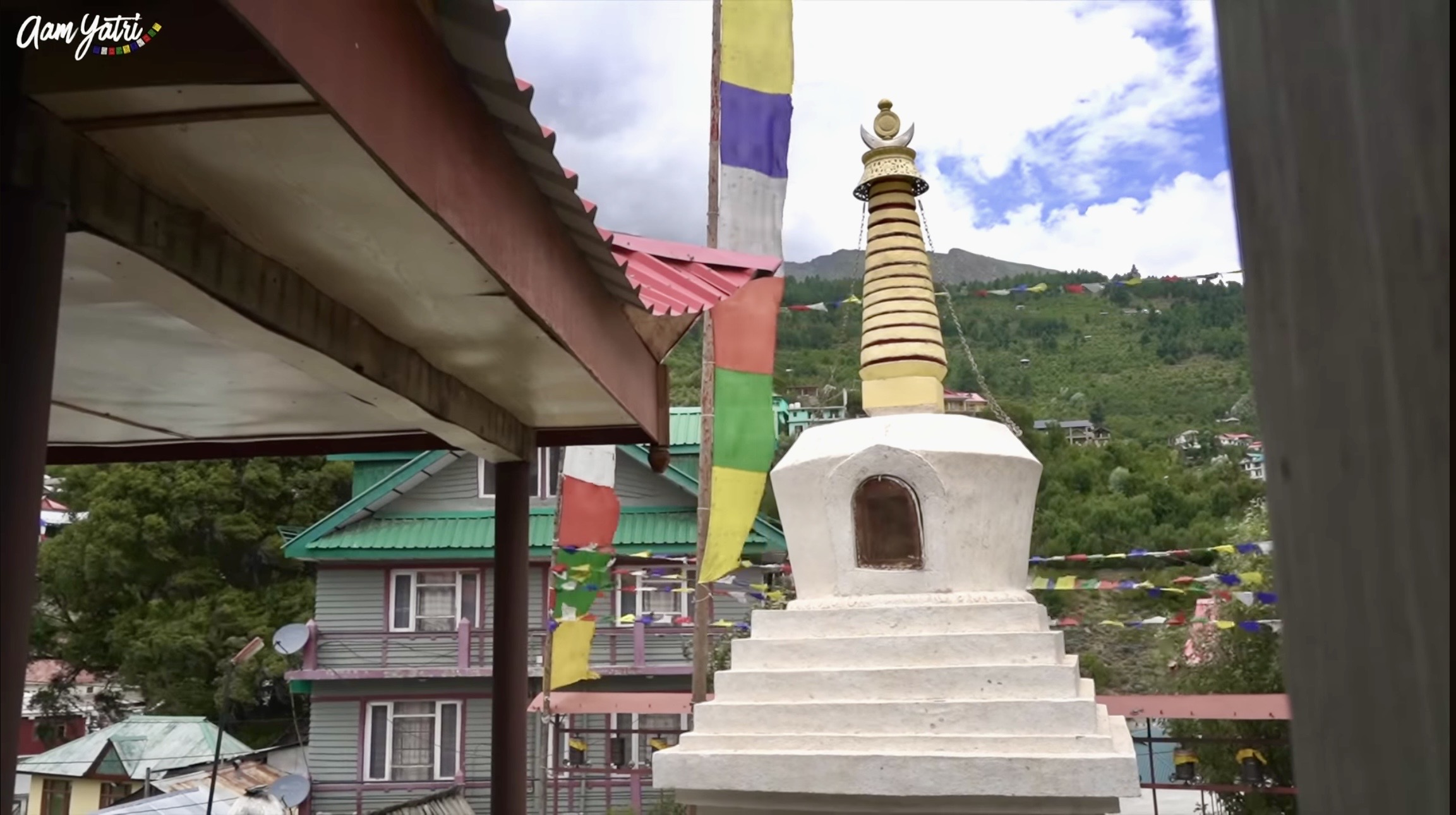
Nearby, a monastery adds another layer to this cultural blend — once again showing how seamlessly Hinduism and Buddhism coexist in this region.
Beauty That Comes With Responsibility
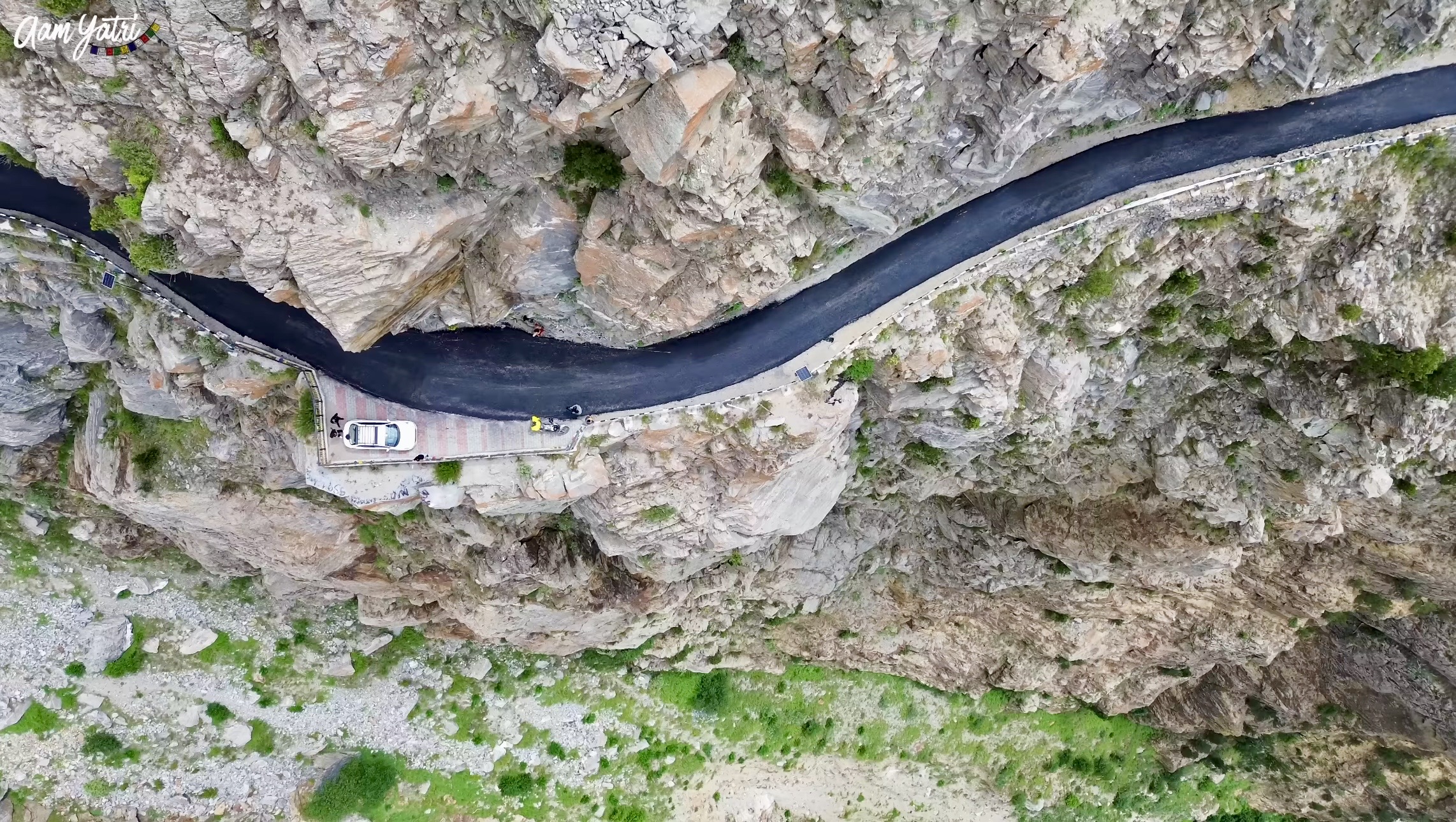
A short distance from Kalpa lies a viewpoint often referred to as Sunrise Point.
Reaching it is easy — a short drive or a small trek.
But standing there is something else entirely.
The view is vast, open, and overwhelming. The kind that makes you pause without needing a reason.
But alongside that beauty comes risk. The cliffs are steep, the terrain unstable, and the margin for error is almost zero.
And yet, what stands out the most is something unexpected — names carved into rocks.
In a place that has existed for centuries, untouched and complete, these marks feel unnecessary.
It raises a quiet question:
Why do we try so hard to leave a mark…
in places that were never meant to be altered?
The Journey That Stays With You
Chitkul and Kalpa are not just destinations on a map.
They are experiences that shift something within you.
They make you question ideas you’ve always believed — like what it means to be last, what it means to live simply, and what it means to truly experience a place.
Because somewhere between dangerous roads, quiet villages, ancient temples, and towering peaks…
you begin to understand that travel is not just about reaching somewhere new.
It’s about seeing something differently.
And sometimes, the most meaningful places are the ones at the very end of the road.