Kuala Lumpur Travel Guide 2026: Four Days in Malaysia’s Most Vibrant City
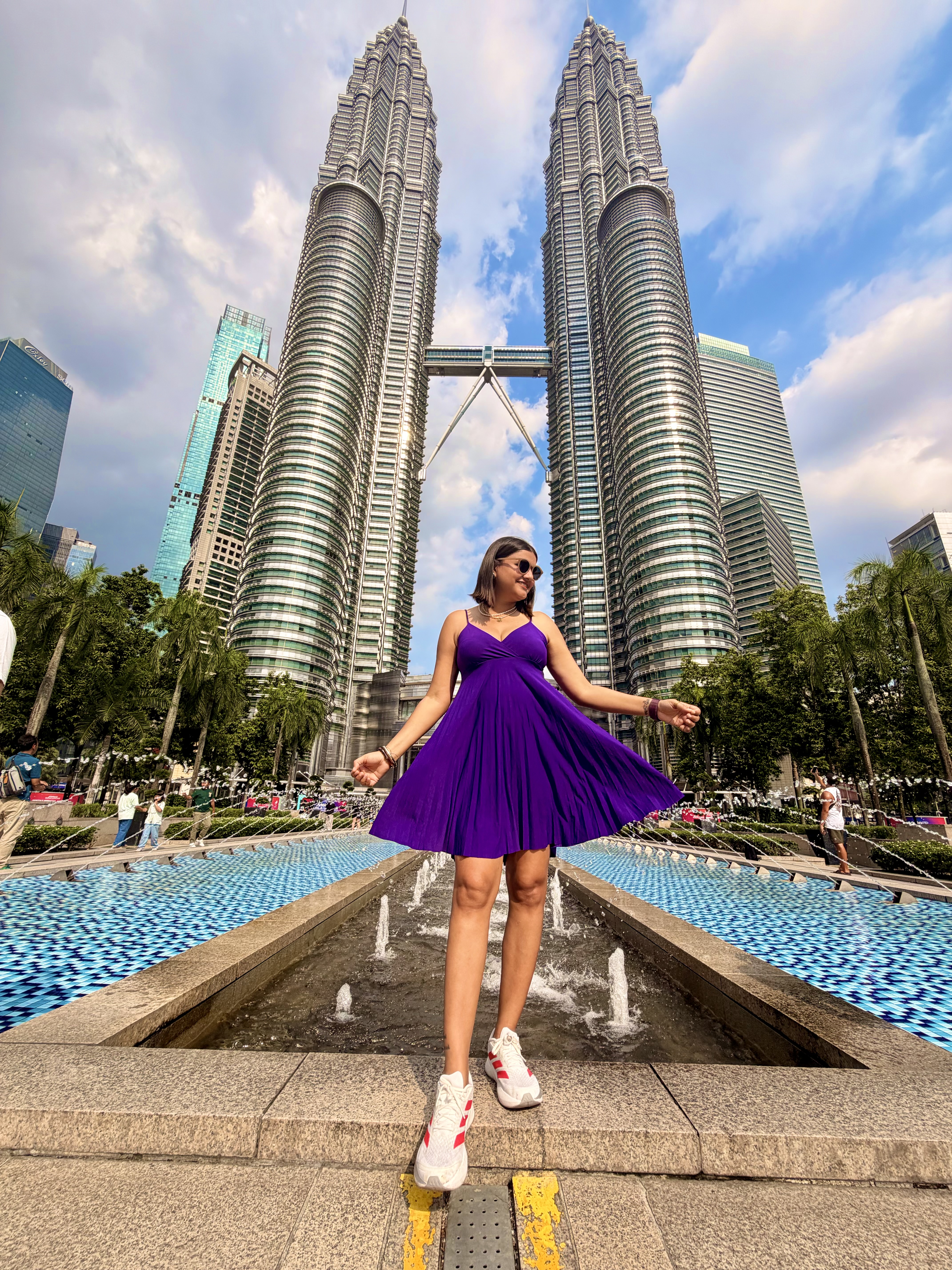
This is Kuala Lumpur — one of the most iconic cities in Southeast Asia, and the first stop on our Malaysia journey. We had four days to explore the city, and instead of treating it like a checklist of tourist attractions, we wanted to understand what actually makes Kuala Lumpur feel different. Malaysia has always carried the famous identity of being “Truly Asia”, and after spending a few days here, I started to understand why that line works so well. Kuala Lumpur is modern and polished in one moment, chaotic and colourful in the next, and then suddenly you find yourself standing in a neighbourhood that feels completely different from the skyscrapers you had just been looking at.
Our Malaysia trip was partly born out of the weather back home. May and June in India can get seriously hot, and while places like Himachal Pradesh are usually an obvious escape, the roads can become so crowded with cars during the season that the idea of a peaceful mountain break starts becoming slightly less peaceful. So we decided to look outside India instead and eventually found ourselves flying from Delhi to Kuala Lumpur. What followed was four days of skyscrapers, temples, caves, street food, shopping streets, hill stations, Chinese neighbourhoods, Indian food and a city that constantly changes its personality depending on which road you turn into.
This is not one of those Kuala Lumpur travel guides where every attraction gets two lines and a tick mark. This is our actual four-day experience — what we saw, what surprised us, what we ate, what we paid approximately during our trip, which places were genuinely worth visiting and which moments stayed with us long after we left. If you are planning a Kuala Lumpur trip, especially as an Indian traveller, I hope this gives you a much better idea of what the city actually feels like.
ARRIVING IN KUALA LUMPUR — THE JOURNEY STARTS AT KLIA
For Indian travellers, Malaysia can be a relatively straightforward international destination, but immigration and entry requirements can change, so it is always important to check the latest official rules before travelling. During our trip, the process was quite simple, and the most important thing was making sure the required digital arrival information had been completed before entering the country. Once the formalities were done, the next question was much more practical — how do you get from Kuala Lumpur International Airport to the city without spending a ridiculous amount of money?
There are several ways to make the journey from KLIA to Kuala Lumpur. The cheapest option we found was the airport bus, which cost around RM15 per person, roughly ₹360 at the exchange rate we were getting during the trip. The bus stand is easy enough to reach from the airport, and if your priority is saving money, this makes a lot of sense. A Grab or taxi can be considerably more expensive, around ₹1,600–₹1,700 depending on the circumstances, while the airport train is another faster but more expensive option at roughly ₹1,000 per person. For us, the bus was the obvious choice because there was no reason to spend several times more when we were not in a hurry.
We also sorted out our local SIM before heading into the city. We booked it through Klook and collected it from the counter at Kuala Lumpur airport. It cost us around ₹500 and came with approximately 40GB of data and 14 days of validity. Having mobile data from the moment you leave the airport makes the first few hours of an international trip much easier — especially when you are using Grab, checking maps, translating things or simply trying to figure out which side of the road you are supposed to walk towards.
PETRONAS TWIN TOWERS — THE HEARTBEAT OF KUALA LUMPUR
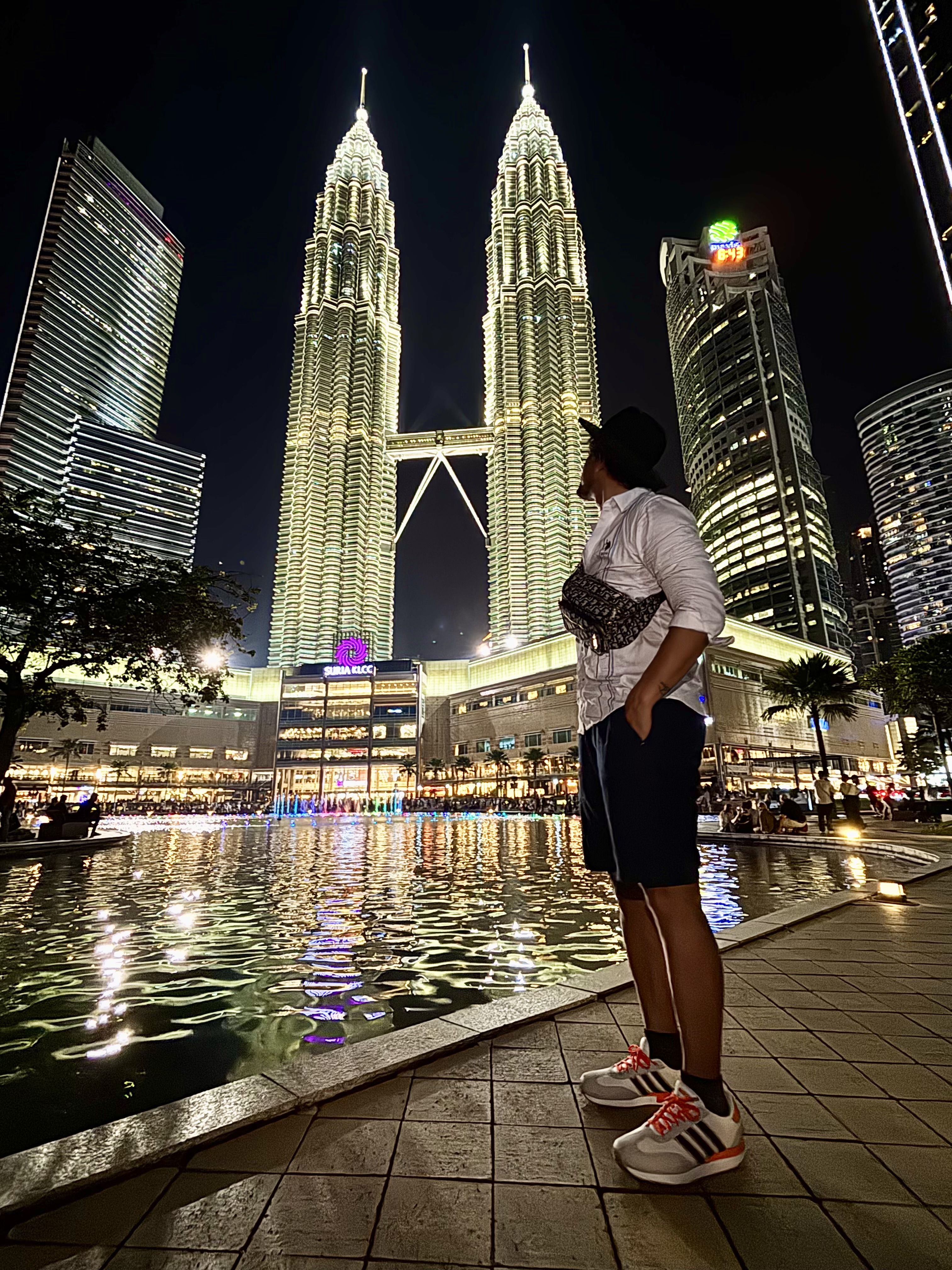
If there is one image that immediately comes to mind when someone says Kuala Lumpur, it is almost certainly the Petronas Twin Towers. Standing at 451.9 metres, these twin skyscrapers dominate the KLCC skyline and have become much more than just office buildings. They are the visual identity of Kuala Lumpur. The towers were completed in the late 1990s and, for a period, held the title of the world’s tallest buildings. Their architecture also carries a distinctly Malaysian identity, with Islamic-inspired geometric patterns incorporated into the design rather than simply creating another generic glass skyscraper.
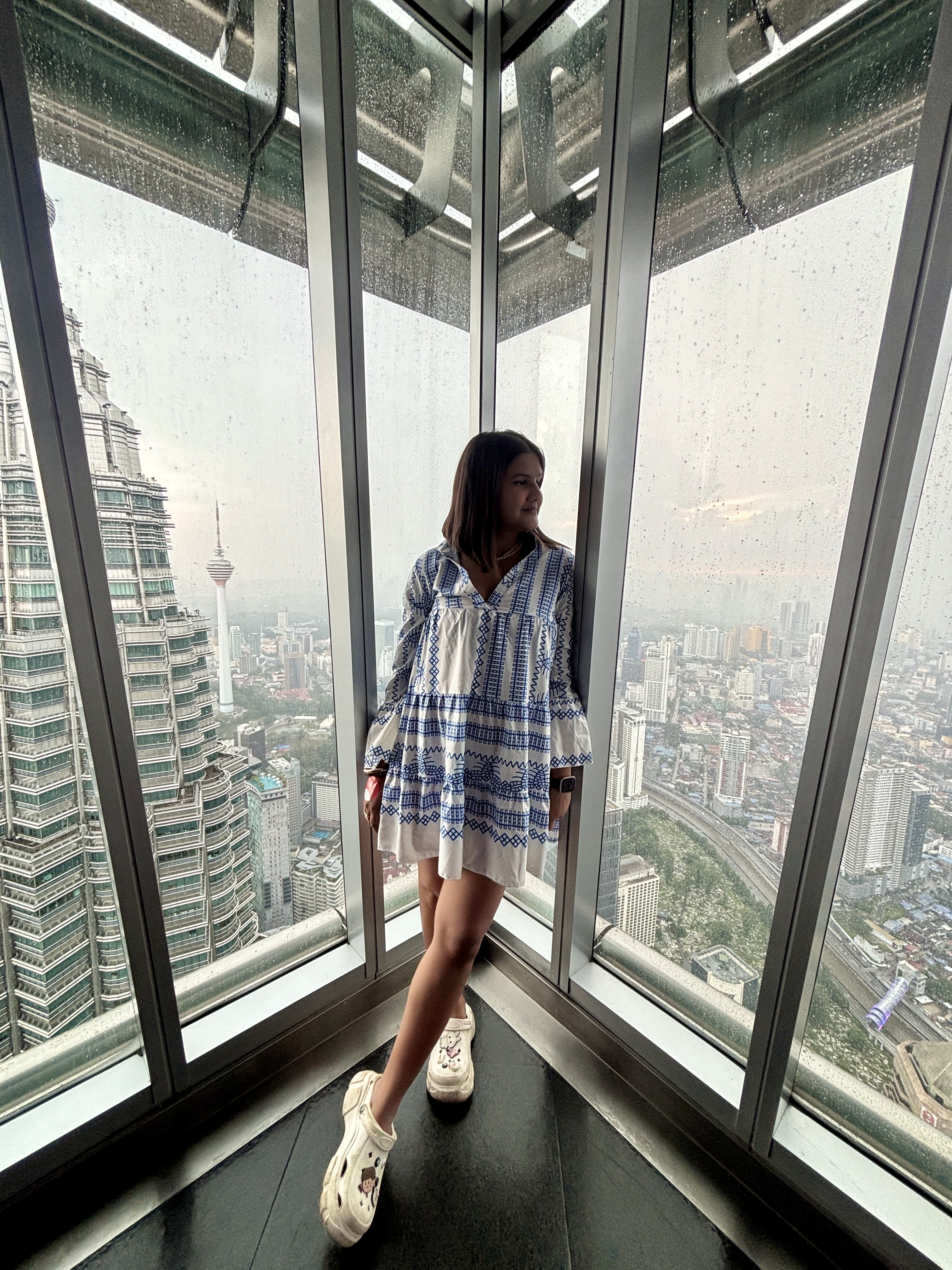
We decided to go up to the 86th floor, and honestly, before visiting, I was not completely convinced that spending money on a ticket to go inside a skyscraper was going to be worth it. You can see the towers from almost everywhere in central Kuala Lumpur, and there are plenty of free viewpoints around the city. But once we were actually up there, my opinion changed. The perspective from the top is completely different. The city stretches in every direction, the buildings suddenly look small, and you begin to understand the sheer scale of Kuala Lumpur.
The visit is organised around timed entry, so you cannot simply turn up whenever you feel like going upstairs and expect to walk straight in. Booking in advance is the sensible option, especially if you want a particular time around sunset. During our visit, we had the advantage of seeing the weather change while we were up there. The rain had stopped, the sky started clearing and the city slowly shifted into evening. What had initially felt like an expensive tourist ticket ended up becoming one of those experiences where you leave thinking, “Okay, that was actually worth it.”
The official Petronas Twin Towers website currently recommends advance online ticketing and requires visitors to arrive before their scheduled entry time, so anyone planning a future visit should check the current ticket categories, prices and timings before booking.
KLCC PARK — WHEN THE TOWERS LIGHT UP
Once you come back down from the Petronas Twin Towers, there is still plenty to experience around KLCC. The easiest way to reach KLCC Park is through Suria KLCC, the huge shopping mall sitting directly below the towers. Walk through the mall and you suddenly emerge into a completely different environment — greenery, open space, fountains and the towers rising behind everything. It is one of those places where Kuala Lumpur’s obsession with modern development somehow works alongside a surprisingly pleasant amount of open space.
The fountain becomes particularly interesting in the evening when the area starts filling with people waiting for the light and water performances. During our visit, people were already gathering around the fountain from around eight in the evening, waiting for the show. The lights, music and water create a completely different atmosphere compared with seeing the towers during the day. Even if you are not particularly interested in shopping, KLCC Park is worth including in a Kuala Lumpur itinerary because it gives you one of the easiest opportunities to simply sit back and enjoy the city without constantly moving from one attraction to another.
BUKIT BINTANG — WHERE KUALA LUMPUR COMES ALIVE AFTER DARK
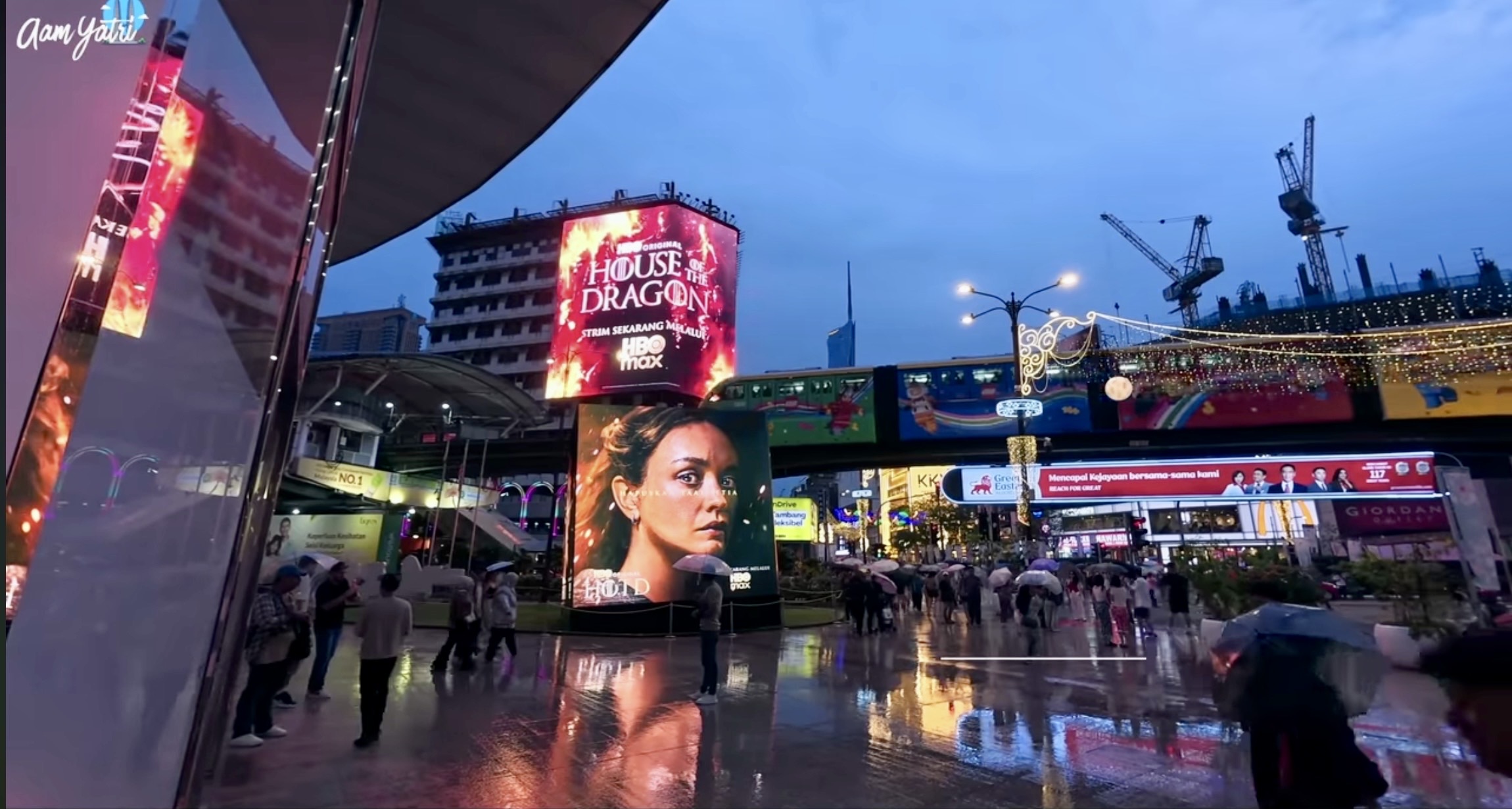
If KLCC represents the polished, modern side of Kuala Lumpur, Bukit Bintang is where the city becomes much louder and more energetic. This is one of the main shopping, entertainment and evening districts of Kuala Lumpur, and once the sun starts going down, the streets become a completely different world. Giant LED screens, shopping malls, restaurants, pedestrians, music and traffic all compete for your attention. There are places like Pavilion, Lot 10 and Fahrenheit around the area, and if you have ever been to Times Square in New York, the giant screens and constant movement may give you a similar feeling — although the overall atmosphere is distinctly Kuala Lumpur.
Bukit Bintang is also incredibly easy to reach by public transport, including the monorail, which makes it a convenient area to include in an evening itinerary. You do not necessarily need a detailed plan here. In fact, this is one of those parts of Kuala Lumpur where wandering around works better. Walk through the malls, come back onto the street, watch the city move around you, stop somewhere for food and then continue exploring. We were not particularly interested in nightlife, so we did not spend the night hopping between clubs and bars, but even without that, Bukit Bintang was one of the places that gave us a proper feel for the city after dark.
JALAN ALOR — KUALA LUMPUR’S STREET FOOD PARADISE
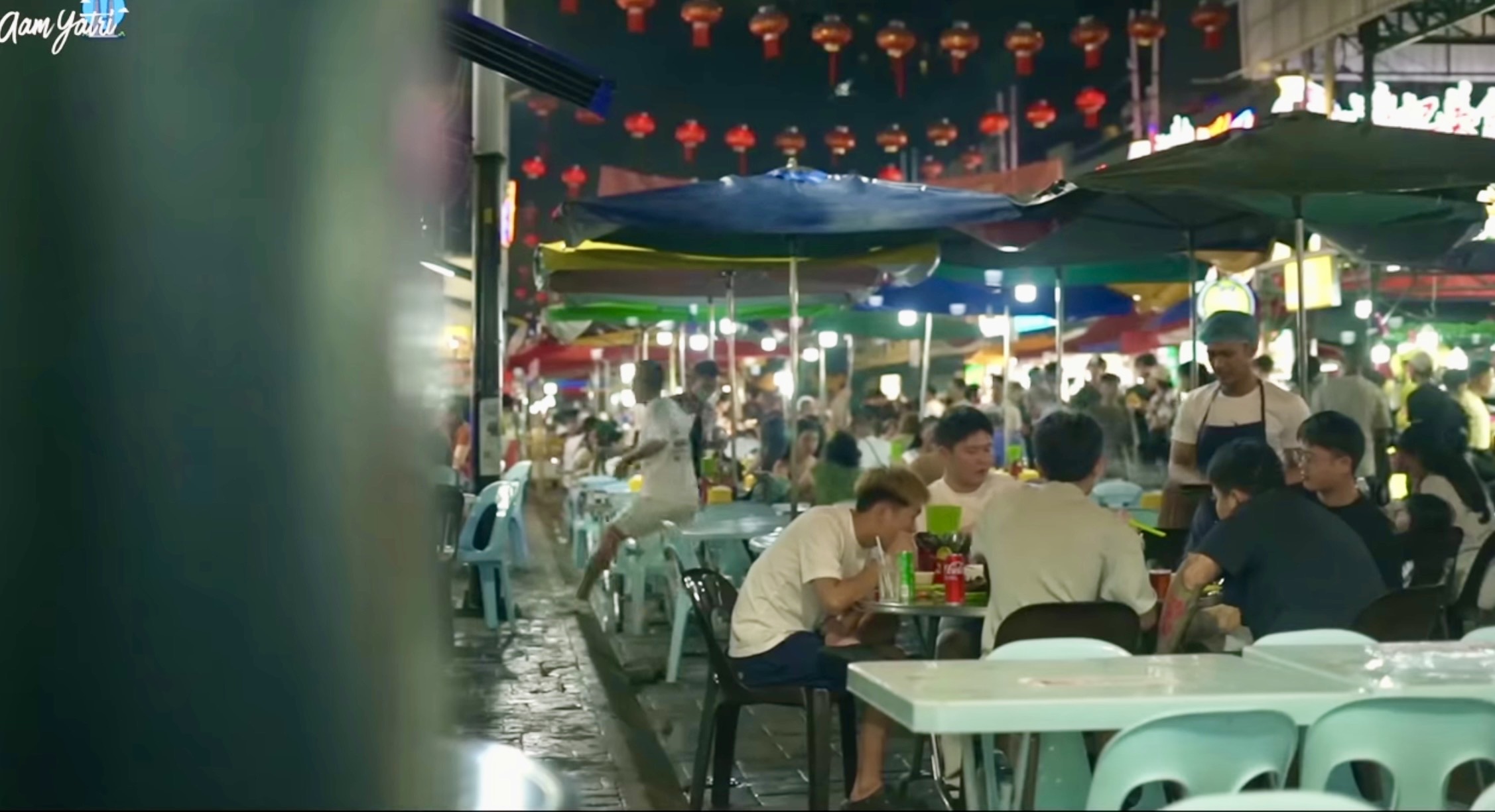
Just around Bukit Bintang is Jalan Alor, one of those streets where your appetite disappears the moment you arrive because there are simply too many things to look at. Restaurants and food stalls line both sides of the street, tables spill out onto the road and the entire place becomes increasingly busy as the evening progresses. We reached around seven to eight in the evening, when it was still possible to move around relatively comfortably, but as the night continued, the crowd became much heavier.
Being Indian, one of the first things we noticed was pani puri and golgappa. Of course, we had to try it. We paid around RM15, roughly ₹300 for two, which initially felt surprisingly expensive for something we would normally eat for much less in India. But after tasting it, I had to admit that it was genuinely good. The dahi puri in particular was interesting, with ingredients like cheese and carrot added to it, giving something familiar a completely different character. Sometimes travelling is exactly about this — seeing something that looks familiar, ordering it because you think you already know what it will taste like, and then discovering that it has its own local personality.
We continued the evening with dinner at a local place we visited called Monkey Grill Fish, and this was also where I tried soju for the first time. The evening eventually became less about ticking off Jalan Alor as an attraction and more about simply enjoying the street — food, shopping, music, performances and the constant movement around us. If you are planning things to do in Kuala Lumpur at night, Jalan Alor is one of those places I would keep on the list even if you are not a serious foodie.
BATU CAVES — 272 STEPS INTO THE MOUNTAIN
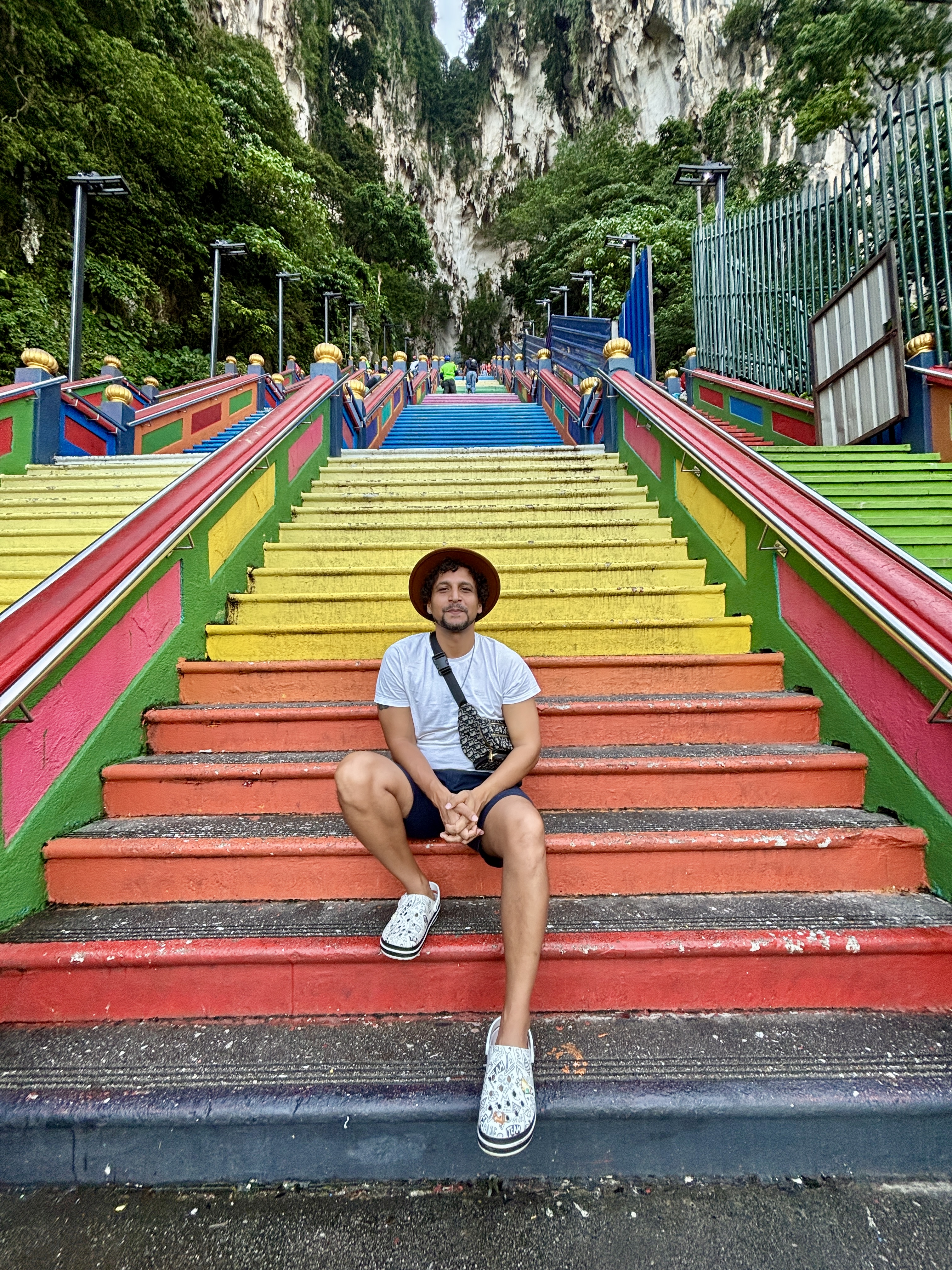
The next morning started ridiculously early. We left around five in the morning, when Kuala Lumpur was still mostly dark, because I wanted to reach Batu Caves before the crowds arrived. Batu Caves is one of the most famous places to visit near Kuala Lumpur, and many organised day tours combine it with Genting Highlands. That means the place can become extremely crowded once tour buses start arriving. Since we were travelling independently, we decided to beat the crowds instead.
At that hour, the train was not a practical option for us, so we booked a Grab. The ride took roughly half an hour and cost around ₹300–₹400. When we arrived, the first thing that completely grabs your attention is the enormous golden statue of Lord Murugan standing at the entrance. Even before climbing the stairs, the scale of the place is impressive. Then you look up and realise that there are 272 steps between you and the main cave.
The climb itself is not particularly difficult if you take your time, but the heat and humidity can make it much more tiring later in the day. That is another reason I strongly recommend arriving early. Around six or seven in the morning, you get a completely different experience. There are fewer people, the atmosphere is quieter and you can actually stop and look around without constantly having someone walking directly in front of your camera.
The cave at the top is beautiful in a way that photographs struggle to communicate. The limestone walls, the height of the natural space and the temple inside create a very different atmosphere from the colourful staircase outside. At the same time, I personally felt that some of the artificial lighting and decorations inside took away from the natural beauty of the cave. In a place like this, I think the rock formations and natural light should be allowed to do most of the work. Sometimes less decoration would actually make the experience more powerful.
There is also a slightly amusing souvenir at the end of the climb — a certificate of completion for the 272 steps. Is it necessary? Absolutely not. Did we find it funny enough to consider getting one? Of course. But jokes aside, Batu Caves is one place I would not remove from a Kuala Lumpur itinerary. Arrive early, take your time climbing and allow yourself a little space to simply look around rather than treating it as a quick photo stop.
GENTING HIGHLANDS — FROM KUALA LUMPUR TO THE CLOUDS
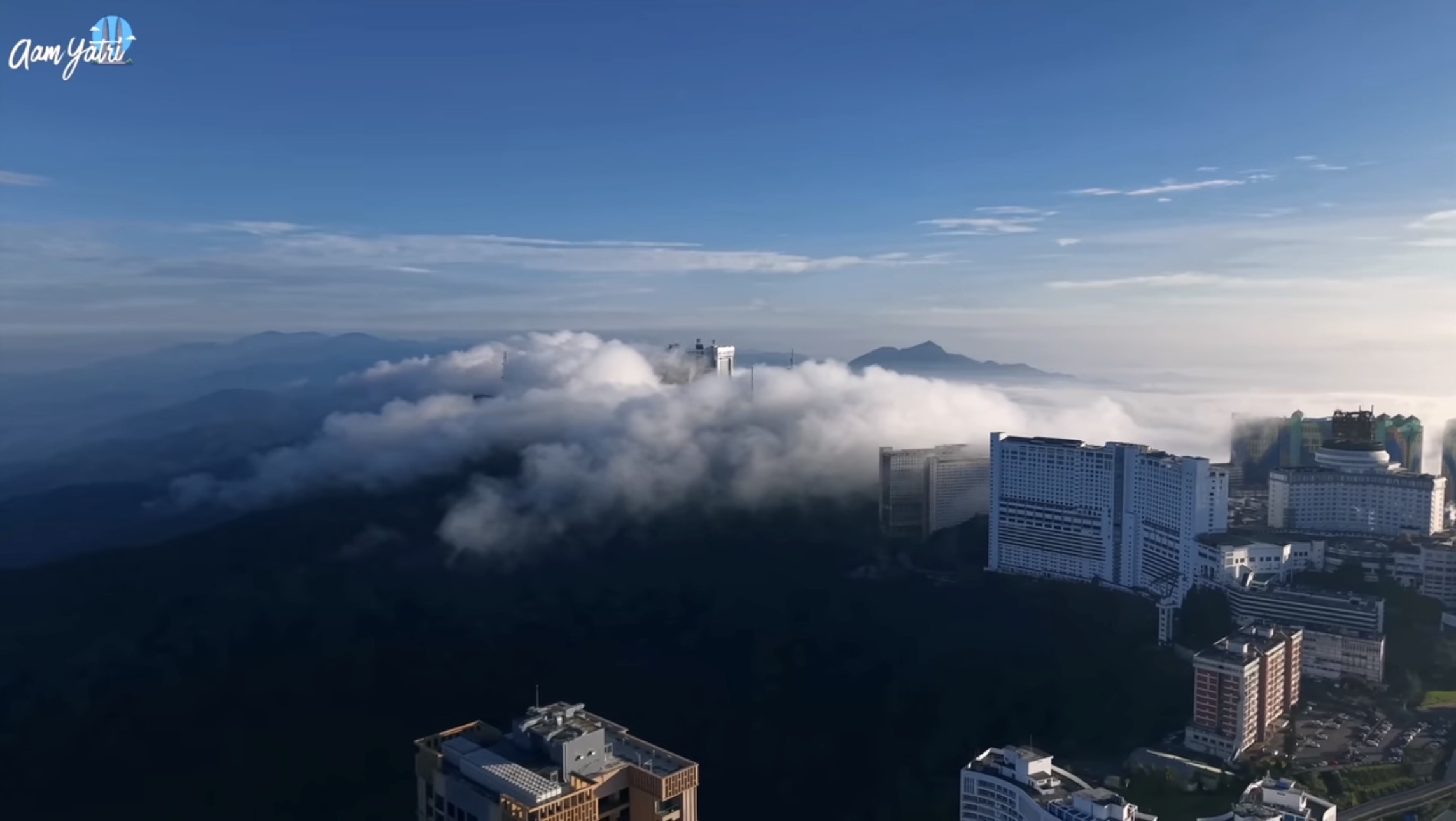
From Batu Caves, the journey continues towards Genting Highlands, one of Malaysia’s most popular hill resorts. Genting is roughly 50 kilometres from Kuala Lumpur and, depending on traffic and where you start, the drive can take around an hour to an hour and a quarter. The change is quite noticeable. Kuala Lumpur is hot, humid and intensely urban, while Genting Highlands rises into the mountains at around 1,800 metres above sea level, where the climate is considerably cooler.
There are several ways to reach Genting Highlands, including buses, cars and cable cars. One of the experiences we were most excited about was the gondola ride. The cable car takes you up through the mountain landscape, and the ride itself becomes part of the attraction rather than simply being transport. Looking down at the forest while gradually gaining altitude gives you a very different perspective from the city we had just left behind.
At the top, Genting feels almost like a city built inside the mountains. There are hotels, shopping areas, restaurants, entertainment venues and theme parks all concentrated together. SkyWorlds is the outdoor theme park and has rides and attractions for both children and adults. We found that there was a good mixture of bigger rides for people looking for excitement and smaller attractions for people who are not particularly interested in extreme rides. There are also restaurants, games and live entertainment, so you can easily spend several hours here without feeling like you have run out of things to do.
One thing worth planning carefully is the theme park ticket. During our trip, we found that booking in advance through platforms such as Klook or the official website could make a significant difference compared with buying on the same day. Our experience was that an advance booking could be around ₹1,500 per person, while the same-day price we encountered was closer to ₹4,500. Prices and promotions can obviously change, so check the current rate before your visit rather than using our trip price as a fixed figure.
Genting also has a large indoor entertainment and shopping environment, which is useful because mountain weather can change quickly. Some attractions inside the mall area have free entry while individual rides or experiences are separately ticketed. The resort is also home to a casino, although we did not travel there specifically for gambling. For families, the combination of shopping, restaurants, indoor attractions and outdoor entertainment makes Genting a particularly easy day trip.
One place I would definitely keep in mind while taking the cable car is Chin Swee Caves Temple. It sits along the cable car route and offers another completely different side of Genting. If you have enough time, do not treat the cable car as simply a ride from point A to point B. There are places along the route and around the mountain that are worth exploring.
PETALING STREET — KUALA LUMPUR’S CHINATOWN
After spending time around the modern parts of Kuala Lumpur, Chinatown feels like a completely different chapter of the city. Petaling Street is the kind of place where you come specifically to walk, browse, bargain and explore. You will find souvenirs, shoes, jerseys, T-shirts, jeans, small shops and countless little stalls packed into the area. If you are from Delhi, the atmosphere can remind you of places like Sarojini Nagar or Janpath — not because they are identical, but because the experience of walking through crowded shopping lanes and constantly checking prices feels familiar.
For Indian travellers, one interesting thing about Kuala Lumpur is that many parts of the city can feel expensive once you convert Malaysian ringgit into Indian rupees. Petaling Street was one of the areas where shopping felt much more comfortable. By around six in the evening, more stalls in the central section were open and the street had a noticeably busier atmosphere. This is a place where you should leave some time simply for wandering because the interesting parts are not always the ones you find on a map.
KWAI CHAI HONG — A SMALL LANE WITH A BIG PERSONALITY
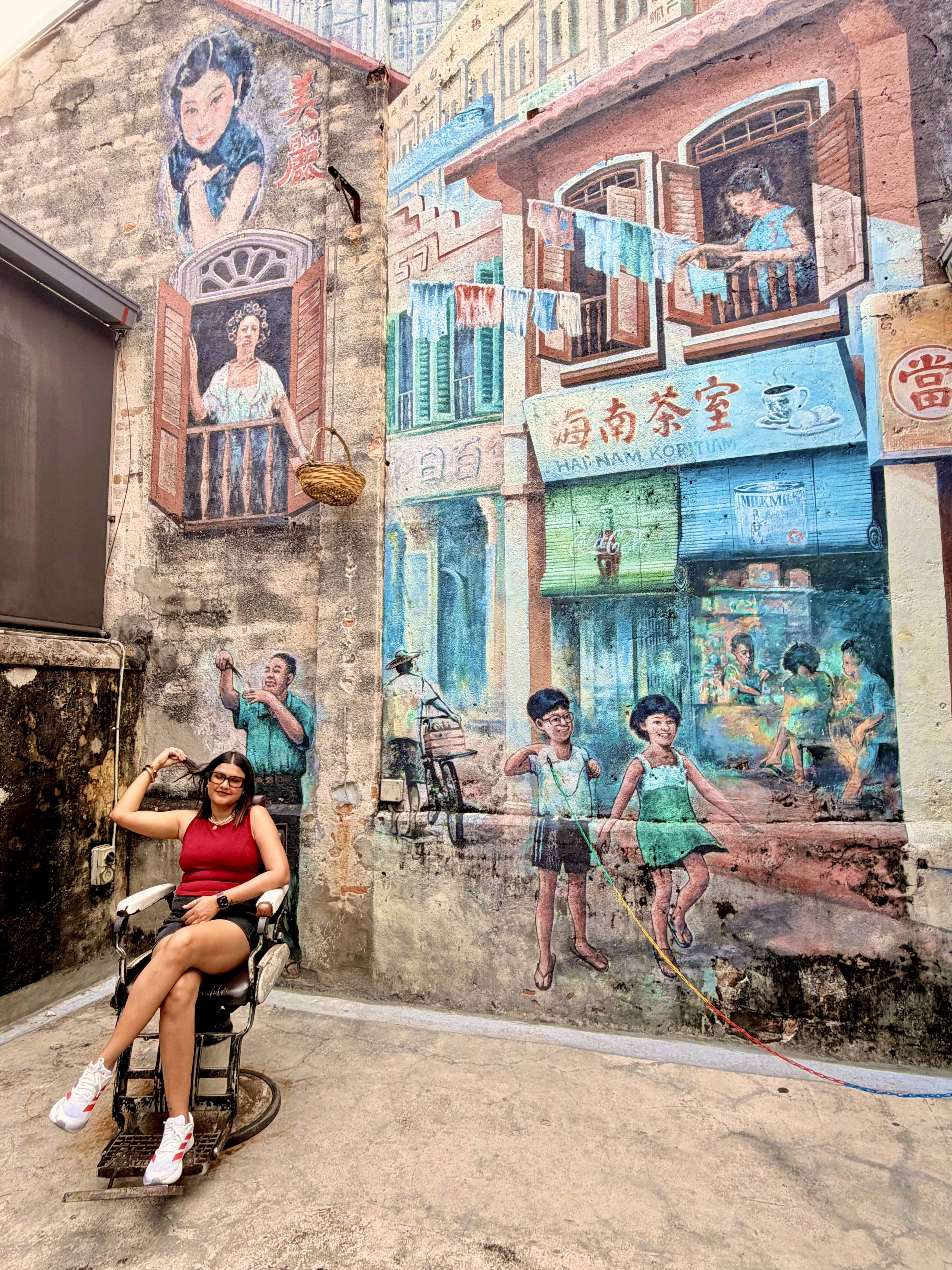
Only a couple of minutes away from Petaling Street is Kwai Chai Hong, and this was one of those places that initially looks small on a map but becomes much more interesting once you actually walk inside. The restored old-school architecture, colourful buildings, murals and carefully created scenes make the area feel like a little pocket of another era. It is naturally very popular for photographs, but the atmosphere is more than just Instagram decoration.
The surrounding Chinatown area also has plenty of restaurants, ranging from casual old-school establishments to more modern dining experiences. This is where Kuala Lumpur’s ability to preserve older neighbourhoods while surrounding them with a rapidly developing city becomes especially obvious. You can spend an afternoon walking through ordinary-looking streets and then suddenly turn into a beautifully restored lane that looks like it belongs in another time.
The only thing you need to respect here is Kuala Lumpur’s humidity. When the rain disappears and the sun comes out, the heat can feel much more intense than the temperature suggests. We found ourselves taking breaks, drinking water and slowing down whenever possible. Kuala Lumpur is a walking city in many areas, but the weather decides how much walking you can comfortably handle.
CHINATOWN FOOD — ONE OF OUR BEST MEALS IN KUALA LUMPUR
By evening, Chinatown becomes another food destination. We eventually ended up at Nam Heong, a well-known name in the area, and this turned out to be one of the meals I enjoyed most during our Kuala Lumpur trip. We tried the famous chicken rice and the coffee, and the combination was much better than I expected. Sometimes the best travel meals are not the ones you spend hours researching beforehand. You walk into a busy restaurant because it looks popular, order something the locals are eating and suddenly you are sitting there wondering why you had not tried it earlier.
The coffee was particularly memorable, and the chicken rice was the kind of dish that makes you stop talking for a few minutes because you are too busy eating. I finished the entire plate, which probably tells you more about how good I found it than any formal food review could. Kuala Lumpur had already impressed us with street food, but Chinatown showed us another side of the city’s food culture — one where Chinese Malaysian traditions, old restaurants and everyday local eating come together naturally.
LITTLE INDIA — AFTER THREE DAYS, WE NEEDED A TASTE OF HOME
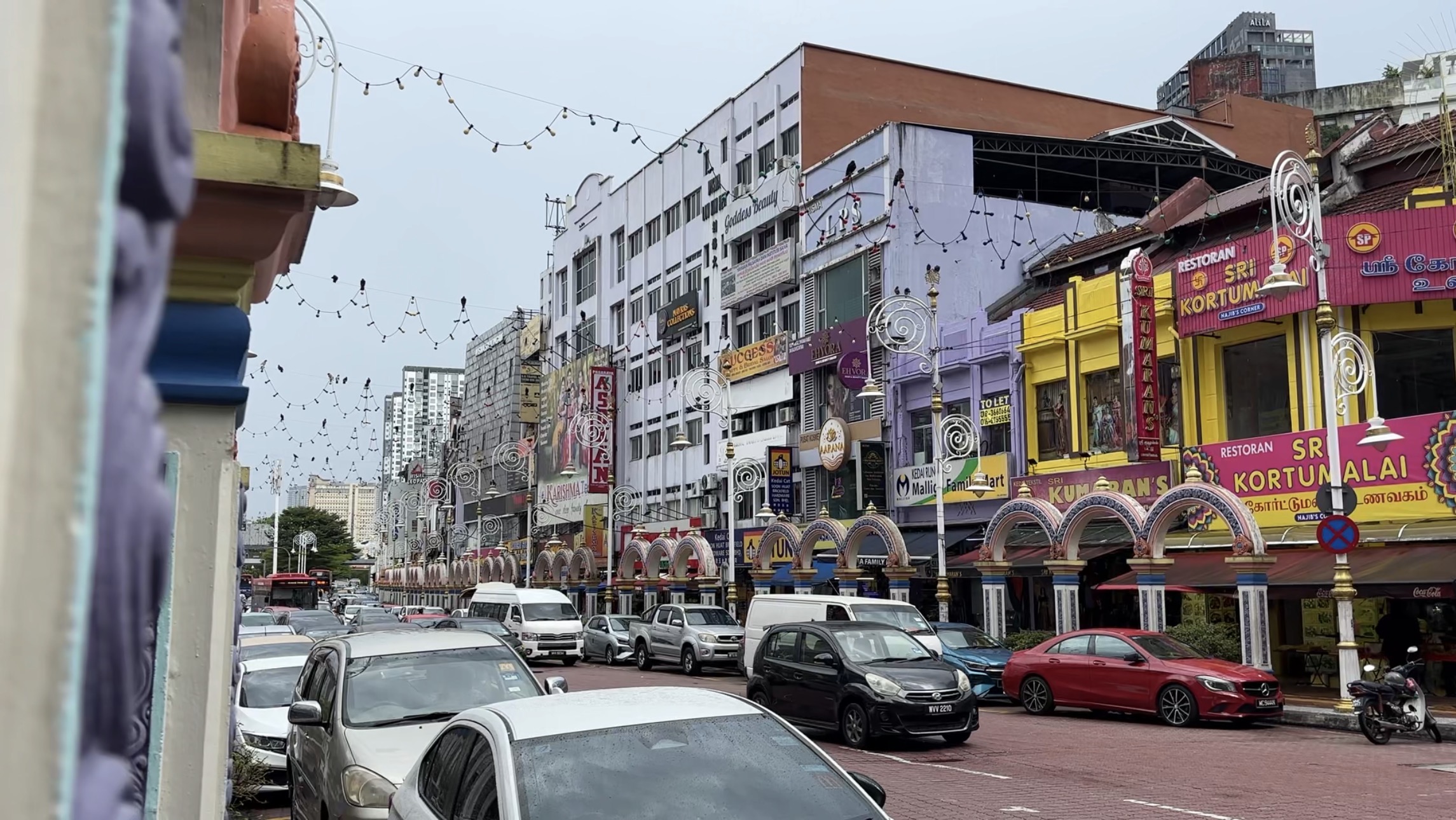
After two or three days outside India, you start missing things you did not even realise you would miss. For us, that meant Indian food, familiar colours, Indian shops and that particular chaos that somehow feels comforting when you are far away from home. That is when Little India becomes the perfect stop. The area feels genuinely Indian, from the shops and restaurants to the clothing, jewellery and colourful streets.
There is something slightly strange about walking through Little India in Kuala Lumpur because parts of it feel less like a themed tourist neighbourhood and more like an actual Indian locality transplanted into another country. Some of the buildings, shops and surrounding residential areas reminded us of Indian tier-two and tier-three cities. In fact, at moments I had the feeling that this was “more India than India”, especially in the way the streets, colours and businesses came together.
Food is obviously one of the biggest reasons to visit. There are restaurants where you can choose from a variety of prepared dishes, and the meal can feel more like eating in a traditional South Indian setting than dining in an international capital. We picked a non-vegetarian plate with fish, mutton and chicken, and the flavours immediately stood out. The use of coconut and coconut oil gave the food that unmistakable South Indian character, and after several days of travelling, it tasted even better because it was familiar without being exactly the same as what we eat back home.
I had planned to mention the exact bill here, but since the final amount from that meal was not properly captured in our trip notes, I would rather not invent a number. What I can say is that the experience was worth including in the itinerary, particularly if you are travelling from India and want a break from trying unfamiliar food every single day.
THEAN HOU TEMPLE — A QUIET CHANGE OF PACE
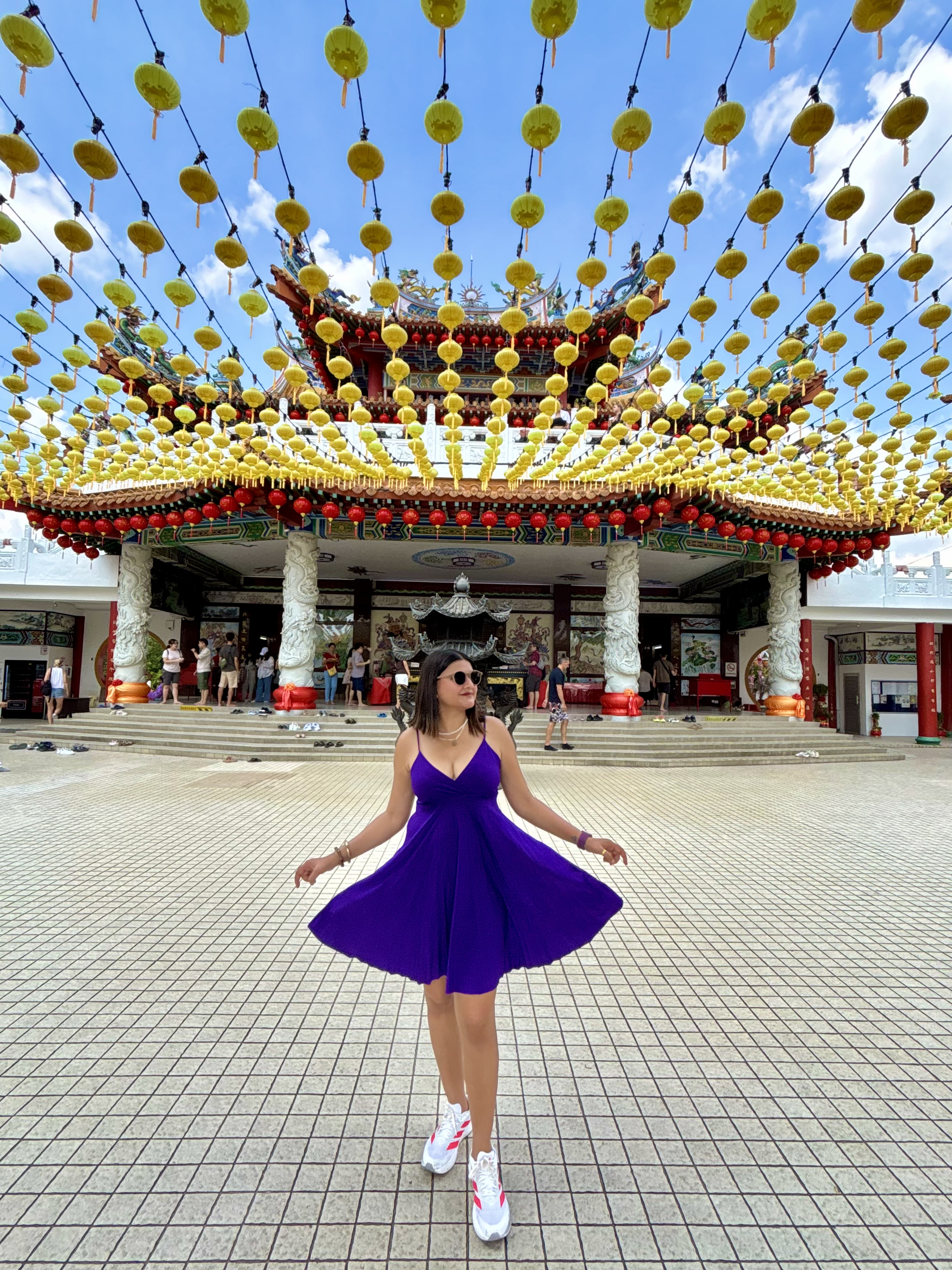
Thean Hou Temple was another place where Kuala Lumpur suddenly felt completely different. This is one of the city’s most beautiful Chinese temples, sitting on a hill and overlooking the modern skyline. The temple is dedicated to Thean Hou, also known as Tian Hou or Mazu, a Chinese sea goddess traditionally associated with protecting sailors and travellers. Standing inside the temple complex, surrounded by traditional Chinese architecture, carvings and lanterns, while the Kuala Lumpur skyline rises in the distance, creates an incredible contrast.
The architecture is one of the main reasons to come here. The red and yellow details, dragon carvings, traditional roofs and hanging lanterns make the temple photogenic from almost every direction. During the day you can appreciate the details of the building, but I particularly liked the idea of visiting around six or seven in the evening when the lanterns begin to glow and the atmosphere changes. If your schedule allows it, visiting once around daylight and staying until evening would give you two completely different experiences.
There are also statues of Thean Hou and other traditional Chinese deities around the complex, and you can observe cultural practices such as the fortune-stick tradition, where visitors choose a stick and receive guidance associated with it. You do not need to be religious to appreciate the experience. For a traveller, it is another window into the multicultural character of Kuala Lumpur and one of the reasons the city never feels like it belongs to just one culture.
KAMPUNG BARU — A TRADITIONAL VILLAGE UNDER THE PETRONAS TOWERS
One of the most fascinating contrasts in Kuala Lumpur can be found in Kampung Baru, a traditional Malay village located remarkably close to the modern centre of the city. This is the kind of place that makes you stop and look around because the Petronas Twin Towers can be visible in the distance while traditional Malay houses and local streets continue life almost as they always have.
Kampung Baru was established in the late nineteenth century as a Malay settlement intended to preserve traditional ways of life, and parts of that character remain visible today. The traditional wooden houses and village-style streets create a strange but beautiful contrast with the skyscrapers surrounding them. It is almost as if two versions of Kuala Lumpur are occupying the same frame — one racing towards the future and another quietly holding on to its past.
Interestingly, as an Indian traveller, some of the houses and neighbourhood scenes did not feel completely unfamiliar. They reminded us of ordinary residential areas in Indian tier-two or tier-three cities. But that familiarity is exactly what makes the place interesting. A traveller from another part of the world may see an extremely unusual cultural landscape, while someone from India might notice the everyday details first and the contrast with the skyscrapers second.
Kampung Baru is also known for its local restaurants and food, making it a good place to explore around lunch or dinner. After several days of moving between malls, skyscrapers, temples, caves and tourist attractions, ending the Kuala Lumpur trip in a traditional neighbourhood like this feels much more meaningful than simply finishing with another shopping mall.
SO, WHAT IS THE BEST WAY TO SPEND FOUR DAYS IN KUALA LUMPUR?
Four days is actually a very comfortable amount of time for a first Kuala Lumpur trip if you plan intelligently. The city has enough major attractions to fill much longer, but you can experience its biggest highlights in four days without constantly feeling like you are running from one place to another. The trick is to group places geographically and leave enough time for the city itself rather than treating every hour as an opportunity to add another attraction.
The Petronas Twin Towers and KLCC area work naturally together, while Bukit Bintang and Jalan Alor are ideal for an evening. Batu Caves deserves an early start because arriving before the tour buses completely changes the experience. Genting Highlands can take up a substantial portion of a day, especially if you want to use the cable car and spend time at the theme park. Chinatown, Petaling Street and Kwai Chai Hong work beautifully together because everything is close enough to explore on foot. Little India and Thean Hou Temple give you a different cultural perspective, while Kampung Baru provides one of the most interesting contrasts between traditional Kuala Lumpur and the modern skyline.
Most importantly, do not assume that Kuala Lumpur is only about the Petronas Twin Towers. The towers are spectacular, and I absolutely recommend going up if your budget allows it, but the real character of the city appears when you move away from the postcard attractions. It is in the street food, the temples, the markets, the old neighbourhoods, the Indian streets, the Chinese lanes and the traditional Malay houses that Kuala Lumpur starts becoming more than a skyline.
IS MALAYSIA TRULY ASIA?
After four days in Kuala Lumpur, I think the answer is yes. And not simply because Malaysia’s tourism campaign says so. You can actually see the idea playing out around you. In a single trip, we moved between modern skyscrapers, Hindu temples inside limestone caves, Chinese temples filled with lanterns, Indian neighbourhoods serving South Indian food, traditional Malay houses, crowded street-food streets and a mountain resort surrounded by forest.
That diversity is what makes Kuala Lumpur so interesting. It is modern without completely erasing its past, international without losing its local character and multicultural without feeling like those cultures exist separately from one another. You can eat Chinese Malaysian food for lunch, walk through Chinatown, see the Petronas Towers at sunset, have Indian food in Little India and then end your day somewhere surrounded by Malay culture. That combination is difficult to reproduce anywhere else in quite the same way.
And then there are the people. One of the things that stayed with us throughout the trip was how welcoming and pleasant many of the people we interacted with were. Travel is never only about monuments and attractions. Sometimes what you remember most is a small interaction, a helpful person, a meal that surprised you or a street where you simply enjoyed walking without having any particular destination.
Kuala Lumpur gave us all of that in four days. It gave us the skyline we expected, but also the streets we did not know we were looking for. It gave us tourist attractions, but also ordinary neighbourhoods. It gave us familiar Indian food thousands of kilometres from home, while at the same time introducing us to flavours and cultures that were completely new.
So yes — Malaysia is truly Asia. And Kuala Lumpur may just be one of the best places to understand what that means.
OUR KUALA LUMPUR STORY CONTINUES
This Kuala Lumpur travel guide is based on our own four-day experience in Malaysia. The prices mentioned are approximate amounts we paid or encountered during our trip and should be treated as a reference rather than fixed current prices. Attraction tickets, transport fares, exchange rates and entry requirements can change, so always check the relevant official source before your own journey.
If you are planning a Malaysia trip and this guide helped you, you can also watch our complete Kuala Lumpur travel video on YouTube, where you can see many of these places exactly as we experienced them. The written guide gives you the details; the video gives you the atmosphere. Together, they tell the story of our four days in Kuala Lumpur much better than either one could do alone.
And if Kuala Lumpur is only one part of your Malaysia itinerary, keep following Aamyatri. There is much more of Malaysia waiting beyond the capital.